
As a Shopify expert, I often encounter merchants who are essentially tethered to their admin dashboard. They are the ones staying up until midnight to launch a New Arrivals collection or waking up at 5 AM to ensure a flash sale price actually reverted to the original MSRP. While their dedication is admirable, it is also completely unnecessary. In the modern e-commerce landscape, manual labor is the enemy of scale. If you are spending your hours clicking buttons that a machine could click for you, you are not growing your business; you are just babysitting it.
Most store owners seek a way to reclaim their time without sacrificing the quality of their shopify store setup. They want a store that runs like a well-oiled machine, handling product launches, price adjustments, and inventory updates while they sleep, travel, or focus on high-level strategy. This is where the concept of a "Hands-Off Store" becomes a reality. By leveraging the right tools, specifically the Product Scheduler by Maestro app, you can automate the most tedious parts of ecommerce maintenance services and focus entirely on conversion rate optimization.
Why Merchants Struggle with Manual Management
Before we dive into the five-minute setup, it is important to understand why manual management is a silent profit killer. When you manage every product update by hand, you introduce several risks:
- Human Error: Forgetting to remove a "Sale" tag after a promotion ends leads to customer confusion and lost margins.
- Inconsistency: Prices might be updated on some products but missed on others, creating a disjointed user experience.
- Burnout: The pressure to be "always on" for every seasonal launch or restock leads to decision fatigue.
- Missed Opportunities: If you cannot be at your computer during peak shopping hours in a different time zone, you miss out on timed releases that drive urgency.
Implementing a robust scheduling system solves these issues by shifting the workload from "execution" to "planning."

The Power of the Draft Helper
One of the most significant hurdles in a standard shopify store setup is the transition from product creation to live sale. Traditionally, you create a product in "Draft" status and then must manually switch it to "Active" when you want it to appear.
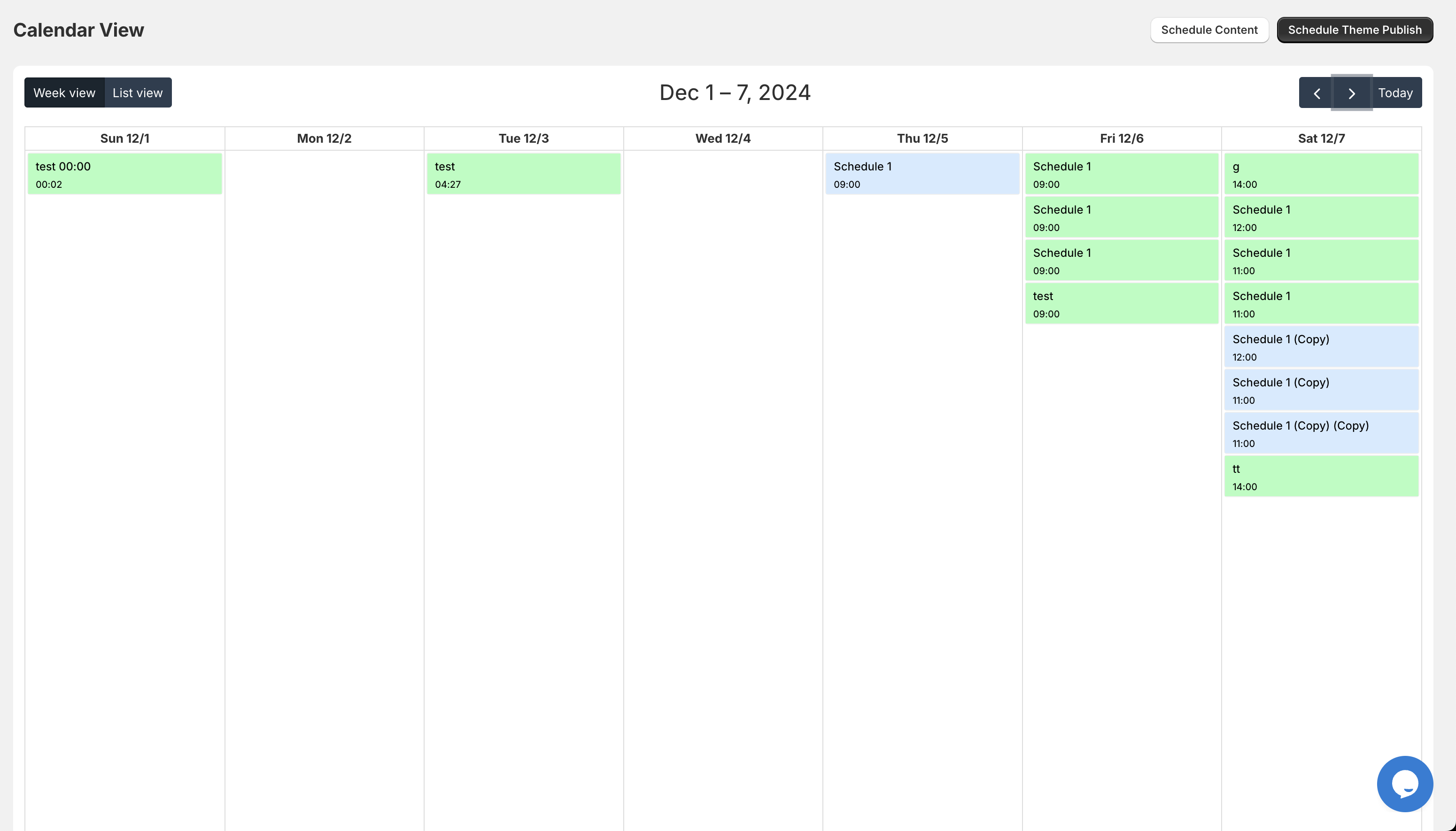
The Draft Helper feature within the Maestro Product Scheduler changes this dynamic entirely. Instead of hovering over the "Publish" button, you can set a specific date and time for your drafts to go live. This allows you to prepare an entire month's worth of product drops in a single afternoon.
Here are the primary benefits of using a Draft Helper:
- Batching Workflows: You can upload all your product photography, descriptions, and SEO data at once.
- Timed Releases: Align your product launches with your email marketing or social media announcements down to the exact second.
- Global Readiness: Schedule launches to hit at 9 AM in London, New York, or Tokyo without needing to be awake for any of them.
Once your products are scheduled, you can also consider how they fit into your overall site structure. For example, you might want to add a featured collection to your home page that only appears when those new products go live.
Automated Tag Management for Seasonal Sales
Tags are the invisible backbone of a Shopify store. They drive your smart collections, filter your search results, and often trigger specific UI elements like "New" or "Sale" badges. However, managing these tags manually during a seasonal sale is a nightmare.
With the Product Scheduler, you can automate tag management. You can instruct the app to add a "Summer-Sale" tag on July 1st and remove it on July 31st. This ensures that your collections stay updated without you ever needing to bulk-edit products in the middle of a holiday.
This automation is vital for maintaining a high level of usability. If a customer clicks a "Sale" filter and sees products that are no longer discounted because you forgot to remove a tag, your conversion rate optimization efforts take a massive hit. Clean data equals a clean user experience.
Scheduling Price Changes and Rounding Rules
Pricing is a psychological game. We know that $19.99 often converts better than $20.00. However, when you run a site-wide 20 percent off sale, the math often results in messy numbers like $15.992 or $16.14.
The Maestro Product Scheduler handles both the timing of price changes and the aesthetics of the final number. You can schedule a price drop for a specific collection and apply "Rounding Rules" simultaneously.
- Select Your Products: Choose by collection, tag, or individual SKU.
- Set the Discount: Apply a percentage or a fixed amount decrease.
- Apply Rounding: Ensure every price ends in .95, .99, or .00 to match your brand's pricing strategy.
- Schedule the Reversal: Tell the app exactly when to put the prices back to their original state.
This level of precision is what separates a professional shopify store setup from a hobbyist site. If you want to take it a step further, you can even show discount info on the product page to further incentivize the purchase.

Inventory Automation and Restock Management
There is nothing more frustrating for a customer than finding the perfect item only to see it is out of stock. Conversely, there is nothing more frustrating for a merchant than having stock arrive at the warehouse but forgetting to update the "Inventory" count on the website.
Inventory automation allows you to schedule restocks. If you know a shipment is arriving on Wednesday, you can schedule the inventory levels to increase on Wednesday morning. You can even combine this with visibility settings. For instance, if a product is out of stock, you might want to hide the product price or hide the product entirely until the restock date.
Managing Collection Visibility and Sorting
A hands-off store does not just manage products; it manages the entire shopping environment. This includes when certain collections are visible to the public.
If you are running a "Black Friday" collection, you don't want that link sitting in your navigation or visible in your sitemap in June. Using the Maestro Theme Scheduler, you can coordinate the visibility of entire sections and blocks alongside your product launches.
This synergy ensures that when your products go live, the banners promoting them go live as well. This creates a cohesive brand experience that boosts trust and authority.

How to Set Up Your Hands-Off Store in 5 Minutes
Now that you understand the "why," let us look at the "how." Follow these simple steps to begin automating your store today.
Step 1: Install the App
Navigate to the Shopify App Store and install the Product Scheduler by Maestro. Once installed, the app will sync with your existing product catalog.
Step 2: Define Your First Action
Click on "Create New Action." You will be prompted to choose what you want to automate. For your first time, try a "Status Change" to move a product from Draft to Active.
Step 3: Select Your Targets
Use the robust filtering system to select the products. You can select by specific tags, vendors, or even by a specific search term in the title.
Step 4: Set the Timeline
Choose the date and time for the action to occur. If this is a recurring event, such as a weekly "Deal of the Day," you can set the schedule to repeat.
Step 5: Review and Save
Double-check your settings. The app will provide a summary of which products will be affected and when. Hit "Save," and you are officially running a hands-off store.
Enhancing UX While You Sleep
Automating your store management does more than just save you time; it creates a more reliable environment for your customers. When prices change exactly when the banner says they will, and when new products appear precisely when the countdown timer hits zero, you build brand authenticity.
Many merchants also find that once they automate the "boring" stuff, they have time to focus on advanced features that improve the customer journey. You might finally have the time to setup Google Tag Manager to track user behavior or add a testimonial carousel to build social proof.
The Proactive Step Toward Scalability
Running a manual store is a linear way to do business. Your growth is capped by the number of hours you can spend in the Shopify admin. Transitioning to a scheduled, automated model is a proactive step toward exponential growth.
As a Shopify expert, I can tell you that the most successful brands on the platform are not the ones with the most employees, but the ones with the best systems. By using the Product Scheduler by Maestro, you are implementing a system that reduces human error, enhances your store's UX and conversion rate, and gives you back the most valuable resource you have: your time.
Automation is no longer a luxury for Shopify Plus merchants; it is a necessity for anyone serious about e-commerce. Whether you are managing a handful of SKUs or a catalog of thousands, the ability to plan, schedule, and forget is the ultimate competitive advantage.
Stop babysitting your store. Start leading it. If you need assistance setting up these advanced automations or want to take your shopify store setup to the next level, our team at XCO Agency is ready to help. Reach out for an optimization audit today and let us help you build a store that works as hard as you do, even when you aren't working at all.