
As a Shopify expert, I often encounter merchants who are trapped in a cycle of manual updates. They find themselves staying up until midnight on a Sunday just to publish a new theme for a Monday morning sale, or waking up at dawn to ensure a promotional banner is removed the moment a flash sale ends. These manual processes are not just exhausting; they are a significant bottleneck for growth.
In the competitive landscape of modern retail, staying dynamic is a requirement. However, manually managing your storefront is an inefficient use of time that could be spent on strategy and customer acquisition. Merchants seeking a more streamlined approach often turn to custom shopify themes and specialized tools to regain control over their schedules. This is where the Maestro Theme Scheduler becomes an essential part of your toolkit.
The Problem with Manual Storefront Management
For many Shopify and Shopify Plus merchants, the storefront is a living entity. It needs to reflect current promotions, seasonal changes, and inventory shifts. When you manage these changes manually, you face several risks:
- Human Error: Forgetting to publish a theme or hiding a section can lead to lost revenue or a confusing customer experience.
- Operational Inefficiency: High-paid team members spending hours on repetitive tasks instead of high-value projects.
- Lack of Scalability: As your store grows and you move into global markets, managing time-zone-specific updates becomes nearly impossible without automation.
- Inconsistent Branding: If updates are not synchronized perfectly, customers might see conflicting messages across different pages.
To solve these issues, you need a solution that offers a "set it and forget it" workflow. By automating your storefront changes, you ensure accuracy and free up your team to focus on what matters most: growing your business.
Why Automation is Vital for Modern E-Commerce
Before we dive into the how, let us look at the why. Implementing automation through a tool like Maestro provides several immediate advantages that go beyond just saving time.
- Boost Accuracy: Automation eliminates the "oops" factor. Once a schedule is set, the system executes it with precision, ensuring your custom shopify themes go live exactly when planned.
- Enhance Customer Experience: A store that updates seamlessly feels more professional and reliable. Customers are never greeted with expired discount codes or out-of-season imagery.
- Optimize Team Performance: Your developers and marketers can schedule weeks of content in one afternoon, allowing them to focus on deep work for the rest of the month.
- Support Global Growth: For Shopify Plus merchants operating in multiple regions, automation allows you to align storefront changes with local holidays and peak shopping hours without working around the clock.
Step-by-Step: Automate Your Storefront in 5 Minutes
The beauty of the Maestro Theme Scheduler lies in its simplicity. You do not need to be a developer to master it. Here are the simple steps to set up your first automated storefront change.
Step 1: Install and Access Maestro
Navigate to the Shopify App Store and install the Maestro Visibility Scheduler. Once installed, you can access the app directly from your Shopify admin dashboard. It is designed to feel like a native part of your Shopify experience.
Step 2: Create a New Schedule
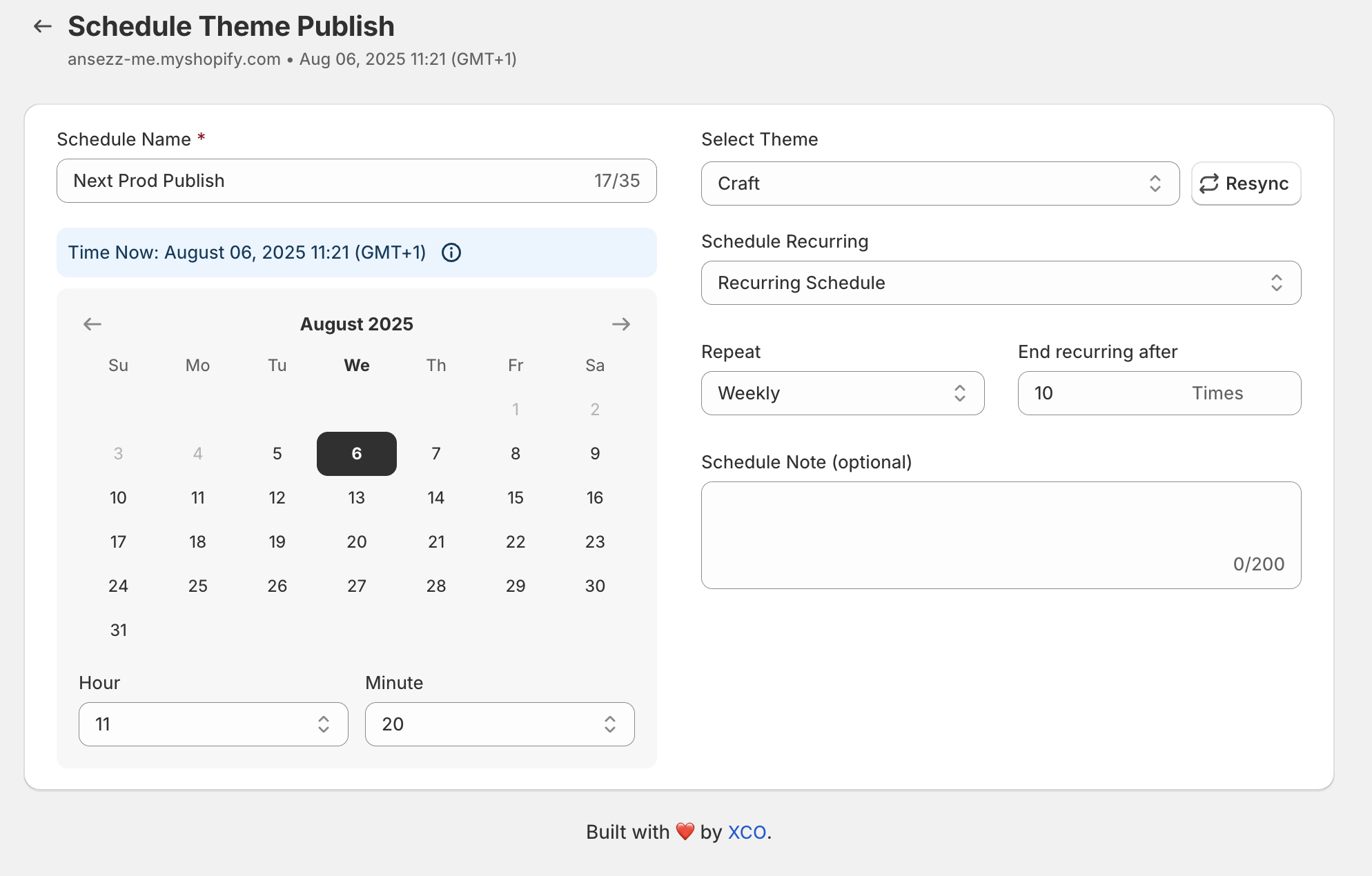
Click on the option to create a new schedule. You will be prompted to give your schedule a name. Choose something descriptive, such as "Black Friday Launch" or "Weekly Tuesday Refresh."
Step 3: Select Your Theme or Elements
Decide what you want to automate. You can choose to publish an entire theme or toggle the visibility of specific sections and blocks. This flexibility is what makes Maestro a powerhouse for ecommerce maintenance services.
Step 4: Define the Timeline
Select the start date and time for your update. If the change is temporary, you can also set an end date. Maestro allows for recurring schedules, which is perfect for weekly promotions or "Deal of the Day" features.
- Set the Date: Choose the specific day from the calendar.
- Set the Time: Pick the exact hour and minute, ensuring it aligns with your marketing emails or social media launches.
- Add Notes: Use the custom note field to remind your team why this schedule was created.
Step 5: Save and Sync
Once you have reviewed your settings, click save. The app will handle the rest. You can view your upcoming changes in a clear, organized timeline to ensure everything is coordinated.
Advanced Use Cases for Shopify Plus Merchants
While simple scheduling is great, Shopify Plus development often requires more complex workflows. Maestro is built to handle high-volume stores that need more than just a basic timer.
Automating Section and Block Visibility
Sometimes you do not want to change your entire theme; you just want to update the homepage. With Maestro, you can schedule specific sections (like a hero banner) or blocks (like a single product callout) to appear and disappear. This is incredibly useful for:
- Flash Sales: Automatically show a "Flash Sale" countdown timer and hide it the moment the sale ends.
- Inventory-Driven Content: If you know a specific collection is dropping on Friday, you can schedule the collection list section to appear at the exact moment of the drop.
- Seasonal Decorations: Schedule holiday-themed headers to go live on December 1st and revert to your standard branding on December 26th.
Managing Global Campaigns
If you are running a brand with international reach, you can use the Maestro Theme Scheduler to coordinate updates across different markets. While Shopify handles some regional settings, Maestro gives you granular control over the visual presentation of your store based on time-sensitive events.

Integrating Automation into Your Maintenance Strategy
Automation should not be an afterthought; it should be at the core of your ecommerce maintenance services. When we work with clients on Shopify Plus development, we emphasize the importance of building a "set it and forget it" culture.
By using Maestro, you are not just buying an app; you are implementing a system. This system ensures that your store is always optimized for conversions without requiring constant manual intervention. If you are looking to further enhance your store, you might also consider how to add a custom font to your store or open social links in a new tab to keep your UX polished.
Leveraging the Feature Roadmap
The team behind Maestro is constantly innovating to support the evolving needs of Shopify merchants. Recent updates have focused on making the interface even more intuitive and expanding the types of content you can schedule.

Key enhancements include:
- Content Scheduling: Automate even more granular store changes beyond just themes and sections.
- Temporary Schedules: Auto-save your work and create drafts of schedules before they go live.
- Market-Specific Changes: Optimized performance for merchants selling globally, ensuring that regional updates happen at the right local time.
Conclusion: A Vital Step Toward Store Efficiency
Automating your Shopify storefront is no longer a luxury reserved for the biggest brands. With tools like Maestro, even small teams can operate with the precision and scale of a global enterprise. By moving away from manual updates, you protect your store from errors, improve your brand's professional appearance, and give yourself back the most valuable resource of all: time.
Whether you are launching custom shopify themes or simply trying to manage a busy promotional calendar, taking 5 minutes to set up automation is a proactive step that will pay dividends for months to come.
As you look to optimize your store further, remember that every small friction point removed is a win for your conversion rate. From adding a favicon to setting up your domain perfectly, every detail counts.
Are you ready to stop manual updates and start automating? Explore how the Maestro Products Scheduler and Theme Scheduler can transform your daily operations. At XCO Agency, we specialize in helping merchants navigate the complexities of Shopify Plus. If you need a partner to help you implement these tools or build a bespoke e-commerce strategy, we are here to guide you.