
As a Shopify expert, I often consult with high-growth merchants who believe that global expansion is as simple as clicking a button in their admin dashboard. The launch of Shopify Markets promised to democratize international commerce, and in many ways, it has. However, there is a significant gap between "enabling" a market and actually "scaling" a market.
Many merchants fall into the trap of thinking that Shopify Markets is a complete global strategy. In reality, it is a powerful testing tool that can lead to stagnating conversion rates if you do not layer it with sophisticated infrastructure and strategic automation. If you are seeking to grow your brand beyond borders, you need to understand the hidden mechanics that separate global leaders from those who merely have international traffic.
The Myth of the Global Toggle
The most common misconception I encounter is the belief that turning on Shopify Markets will naturally drive international growth. While the platform makes it easy to show local currencies and calculate duties, these features alone do not build brand trust or optimize the user journey for a specific region.
Experts in the ecosystem know that the real wins come from a layered approach. This includes faster fulfillment within the European Union, geo-specific messaging, and performance-led conversion rate optimization. When you treat international expansion as a technical checkbox rather than a business expansion, you leave money on the table.

When Shopify Markets Is Genuinely Sufficient
Before we dive into the secrets of scaling, it is important to recognize where Shopify Markets excels. For many of our clients at XCO Agency, we recommend using the standard Markets features during the initial stages of exploration.
- Testing demand in new regions: If you are unsure if there is a market for your products in Australia or Germany, Shopify Markets allows you to test the waters without the overhead of a localized store.
- Early-stage global strategies: For brands where speed to market is more important than perfect localization, Markets provides an immediate solution.
- Limited resource teams: If your team is small and cannot manage multiple store instances or complex subdomains, the centralized nature of Markets is a lifesaver.
However, there is a critical tipping point. Once your international revenue exceeds 20 to 30 percent of your total sales, the basic Markets setup becomes insufficient. This is the threshold where local payment methods, dedicated logistics, and regional marketing become mandatory for continued growth.
The Localization Hierarchy Beyond Translation
True localization is not just about translating words from English to French. It is about cultural relevance and friction-free commerce. To truly scale, you must move beyond the basics and focus on these three pillars:
1. Market-Specific Pricing Strategies
Using a simple currency converter is a rookie mistake. High-performance brands use market-specific pricing that accounts for local purchasing power, competitor pricing in that region, and landed costs. This might mean your product is 50 dollars in the United States but 55 euros in France to account for VAT and shipping overheads.
2. Local Payment Method Integration
In many countries, credit cards are not the preferred way to pay. In the Netherlands, iDEAL is king. In Germany, many customers prefer Sofort or Klarna. If you do not offer these local payment methods at checkout, your conversion rate will suffer regardless of how good your product is.
3. Region-Based Product Customization
Sometimes, what sells in New York will not sell in Tokyo. Experts use Shopify Markets to curate specific collections for specific regions. This ensures that your international customers see the most relevant products first, reducing the time to purchase.
Automating the International Storefront
One of the biggest challenges in international scaling is managing time zones. If you are running a flash sale that starts at 9:00 AM local time in London, Paris, and New York, you cannot manually update your site for every region. This is where automation becomes your competitive advantage.
At XCO Agency, we often implement the Maestro Theme Scheduler to handle these regional complexities. By scheduling theme sections to show or hide based on specific time zones, you can ensure that your European customers see a "Free Shipping to EU" banner while your American customers see a "July 4th Sale" promotion.
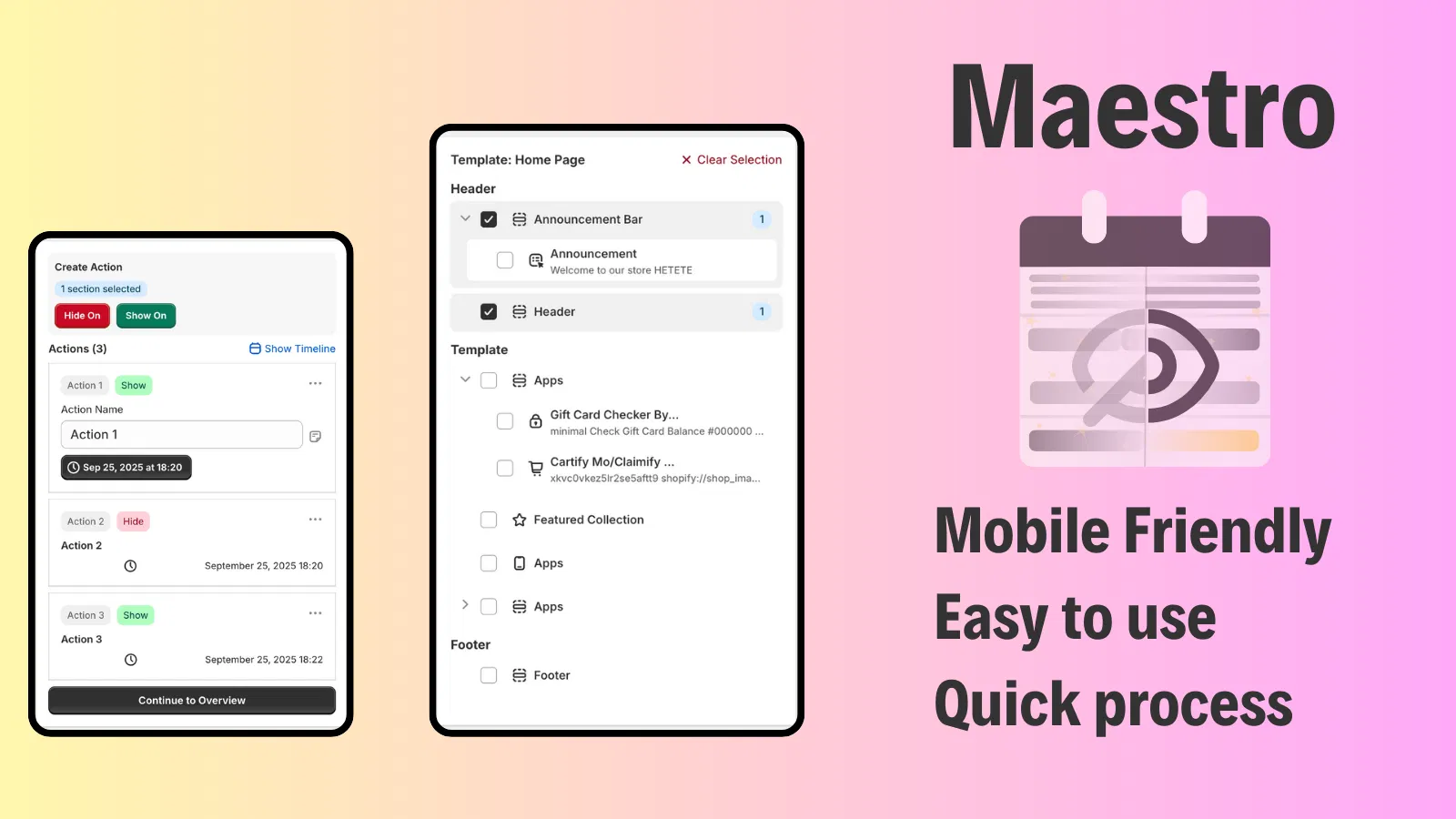
Here are the benefits of automating your regional storefront content:
- Consistency across time zones: Ensure promotions start and end exactly when they should, without requiring your team to be awake at 3:00 AM.
- Localized urgency: Use banners and countdown timers that reflect the specific holidays or events of the target market.
- Reduced manual error: Automating the visibility of sections prevents the common mistake of leaving an expired promotion visible to an international audience.
Managing Global Product Data with Precision
When you scale internationally, your product catalog becomes significantly more complex. You are no longer managing one price; you are managing dozens. You are not just managing one inventory pool; you are often coordinating across multiple warehouses.
To manage this, we suggest using Product Maestro Scheduler. This tool allows you to bulk schedule changes to product attributes, prices, and tags across your entire catalog. If you need to adjust prices for a specific market's seasonal sale, you can set it and forget it.
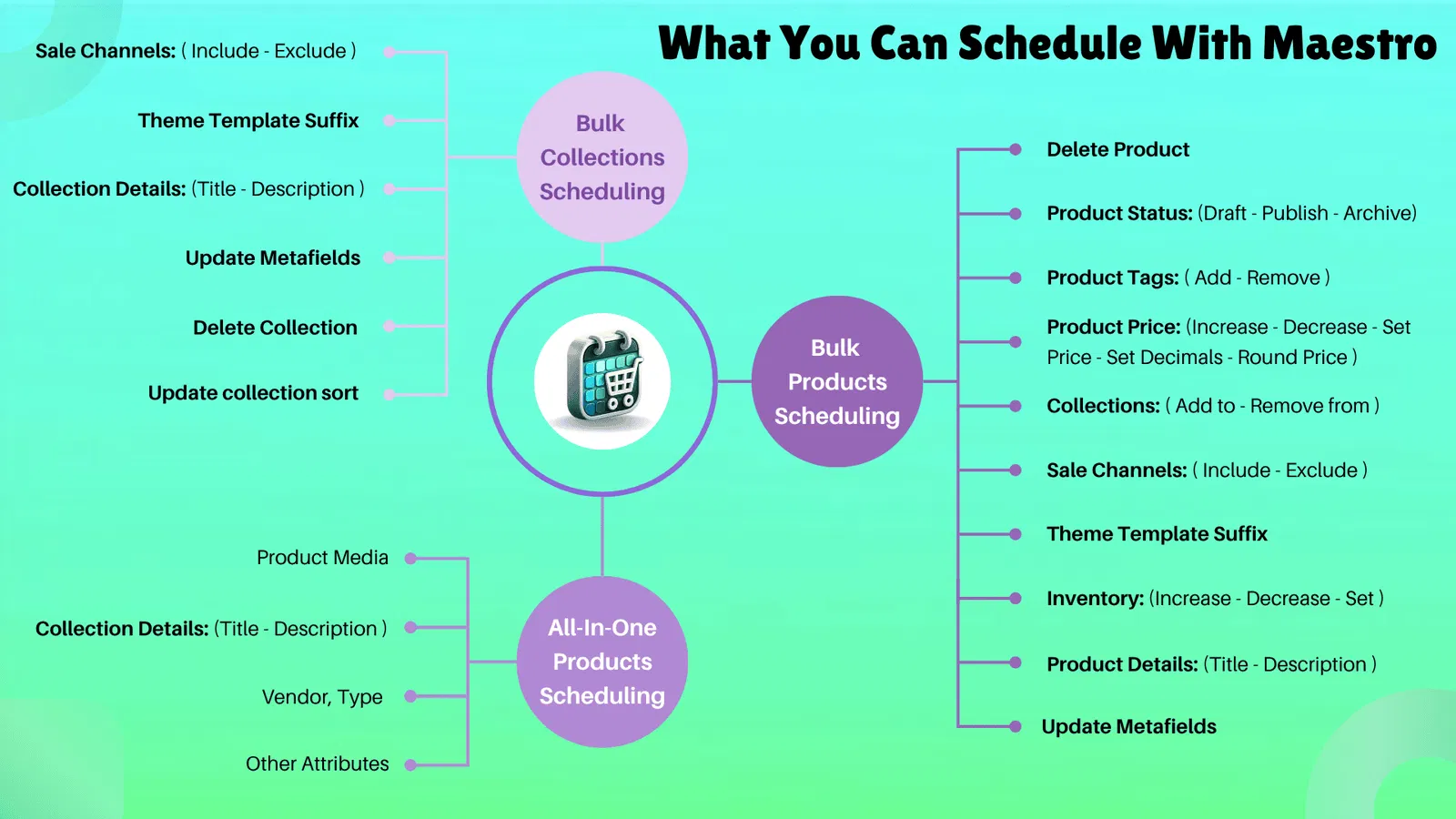
Step-by-Step International Catalog Management
- Audit your regional demand: Use your Shopify analytics to identify which products are trending in specific markets.
- Define your regional pricing rules: Determine if you will use a percentage increase or specific fixed prices for international zones.
- Schedule your updates: Use a tool like Maestro to automate the price changes so they align with local market hours.
- Monitor inventory levels: Ensure your regional fulfillment centers are synced with your Shopify backend to prevent overselling.
The Infrastructure Trap: Speed and SEO
If your website takes five seconds to load for a customer in Singapore because your server is in Virginia, you have already lost the sale. International scaling requires a focus on Shopify speed optimization and technical SEO.
Shopify handles much of the CDN (Content Delivery Network) work for you, but you still need to be diligent about your technical setup. This includes:
- Hreflang tags: Ensuring search engines know which version of your site to show to which users.
- Localized domains: Using .co.uk or .de domains can significantly increase brand trust and local search rankings compared to a generic .com/en-gb subfolder.
- Performance-led CRO: Optimizing your site for the mobile devices and internet speeds common in your target market.
Fulfillment: The Final Frontier of International Trust
The post-purchase experience is where most international expansion efforts fail. If a customer orders a product and it takes three weeks to arrive with no tracking updates, they will never shop with you again. Worse, if they are hit with unexpected customs fees at the door, they will leave a negative review that damages your reputation in that country.

To solve this, you must integrate transparent order tracking and clear duty communication. Shopify Markets helps with the "Estimated Duties" at checkout, but your logistics partner must execute the delivery flawlessly. Providing a clear order tracking dashboard is a vital step in reducing customer anxiety and decreasing the volume of support tickets.

Building a Sustainable Global Strategy
Scaling internationally is not a one-time event; it is a continuous process of optimization. As you move beyond the initial testing phase of Shopify Markets, you should consider more robust growth strategies that include localized marketing campaigns and perhaps even a Shopify B2B wholesale channel for international distributors.
The secret that many experts do not want you to know is that Shopify Markets is designed to get you started, but it is the custom integrations, automated workflows, and localized optimizations that actually make you profitable.
Summary of the International Scaling Framework
- Treat Markets as a launchpad: Use it to find your next top-performing region.
- Scale at the 20% mark: Once a region shows significant revenue, invest in deep localization.
- Automate your operations: Use Maestro tools to manage global content and product data without increasing headcount.
- Prioritize the post-purchase journey: Ensure tracking and duties are transparent to build long-term brand loyalty.
- Optimize for speed: Never let technical lag ruin a global opportunity.
International scaling is one of the most effective ways to grow a Shopify brand in 2026. By looking past the basic "on" switch and building a sophisticated, automated global operation, you can capture market share that your competitors are missing.
If you are ready to take your Shopify store to the global stage, our team at XCO Agency is here to help you navigate the complexities of international architecture and performance. Whether you need a full migration to Shopify or advanced Shopify design services tailored for a global audience, we have the expertise to scale your vision.
Reach out to us today to book a meeting and let's discuss how to unlock your brand's international potential.