
As a Shopify expert, I often find myself explaining to merchants that their time is the most expensive resource in their business. When you are first navigating your shopify store setup, the excitement of the launch usually masks the reality of the manual labor required to keep the engine running. You start with five products, and it is manageable. You grow to fifty, and it becomes a chore. You reach five hundred, and suddenly you are pulling all-nighters just to ensure a "New Arrivals" collection goes live at the right time.
The reality of ecommerce maintenance services is that they are often reactive. You wait for something to break, or you wait for a sale to start, and then you scramble to update the site. This manual approach is the enemy of growth. It is also the enemy of sleep. This is exactly why Product Scheduler by Maestro was built. It is not just another utility app. It is a fundamental shift in how you manage your catalog, moving you from a manual operator to a strategic director.
The Problem of the Midnight Launch
We have all been there. It is 11:58 PM on a Thursday. You have a big drop scheduled for Friday at midnight. You are sitting at your desk, refreshing the Shopify admin, ready to toggle forty different products from "Draft" to "Active." If you have a life, or perhaps a family, this is the least efficient way to spend your time. Even worse, if you make a mistake and forget to update a price or a tag, your conversion rate optimization efforts go right out the window.
A manual shopify store setup is prone to human error. You might forget to add a product to a specific collection, or you might leave a "Sale" tag on a product long after the promotion has ended. These small mistakes erode customer trust and bleed revenue. Maestro changes this by allowing you to build your store logic in advance.
Feature 1: The Draft Helper for Seamless Launches
The "Draft Helper" is perhaps the most underrated tool in the Maestro arsenal. When you are preparing for a launch, you usually have dozens of products sitting in draft mode. Manually activating them is tedious.
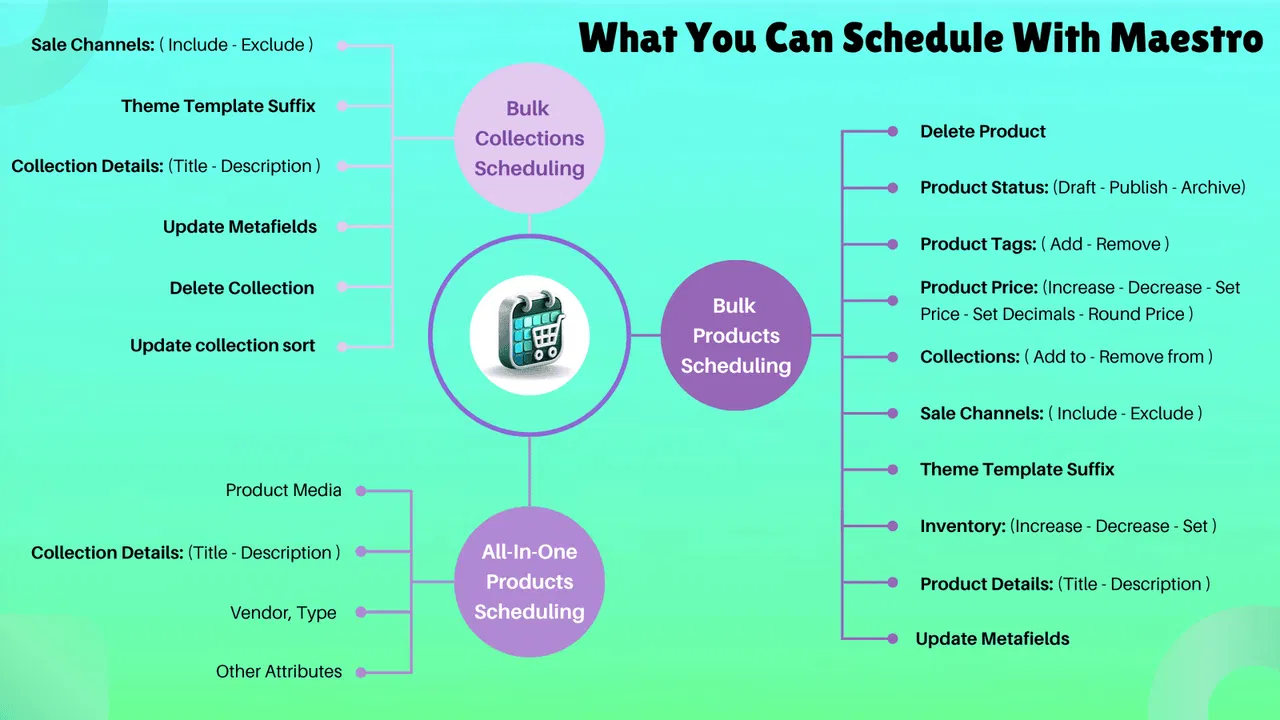
With Maestro, you can schedule the exact second a product moves from draft to active. But it goes deeper than just a simple status change. You can coordinate the launch with specific sales channels. If you want a product to hit your Online Store at midnight but wait until 8 AM for your Facebook Shop, you can do that. This level of control is vital for merchants who treat their shopify store setup as a sophisticated marketing machine rather than a simple digital shelf.
Feature 2: Automated Tag Management for Seasonal Sales
Tags are the invisible architecture of a Shopify store. They power your filters, your automated collections, and often your third-party app integrations. During a seasonal sale, tags become a nightmare to manage. You need to add "Black Friday" tags to 200 items on Monday and remove them the following Tuesday.
If you are doing this manually, you are likely using the bulk editor and hoping your internet connection does not drop mid-save. Maestro allows you to schedule tag additions and removals with surgical precision.
How to Automate Your Seasonal Tags:
- Identify the products for your upcoming promotion.
- Navigate to the Maestro app interface and select "Schedule Tag Change."
- Choose your start date and time to add the promotional tag.
- Set an expiration date and time to automatically remove the tag.
- Save the schedule and move on to more important growth strategies.
This automation ensures that your storefront stays clean. There is nothing more unprofessional than a "Summer Clearance" tag appearing on a winter coat in December because someone forgot to run a manual update.
Feature 3: Scheduling Price Changes and Rounding Rules
Pricing is a sensitive lever in ecommerce. A small change can have a massive impact on your conversion rate optimization. However, changing prices across a large catalog is a high-risk activity. One misplaced decimal point can lead to a pricing glitch that costs thousands of dollars.
Maestro allows you to schedule price increases, decreases, or set specific fixed amounts. More importantly, it handles the "rounding rules" that keep your site looking professional. If you want all your sale prices to end in .99 or .95, you do not have to calculate that yourself. The app applies the logic automatically.
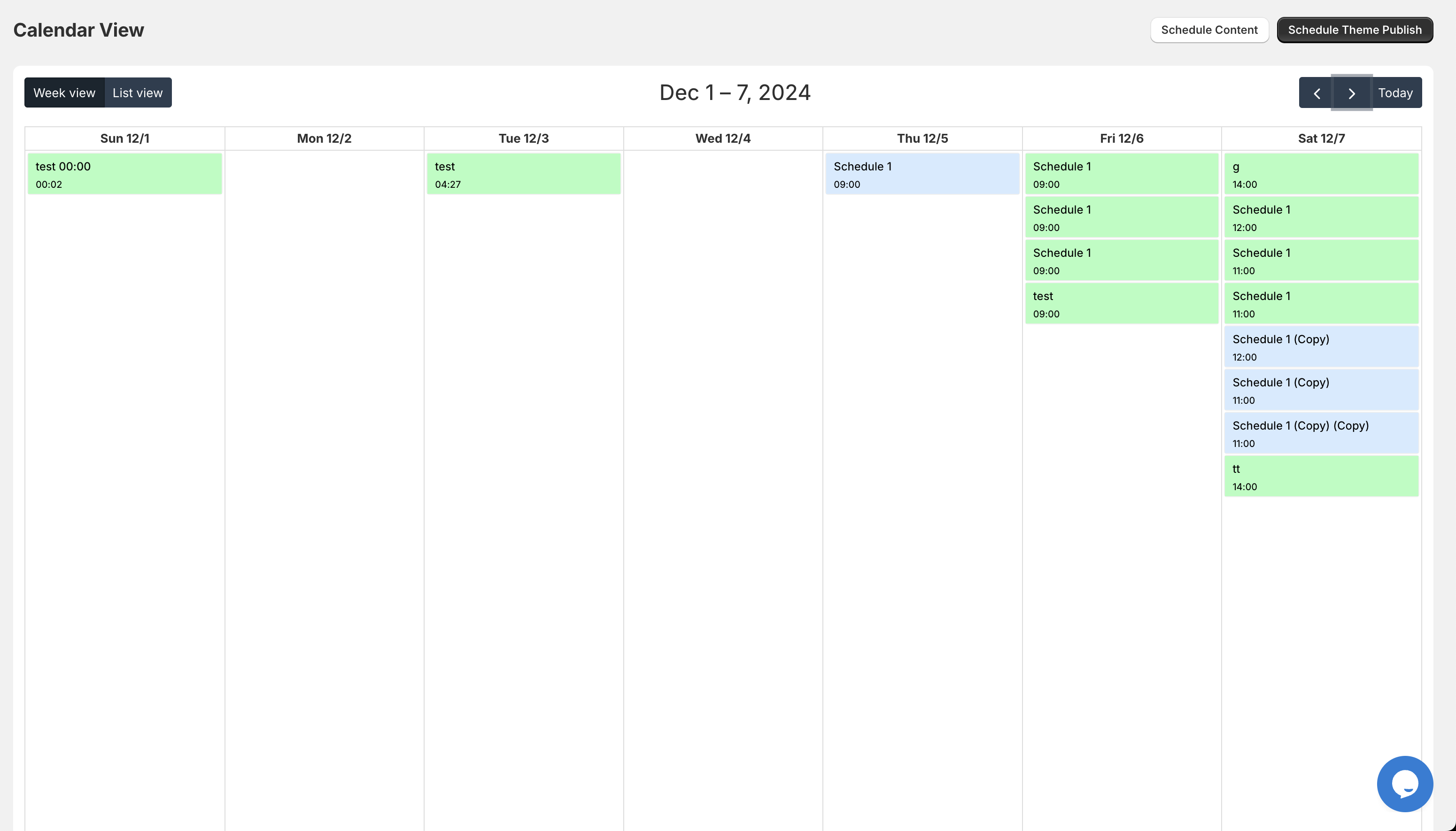
This is particularly useful for merchants who participate in growth strategies involving flash sales. You can schedule a 20 percent discount to trigger at noon and revert to the original price at 2 PM. You do not even need to be at your computer. The app acts as your dedicated ecommerce maintenance services team, working in the background.
Feature 4: Inventory Automation for Restocks
Inventory management is often the bottleneck of a growing store. When a popular item comes back in stock, you want it to be front and center. But you also do not want to publish a product that still has zero inventory because of a shipping delay.
Maestro allows for inventory-based scheduling logic. You can set rules that automatically publish or archive products based on their stock levels. If a product hits zero, it can be archived or moved to a "Sold Out" collection automatically. When the restock arrives, the app can move it back to the "New Arrivals" section. This keeps your store looking fresh and prevents the frustration of customers clicking on products they cannot buy.
Feature 5: Managing Collection Visibility and Sorting
Your homepage is your most valuable real estate. Usually, the top collections are the ones that drive the most revenue. But what happens when your "Best Sellers" change? Or when a holiday collection is no longer relevant?
Maestro offers a robust collection scheduler. You can automate which collections are visible on which channels and even schedule changes to the collection's "Sort Order." If you want your highest-margin items to appear at the top of the collection during the weekend and your highest-volume items to appear during the week, you can automate that workflow.

The Hands-Off Store: Reducing Human Error
The true value of Product Scheduler by Maestro is the peace of mind it provides. As a business owner, you should be focused on high-level decisions, not the minutiae of shopify store setup updates. When you automate these tasks, you eliminate the "human element" that leads to mistakes.
We often talk to clients about shopify speed optimization, but operational speed is just as important. How fast can you react to a market trend? How quickly can you launch a new product line? If your process is manual, the answer is "not very fast." If your process is automated via Maestro, the answer is "instantaneously."

A Scalable Solution for Growing Brands
Whether you are a small boutique or a high-volume merchant, the need for automation is the same. Maestro is designed to scale with you. The app allows for batch scheduling of up to 50 products at a time, and the higher-tier plans offer unlimited scheduling with no product limits. This makes it an essential tool for anyone serious about professional ecommerce maintenance services.
The interface is built to live directly within your Shopify admin, so there is no steep learning curve. You do not need to be a developer to use it. You just need to know what you want to happen and when you want it to happen.
Conclusion: Taking the Proactive Step
Maintaining a Shopify store should not feel like a second full-time job. By implementing tools like Product Scheduler by Maestro, you are taking a proactive step toward a more efficient, profitable business. You are moving away from the "Midnight Click-A-Thon" and toward a system that works for you while you sleep.
If you are looking to truly power-up your store, automation is the only path forward. It enhances your professional image, optimizes your conversion rates, and, most importantly, gives you your time back.
Ready to transform your Shopify operations? You can explore our full range of Shopify integrations or book a meeting with our team to discuss how we can help you build a hands-off ecommerce empire. Don't let manual tasks hold your growth hostage. The future of your store setup is automated.