
As a Shopify expert, I often work with high-growth brands that find themselves stuck in the "midnight launch" trap. You know the drill: your marketing team has planned a massive Black Friday promotion, and someone has to stay awake until 12:00 AM to manually click the publish button on a new theme. This manual process is not just exhausting. It is a significant risk to your business operations.
Modern e-commerce merchants are seeking ways to eliminate these manual hurdles. Whether you are managing custom Shopify themes or running a high-volume store on Shopify Plus, the ability to automate your storefront changes is no longer a luxury. It is a necessity for maintaining a competitive edge. This guide will walk you through the essential strategies of theme scheduling and how tools like the Maestro Theme Scheduler can transform your campaign execution.
The Problem with Manual Theme Management
Managing a store manually during peak periods creates several points of failure that can hurt your bottom line.
- Human Error: In the rush of a late-night launch, it is easy to publish the wrong theme version or forget to update a critical section.
- Time Zone Discrepancies: If you sell globally, a midnight launch in London is a mid-afternoon task in San Francisco. Managing these shifts manually is a logistical nightmare.
- Operational Burnout: Your team should focus on customer support and performance monitoring during a sale, not on the technical minutiae of theme publishing.
- Maintenance Costs: Frequent manual updates increase the need for constant ecommerce maintenance services to fix small bugs introduced during hurried deployments.
By transitioning to an automated system, you move from a reactive state to a proactive one. You can set up your entire holiday calendar weeks in advance, ensuring that every transition is seamless and error-free.
Why Theme Scheduling is Vital for Shopify Plus Merchants
As your store scales, the complexity of your Shopify Plus development needs increases. High-volume merchants often run multiple campaigns simultaneously, including VIP early access sales, general public launches, and post-sale clearance events.
Theme scheduling allows you to align your website’s visual identity with these specific marketing milestones. Instead of a single "static" site, your store becomes a dynamic environment that evolves based on the date and time. This ensures that your brand remains fresh and relevant to the customer's current journey.
Core Use Cases for Automation
To maximize the ROI of your custom Shopify themes, you should consider these primary use cases for automated scheduling.
1. Black Friday and Cyber Monday (BFCM)
BFCM is the ultimate test for any e-commerce platform. With automated scheduling, you can prepare your BFCM theme days in advance. You can schedule the "Sale Live" theme to publish exactly at midnight and, more importantly, schedule the "Sale Ended" theme to revert automatically. This prevents customers from seeing expired discounts, which can lead to support headaches and lost trust.
2. Flash Sales and Limited Drops
Flash sales rely on a sense of urgency. If your theme does not update the moment the sale starts, you lose the impact of that initial traffic surge. Automating this process ensures that the hero banners, product grids, and promotional sections appear exactly when your email and SMS campaigns hit the customers' phones.
3. Seasonal Branding Transitions
Changing your store's look for Christmas, Valentine's Day, or Summer shouldn't be a chore. You can schedule these seasonal refreshes to align with the first day of the month or a specific holiday. This keeps your site looking updated without requiring a developer's intervention every single time.
4. Regional Market Optimizations
For stores utilizing Shopify Markets, theme scheduling can help you coordinate launches across different time zones. This ensures that your promotional content is always relevant to the local time of the shopper, which is a key component of sophisticated Shopify Plus development.

Introducing Maestro Theme Scheduler: Your "Set it and Forget it" Solution
To solve the challenges of manual updates, we developed the Maestro Theme Scheduler. This app is designed specifically for merchants who need a reliable, professional-grade tool to handle theme transitions. It moves beyond simple publishing by offering granular control over your storefront elements.
Key Features that Power Your Growth
- Automated Theme Publishing: Schedule any theme in your library to go live at a precise date and time.
- Section and Block Visibility: Sometimes you don't need a whole new theme. You just need to hide or show specific sections (like a countdown timer) or blocks (like a promotional banner). Maestro allows you to automate this at the section level.
- Recurring Schedules: If you run a "Weekend Special" or a "Flash Sale Friday" every week, you can set a recurring schedule that handles the publishing and reverting automatically.
- Multi-Schedule Support: Manage multiple upcoming events from a single dashboard, providing a clear timeline of your storefront’s future.
For more details on how these features can be tailored to your specific needs, you can explore our Shopify design services or view the Maestro Theme Scheduler product page.
How to Set Up an Automated Theme Schedule
Follow these simple steps to automate your next big sale using a professional scheduling tool.
Step 1: Prepare Your Theme
Before scheduling, ensure that your destination theme is fully customized and tested. This includes checking all links, images, and mobile responsiveness. If you are using custom Shopify themes, verify that all Liquid changes are saved in the specific theme version you intend to publish.
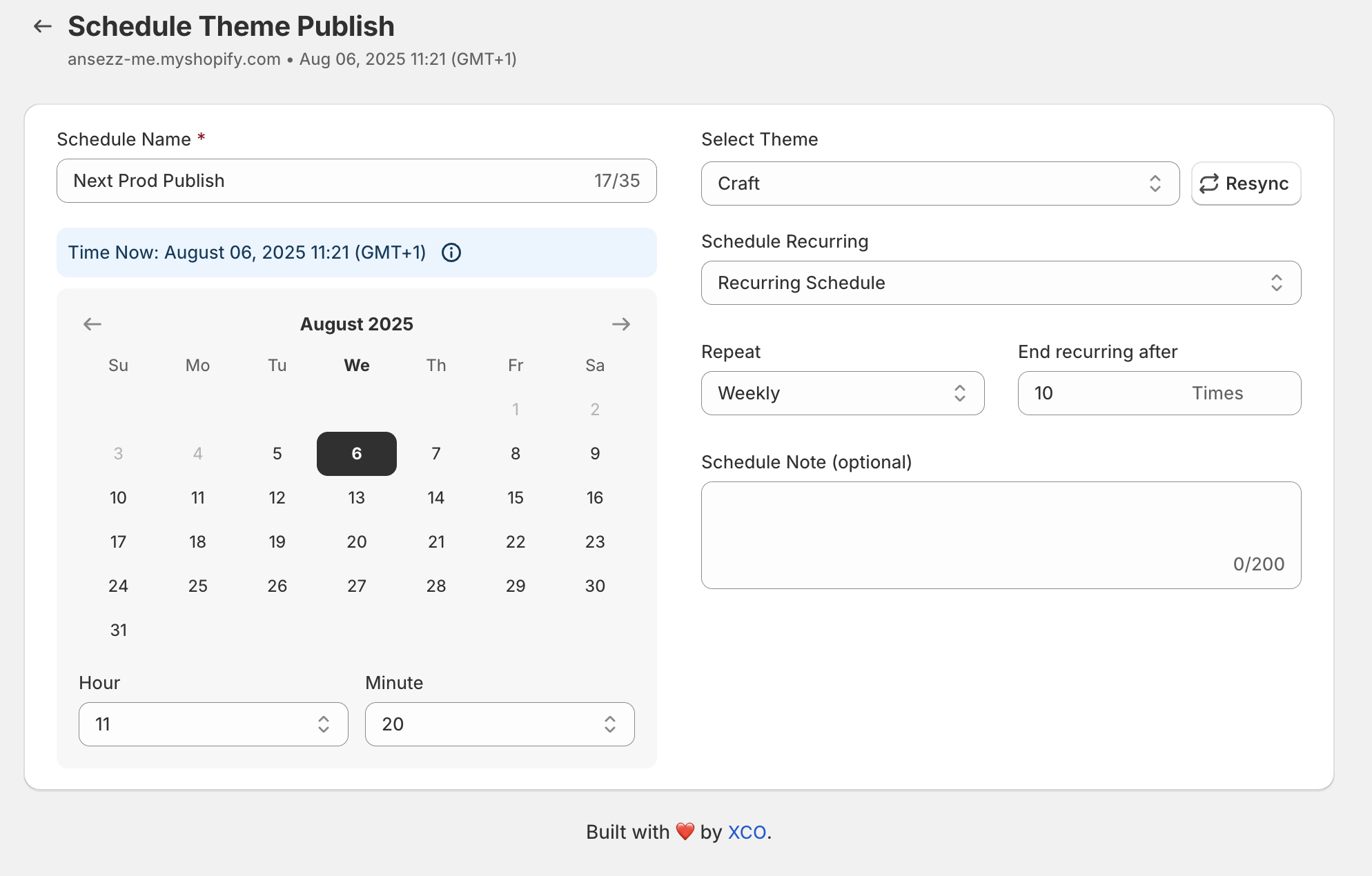
Step 2: Navigate to the Scheduler Interface
Open your theme scheduling app from the Shopify admin. In Maestro, you will see a clear dashboard that shows your current live theme and any upcoming tasks.
Step 3: Create a New Schedule
Click on the "Create Schedule" button. You will be prompted to give your schedule a name, such as "BFCM Launch 2026."
Step 4: Select the Theme and Timing
Choose the theme you want to publish from the dropdown menu. Then, select the exact date and time. Ensure your timezone settings match your primary market to avoid any launch delays.
Step 5: Configure Reversion (The "Forget it" Part)
The most critical step is scheduling when the theme should be replaced. Select your "Standard" theme and set it to publish when the sale ends. This completes the automation cycle.
Step 6: Save and Verify
Review your timeline to ensure there are no overlapping schedules. Once confirmed, the app will handle the rest, and you can focus on other aspects of your business.

Enhancing User Experience through Section Automation
Beyond full theme swaps, the future of ecommerce maintenance services lies in granular automation. Modern Shopify themes are built with sections and blocks. Sometimes, changing the entire theme is overkill when you only need to change a promotional banner.
By automating section visibility, you can keep your site consistent while updating only the necessary parts. This is particularly useful for:
- Announcement Bars: Schedule "Free Shipping" bars to appear during specific windows.
- Countdown Timers: Automate the appearance of a timer 24 hours before a sale ends.
- Collection Headers: Change the hero image of a collection page to match a temporary promotion.
This level of detail ensures that your site always feels curated and managed, boosting customer confidence and conversion rates.
How Automation Reduces Ecommerce Maintenance Services Costs
Every time a developer has to log in at an odd hour to perform a manual task, it adds to your operational overhead. By implementing a "set it and forget it" workflow, you significantly reduce the hours spent on routine tasks. This allows your team to redirect their budget toward more impactful growth strategies and high-level Shopify Plus development.
Automation also creates a "paper trail." If a mistake happens, you can look at the publish timeline to see exactly what theme was published and when. This transparency is vital for large teams where multiple people might have access to the Shopify admin.

Best Practices for a Seamless Automated Sale
To ensure your automated sales go off without a hitch, keep these best practices in mind:
- Test on a Duplicate Theme: Always make your edits on a copy of your theme. Never edit the "Scheduled" theme while it is in the queue unless necessary.
- Sync with Marketing: Ensure your email marketing (like Klaviyo) and social media posts are synced with the exact minute your theme is scheduled to change.
- Monitor Performance: Even with automation, it is a proactive step to check your site five minutes after the scheduled time to ensure everything looks perfect.
- Clear Your Cache: If you use third-party speed optimization tools, ensure they are configured to recognize theme changes so that customers see the new version immediately. You can read more about this on our Shopify speed optimization page.
Conclusion: Take Control of Your Storefront Timing
Moving away from manual theme publishing is a vital step for any merchant looking to scale. It reduces stress, eliminates human error, and ensures that your store always presents the best possible version of itself to your customers.
Whether you are preparing for a massive product launch or just want to automate your weekly updates, theme scheduling provides the technical foundation you need to succeed. By utilizing professional tools and following a structured workflow, you can turn your storefront into a high-performance, automated sales engine.
If you are ready to stop staying up until midnight and start growing your business with precision, it is time to look into automated scheduling. For expert assistance with your store setup or to learn more about our tools, feel free to book a meeting with our team or contact us directly. Automation is not just about saving time. It is about creating the freedom to focus on what truly matters: your brand and your customers.