
As a Shopify expert, I often see high-growth brands hit a common plateau: they have conquered their domestic market, but the technical complexity of selling internationally feels like an insurmountable wall. Traditionally, going global meant managing multiple stores, fragmented inventory, and inconsistent customer experiences across different regions.
Shopify Markets has fundamentally changed this equation. It is no longer just a feature; it is a comprehensive command center that allows you to manage your entire global operation from a single Shopify admin. Whether you are a boutique brand testing the waters in Canada or a Shopify Plus powerhouse scaling across Europe and Asia, understanding how to leverage Markets is vital to your success.
Why Merchants are Seeking a Unified Global Strategy
Expansion is more than just shipping a box to another country. It involves building trust and providing a local feel to every interaction. Merchants seek Shopify Markets because it solves the most painful friction points in cross-border commerce:
- Currency Conversion: Automatic conversion that allows customers to shop and checkout in their native currency.
- Language Translation: Localizing your store content to speak directly to your audience.
- Regional Pricing: Adjusting price points to account for local competition, shipping costs, and taxes.
- Localized Domains: Improving SEO by using country-specific subfolders or top-level domains.
- Payment Methods: Offering regional favorites like iDEAL in the Netherlands or Bancontact in Belgium.
By consolidating these functions, you reduce the operational overhead that comes with managing separate expansion stores, allowing your team to focus on growth rather than data synchronization.
The Core Components of Shopify Markets
Shopify Markets operates on the philosophy of "centralized management, localized execution." When we help clients at XCO Agency implement this, we focus on three primary pillars of customization.
1. Market-Specific Catalogs and Pricing
One size does not fit all when it comes to global pricing. With Shopify Markets, you can set specific price adjustments for different regions. You might choose to increase prices by 10% in Australia to cover higher logistics costs while keeping them stable in the UK. Furthermore, you can control product visibility. If a specific product cannot be sold in Germany due to regulatory restrictions, you can hide it specifically for that market without affecting your global catalog.
2. International Domains and SEO
Search engines prioritize results that are relevant to a user's location. Shopify Markets allows you to set up subfolders (e.g., store.com/en-gb) or separate domains (e.g., store.co.uk) for each market. This structure tells search engines exactly which version of the site to show to which user. When combined with automatic Hreflang tags provided by Shopify, your international SEO foundation becomes rock solid.
3. Localization and Translation
Trust is built through language. Shopify Markets integrates with translation apps to ensure that every part of the journey, from product descriptions to checkout, is in the customer’s native tongue. This also extends to duties and taxes. By showing "Duties and Taxes Paid" at checkout, you eliminate the "sticker shock" customers often face when their package is held at customs.

Automating Your Global Launches with Maestro
Managing a global store means dealing with different time zones and seasonal cycles. For example, a summer collection launch in the Northern Hemisphere might coincide with a winter clearance in the Southern Hemisphere. This is where manual updates become a liability.
At XCO Agency, we recommend using the Maestro Theme Scheduler and Product Maestro Scheduler to handle these complex workflows.
- Timed Content Visibility: Use Maestro to schedule specific theme sections or banners to appear only in certain markets at specific times.
- Automated Product Updates: Product Maestro Scheduler allows you to automate price changes or collection inclusions across your different markets.
- Promotional Consistency: Ensure that your "Black Friday" banners go live at midnight in every specific time zone without your team staying up all night.
Using automation tools ensures that your brand remains professional and reactive to local trends without increasing your headcount. You can learn more about how we optimize these workflows on our Maestro Theme Scheduler page.

Managing the International Post-Purchase Experience
A successful global sale does not end at checkout. High-growth merchants often struggle with the logistics of international returns and claims. If a customer in France receives a damaged item, the process of reporting that issue should be as seamless as the purchase itself.
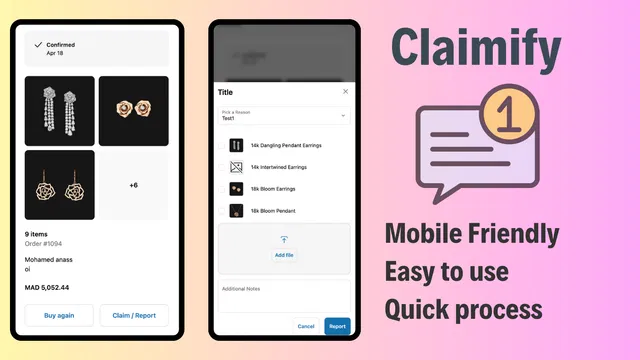
This is why we developed Claimify. It provides a mobile-friendly interface for customers to submit claims and report issues directly.
- Reduce Support Tickets: By giving customers a self-service portal for claims, you significantly reduce the burden on your customer service team.
- Build Global Trust: A transparent and easy claim process reassures international buyers who might be hesitant to order from a brand located overseas.
- Unified Data: Keep all your claims data in one place, allowing you to identify if specific international shipping partners are causing higher damage rates.
Ensuring a smooth after-sales process is a proactive step in maintaining a high Customer Lifetime Value (CLV) in new markets.
Step-by-Step: How to Set Up Your First Market
Launching a new market is a straightforward process when you follow a structured roadmap. Here are the simple steps to get started:
- Navigate to Markets: In your Shopify admin, go to Settings and select Markets.
- Add a Market: Click "Add market" and select the countries or regions you want to group together.
- Configure Domains: Choose whether you will use subfolders, domains, or a single primary domain. For SEO benefits, we typically recommend subfolders.
- Set Currencies and Languages: Enable the local currencies and add the languages you wish to support.
- Adjust Pricing: Use the "Price adjustments" feature to set percentage-based increases or decreases for the region.
- Review Duties and Taxes: Ensure you have your tax settings configured to collect duties at checkout if you are using Shopify Markets Managed Markets or a compatible carrier.
- Activate: Once you have previewed the experience, click "Activate market" to go live.
Advanced Strategies: B2B and Hydrogen
As your global footprint grows, you may find that your needs evolve beyond standard retail. Shopify Markets is designed to grow with you.
Shopify B2B Wholesale
For Plus merchants, Shopify Markets now integrates with the Shopify B2B Wholesale Channel. This allows you to manage your international wholesale relationships with the same ease as your retail ones. You can create specific B2B markets with custom price lists and payment terms tailored to international distributors. You can explore our Shopify B2B services to see how we help brands scale this segment.
Headless Commerce with Hydrogen
If your brand requires a highly bespoke frontend experience for different regions, Shopify's Hydrogen framework provides the tools to build a headless store while still utilizing the powerful backend of Shopify Markets. This is ideal for brands that need extreme performance and unique localized layouts that go beyond standard theme capabilities.

Optimizing for Speed and Conversion
A global store is only as good as its performance. If your site takes too long to load in Tokyo, your conversion rate will suffer regardless of how well you have localized the currency.
- Optimize Images: Use modern formats like WebP and ensure images are compressed.
- Leverage CDNs: Shopify’s built-in Content Delivery Network ensures your assets are served from servers close to your customer.
- Monitor Core Web Vitals: Regularly check your performance metrics for each specific region.
If you find your global store is lagging, our Shopify speed optimization team can help identify bottlenecks that might be unique to your international setup.
Conclusion: The Path to Global Dominance
Shopify Markets has democratized international commerce, giving high-growth merchants the tools that were once reserved for enterprise-level corporations. By consolidating your operations, localizing the customer journey, and automating your workflows with tools like Maestro and Claimify, you remove the barriers to entry for new regions.
Success in global e-commerce is not just about being present; it is about being relevant. Taking the time to configure regional pricing, native languages, and localized domains is a vital step in building a sustainable international brand.
If you are ready to scale your store beyond borders but need a strategic partner to handle the technical heavy lifting, XCO Agency is here to help. From migration to Shopify to advanced growth strategies, we specialize in helping merchants dominate the global stage.
Are you prepared to take your brand global? Book a meeting with us today to discuss your international roadmap.