
As a Shopify expert, I often find myself listening to store owners describe their daily routines as a marathon of clicking, dragging, and refreshing. They want to be visionaries and brand builders, but they end up as high-paid data entry clerks. When you first approach a Shopify store setup, you usually think about the theme, the colors, and the checkout process. However, the real engine of your business is your catalog. If that engine requires manual cranking every single morning, you are not running a business: you are running a hobby that happens to sell things.
The dream has always been the set it and forget it model. We want to upload products, set the rules, and let the software handle the heavy lifting while we focus on growth strategies. For a long time, this was a luxury reserved for Enterprise-level Shopify Plus merchants with massive custom development budgets. But the landscape has shifted. With the right tools, specifically the Product Scheduler by Maestro app, that automated paradise is now accessible to every merchant who values their sanity.
The Problem With Manual Catalog Management
Before we look at the solution, we have to acknowledge the pain. Manual catalog management is the silent killer of conversion rate optimization. When your team is manually updating prices, toggling product visibility, or adding tags for a flash sale, mistakes are inevitable.
Human error is a statistical certainty. A typo in a price can cost thousands in lost margins or lead to a PR nightmare. A product that stays in draft mode three hours past the launch time is a missed opportunity for sales. If you are paying for ecommerce maintenance services just to have someone click publish at midnight, you are burning money that could be spent on customer acquisition.
Here is why manual store management fails:
- It is not scalable. Managing 10 products is easy, but managing 1,000 is a full-time job.
- It creates bottlenecks. If the person with the login is asleep or on vacation, the store stands still.
- It ignores peak traffic. Most merchants launch products when they are awake, not necessarily when their customers are online and ready to buy.
Enter the Product Scheduler by Maestro
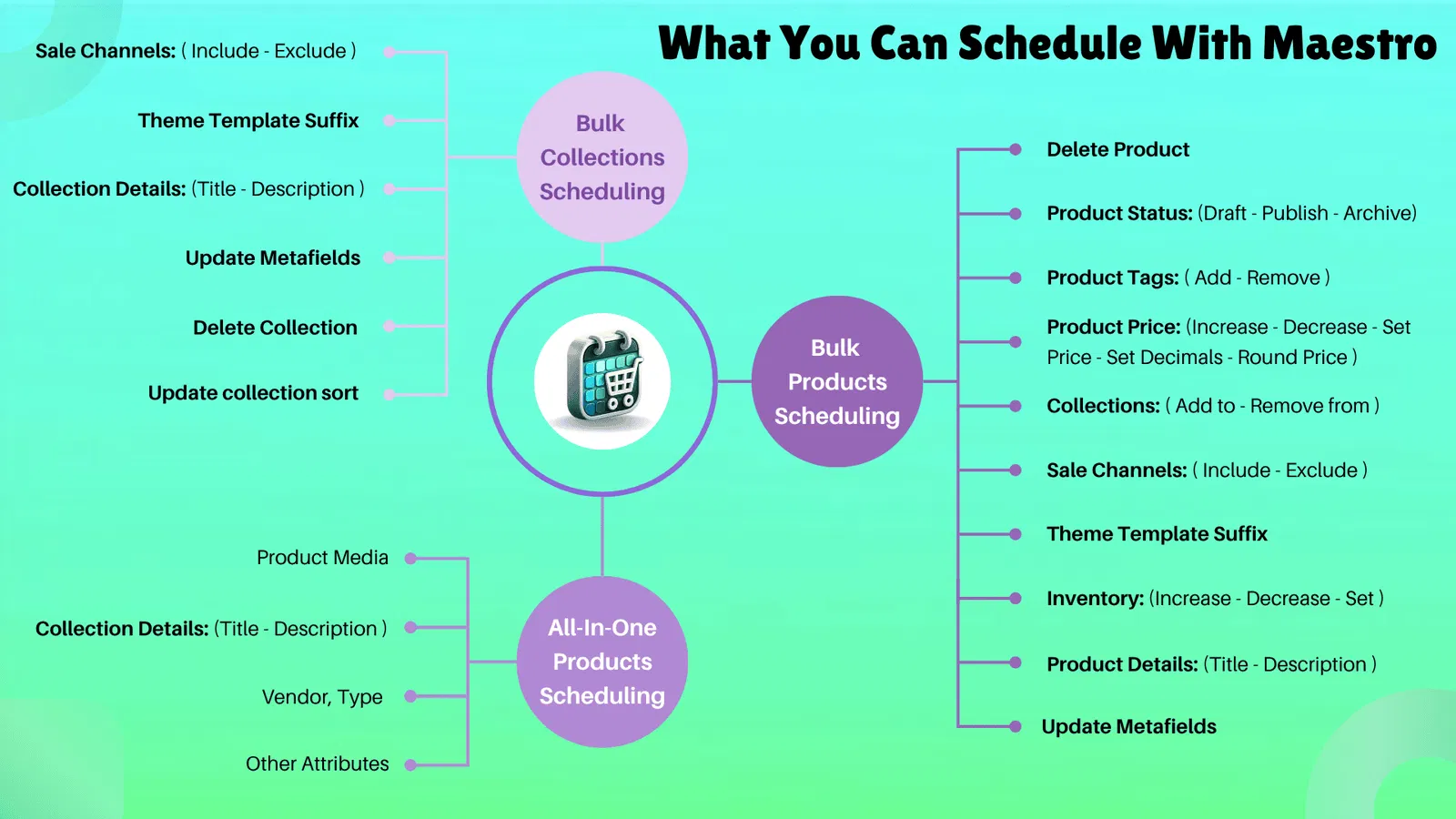
The Product Scheduler by Maestro was built to bridge the gap between "I hope this works" and "I know this is handled." It is an automation powerhouse designed to handle the repetitive, detail-oriented tasks that drain your energy. By automating your catalog, you move from a reactive state to a proactive state.
1. The Draft Helper: Your 2 AM Launch Partner
As a Shopify expert, I often see merchants sacrificing sleep to hit a specific launch window. Whether it is a New Arrivals drop or a limited edition collaboration, timing is everything for conversion rate optimization.
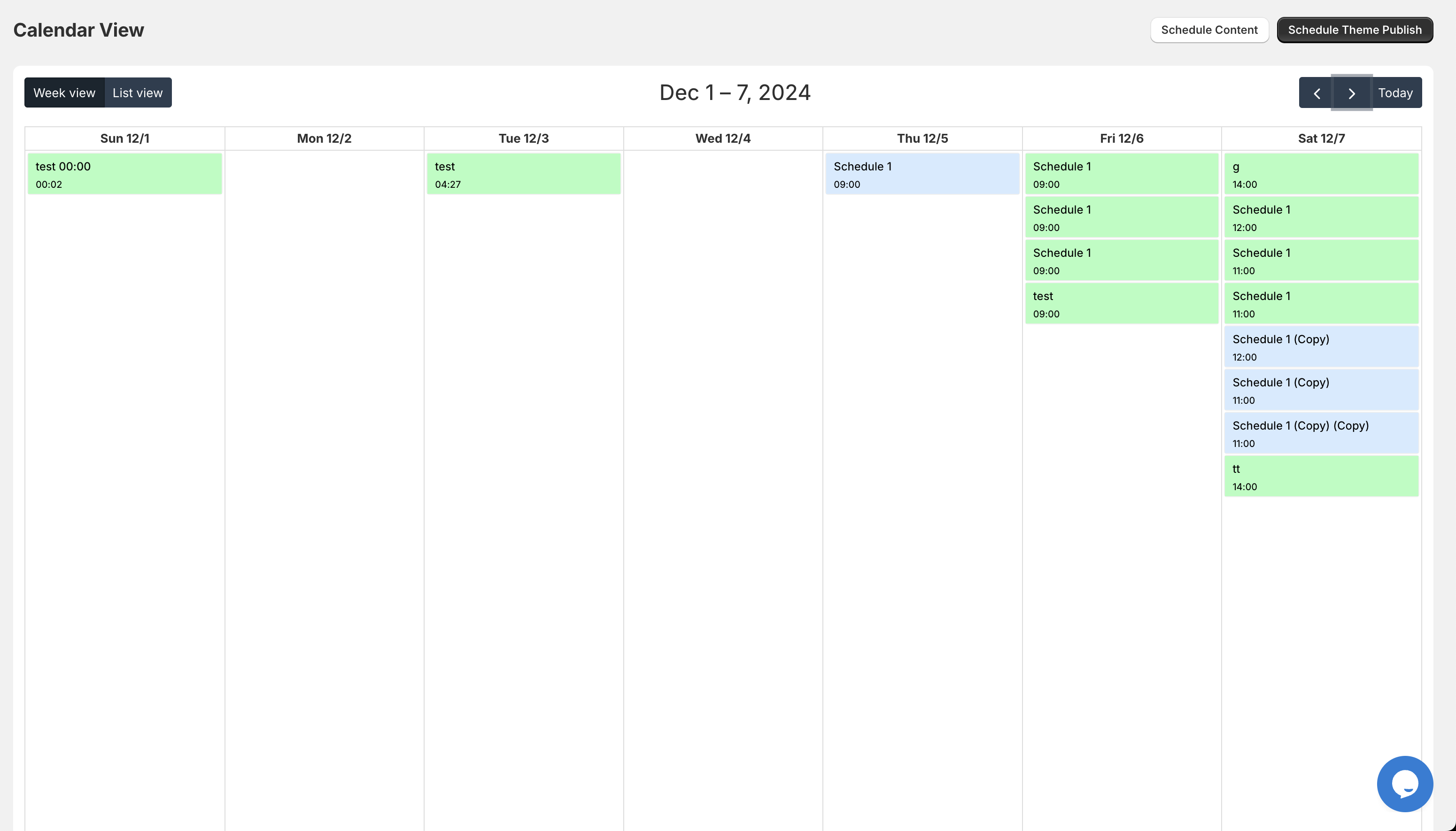
The Draft Helper feature allows you to prepare your product listings in advance and schedule them to go live at the exact second they are needed.
- Prepare your content, images, and SEO metadata days or weeks in advance.
- Set a specific date and time for the product to transition from draft to active status.
- Coordinate launches across different time zones to ensure global customers see the updates simultaneously.
- Eliminate the need for manual oversight during the actual launch event.
This does more than just save time: it ensures that your marketing emails and social media posts align perfectly with what is actually available on the site.
2. Automated Tag Management for Seasonal Sales
Tags are the invisible threads that hold a Shopify store together. They control your filters, your smart collections, and often your site search. During a seasonal sale, managing these tags manually is like trying to organize a library while people are still checking out books.
Maestro allows you to schedule tag additions and removals. Here is how this changes your Shopify store setup:
- Navigate to the tag management section in the app.
- Select the products that need to be part of your upcoming Summer Sale.
- Schedule the tag Summer-Sale to be added on Friday at 8:00 AM.
- Schedule the same tag to be removed on Monday at midnight.
Because your collections are likely built on these tags, your entire store layout updates itself. Your sale section populates and depopulates automatically, ensuring customers never click on a dead link or an expired promotion.
3. Scheduling Price Changes and Rounding Rules
Pricing is psychological. A product priced at $19.99 feels significantly cheaper than one at $20.00. However, when you are running a 20 percent off sale across your entire catalog, the math often leaves you with messy decimals like $15.83. This looks unprofessional and can hurt your conversion rate optimization.
Maestro handles the math and the timing. You can schedule price changes for specific dates and apply rounding rules simultaneously.
- Set a start and end time for your promotional pricing.
- Automatically round all sale prices to the nearest .99 or .95 to maintain brand consistency.
- Ensure that prices revert to their original state the moment the sale ends.
- Avoid the dreaded spreadsheet import errors that often plague manual price updates.

4. Inventory Automation for Restocks
There is nothing more frustrating for a customer than seeing a "Sold Out" badge on a product they desperately want. Conversely, there is nothing more frustrating for a merchant than having stock in the warehouse that isn't showing up as available on the site.
Automation allows you to sync your inventory status with your store visibility.
- Set rules to automatically hide products when inventory hits zero.
- Schedule a "Back in Stock" status update for when a new shipment is processed.
- Use inventory levels to trigger specific tags, such as "Low Stock" or "Only 5 Left," which creates urgency and boosts sales.
This level of ecommerce maintenance services ensures your store always looks fresh and reliable without you needing to check stock levels every hour.
5. Managing Collection Visibility and Sorting
Your homepage and collection pages are your digital storefront windows. In a physical store, you wouldn't leave a Christmas display up in July. In a digital store, keeping your collections relevant requires constant curation.
With Maestro, you can schedule the visibility of entire collections.
- Create your holiday collections months in advance.
- Set them to appear on the navigation menu only during the relevant dates.
- Automate the sorting order within those collections.
- Move high-margin or high-inventory items to the top of the grid automatically during peak traffic periods.
The ROI of a Hands-Off Store
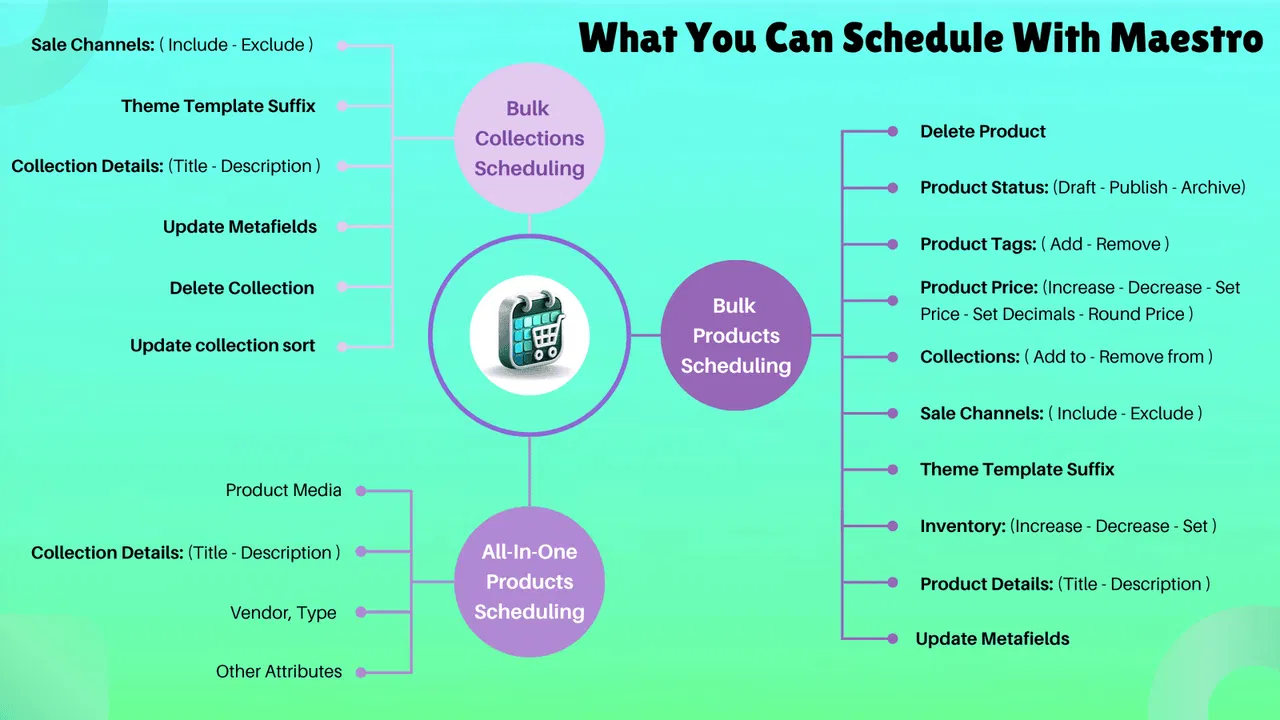
When you automate these five areas, you aren't just saving a few minutes here and there. You are fundamentally changing the economics of your business. As a Shopify expert, I have seen stores reduce their operational overhead by 30 percent just by implementing catalog automation.
The benefits are clear:
- Reduced Human Error: No more "oops" moments that cost you money.
- Consistency: Your store maintains a professional, polished look 24/7.
- Strategic Freedom: You spend your time on growth strategies and brand building instead of administrative drudgery.
- Improved Customer Experience: Customers always see accurate prices, available stock, and relevant collections.
How to Get Started with Automation
If you are ready to stop being a slave to your Shopify admin panel, the path forward is straightforward. You do not need to automate everything at once. Start with your next product launch or your next scheduled sale.
Here are simple steps to begin:
- Install the Product Scheduler by Maestro app from the Shopify App Store.
- Identify one repetitive task you do every week, such as updating a "New Arrivals" tag.
- Create your first schedule within the app to handle that task.
- Monitor the results and gradually expand your automation rules to cover pricing and inventory.
A Proactive Step Toward Scalability
The "Set It and Forget It" dream is not about being lazy: it is about being efficient. It is about building a system that is more capable than any single human could ever be. By automating your catalog, you ensure that your Shopify store setup is robust enough to handle the pressures of rapid growth and high-volume sales events.
Whether you are looking to improve your conversion rate optimization or you are tired of paying for manual ecommerce maintenance services, automation is the answer. It is a vital step for any merchant who wants to move from surviving the daily grind to thriving in the competitive world of digital commerce.
If you are unsure where to start or need a more comprehensive audit of your store’s efficiency, you can always book a meeting with our team at XCO Agency. We specialize in turning manual headaches into automated high-performance machines. Your catalog should work for you, not the other way around. Stop clicking and start scaling.