
As a Shopify expert, I often witness the same recurring nightmare: a merchant sitting at their laptop at midnight, frantically adding "New Arrival" tags to hundreds of products. They are trying to coordinate a launch, but the Shopify admin feels like it is working against them. This manual grind is not just exhausting; it is a massive drain on your resources that could be better spent on growth and strategy.
If you are seeking a way to reclaim your time and minimize human error, you have come to the right place. Most store owners believe that a shopify store setup requires constant, manual babysitting to stay relevant. I am here to tell you that is a myth. By leveraging the right automation tools, you can transition from a manual operator to a strategic owner.
The Product Scheduler by Maestro app is the solution many high-growth brands use to automate their catalog management. In this post, I will break down how you can use this tool to run a truly hands-off store, from automated tagging to inventory-based sorting.
Why Manual Catalog Management is Killing Your Growth
Before we dive into the "how," let us look at the "why." Managing a store manually is a recipe for disaster as you scale. Here is why merchants are looking for automated ecommerce maintenance services:
- Human error leads to missed sales: A forgotten tag means a product does not show up in the "On Sale" collection.
- Inconsistent customer experience: Prices that change at different times across the site confuse customers and hurt your conversion rate optimization.
- Wasted labor costs: Paying a team member to manually update tags for four hours a week is an expensive way to manage data.
- Lack of scalability: You might be able to manage 50 products manually, but what happens when you have 5,000?
Automating these tasks is a vital step toward professionalizing your operations.
Master the Launch with the Draft Helper
One of the most stressful parts of ecommerce is the product launch. You want everything to go live at exactly 9:00 AM, but Shopify does not naturally allow you to schedule every fine detail of a product's visibility and attributes simultaneously.
The Draft Helper feature within the Product Scheduler app is a game-changer for this specific problem. Instead of toggling statuses manually, you can prepare your products in a "Draft" state and schedule them to flip to "Active" at a precise moment.
How to Schedule a Flawless Product Launch
- Navigate to the Maestro app interface in your Shopify admin.
- Select the products you wish to launch from your draft list.
- Choose the "Status Update" action and set it to "Active."
- Set your desired date and time for the launch.
- Apply any necessary tags, such as "New Release," to coincide with the activation.
By using this method, you ensure that your store remains organized and your customers see exactly what you want them to see, right on time.
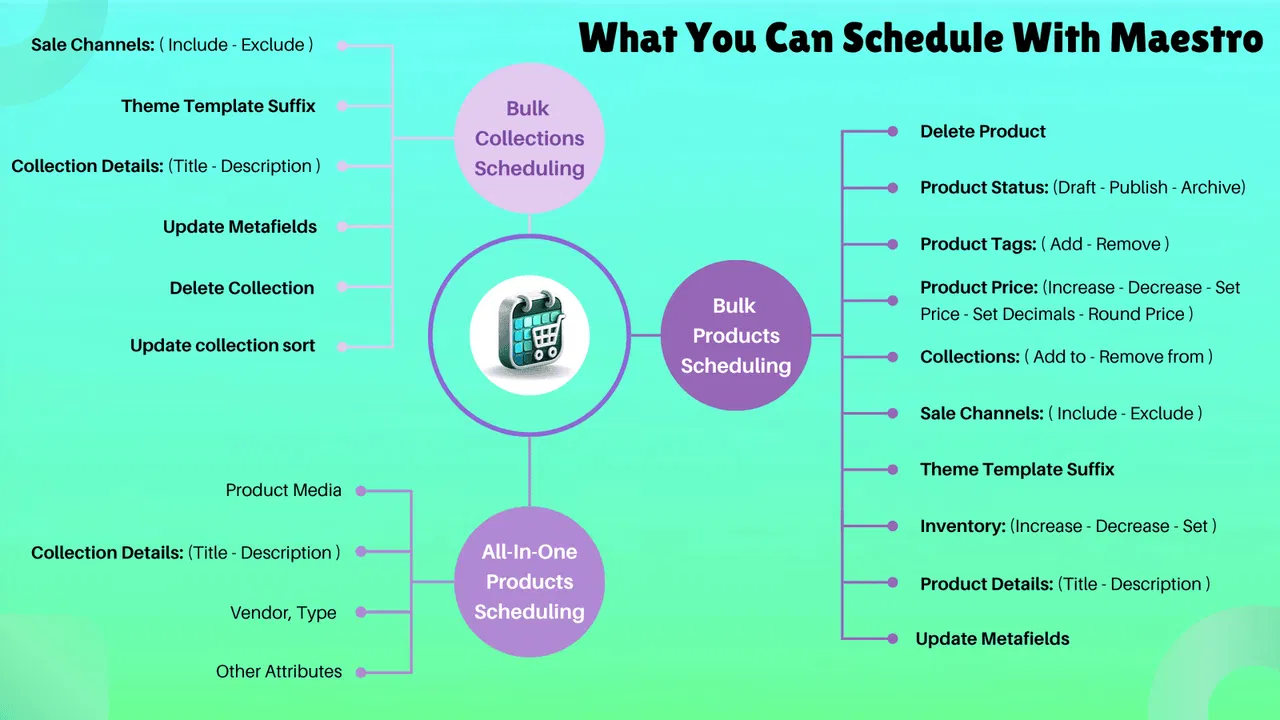
Automated Tag Management for Seasonal Sales
Tags are the invisible engine behind your Shopify store. They power your collections, your filters, and often your marketing automations. However, managing them for seasonal sales like Black Friday or Cyber Monday is usually a headache.
As a Shopify expert, I recommend using automated tag management to handle the "In" and "Out" of seasonal promotions. Instead of manually adding a "Summer Sale" tag to 400 items, you can schedule the app to add the tag on July 1st and remove it on July 31st.
Benefits of Scheduled Tagging
- Clean Collections: Ensure that out-of-season products do not clutter your active promotional collections.
- Better Filtering: Keep your sidebar filters accurate and relevant to what is actually on sale.
- Hands-Off Transitions: Wake up the morning after a sale ends knowing your store has already reverted to its standard state.
You can learn more about these specific features on the Maestro Product Scheduler page.
Scheduling Price Changes and Rounding Rules
Pricing is a psychological game. If you are running a sale, you want your prices to look professional. A price of $19.99 is often more effective than $20.03. When you run bulk price updates in Shopify, you often end up with messy decimals that hurt your brand aesthetic.
The Product Scheduler app allows you to schedule price changes while simultaneously applying rounding rules. This ensures that your prices remain consistent and attractive throughout the duration of your promotion.
Steps to Automate Your Pricing Strategy
- Select the collection or group of products you want to discount.
- Choose the "Update Price" action.
- Apply a percentage-based or fixed-amount discount.
- Enable "Rounding Rules" to ensure all prices end in .99 or .95.
- Schedule the "Compare at Price" to reflect the original cost, showing customers the value they are getting.
This level of precision is essential for conversion rate optimization. When customers see clean, consistent pricing, their trust in your brand increases.
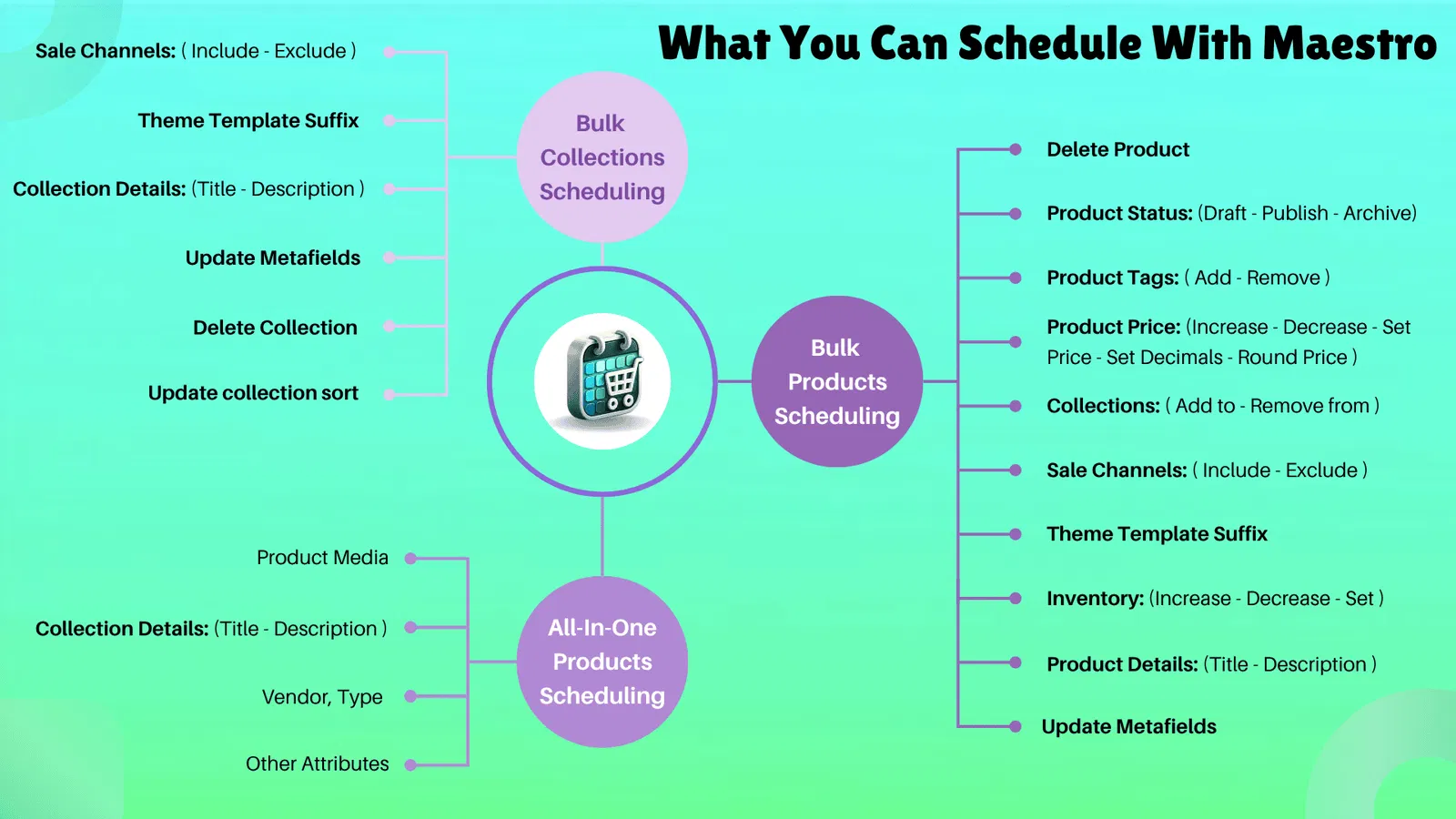
Inventory Automation and Collection Visibility
Nothing kills a customer's mood faster than clicking on a collection only to find that the first ten items are "Sold Out." This is a major friction point that negatively impacts your user experience.
While you could manually move out-of-stock items to the bottom of your collections, why would you? Product Scheduler can handle inventory-based sorting and visibility updates automatically.
Improving UX with Inventory Rules
- Hide Out of Stock: Automatically hide products when inventory hits zero.
- Automated Restock Launches: Schedule a product to reappear the moment a new shipment is logged in your warehouse.
- Smart Sorting: Use tags to push low-stock items to the bottom of the page while keeping high-margin, high-stock items at the top.
These simple steps significantly enhance your store's usability. If you want to dive deeper into UX, you might also consider a conversion rate optimization audit report to see where else your store might be losing money.

Running a Truly Hands-Off Store
The ultimate goal of using the Product Scheduler by Maestro app is to achieve a "set it and forget it" workflow. Imagine a world where you plan your entire month of promotions in a single Monday morning session. You schedule the product launches, the price drops, the tag additions, and the collection updates. For the rest of the month, your store runs itself.
This is the level of automation required for modern ecommerce maintenance services. It allows you to focus on high-level tasks like influencer outreach, content creation, and brand building, rather than data entry.
Coordinating Multi-Channel Updates
If you are running a Shopify Plus store, your complexity is likely even higher. You might have multiple markets or B2B channels that need different updates at different times. Maestro supports these complex workflows, allowing you to coordinate updates across various templates and pages from a single panel.
Implementation Checklist for Shopify Merchants
If you are ready to stop wasting time on manual tagging, here is your action plan:
- Audit your current workflow: Identify how many hours per week your team spends on manual product updates.
- Install the Product Scheduler app: Visit the Maestro Theme app site to get started.
- Set up your first automated task: Start with something simple, like scheduling a "New Arrival" tag for your next product drop.
- Monitor and refine: Use the app's timeline view to ensure your schedules are overlapping correctly.
- Scale your automation: Gradually move your pricing, inventory rules, and collection visibility into the scheduler.
Conclusion: Reclaim Your Time
As a Shopify expert, I have seen many merchants burn out because they tried to do everything themselves. Manual tagging and product management are "low-value" tasks that consume "high-value" time. By implementing the Product Scheduler by Maestro, you are not just buying an app; you are buying back your freedom.
Running a hands-off store is a proactive step toward building a business that works for you, rather than the other way around. Whether you are prepping for a major seasonal sale or just want to keep your "New Arrivals" fresh without waking up at dawn, automation is the key.
Ensure your store is optimized for the future. Start automating your catalog management today and watch your efficiency: and your conversion rate: climb. For more tips on optimizing your Shopify setup, check out our guide on adding featured collections or perfecting your domain setup.
Stop the manual grind. Your time is worth more than a tagging task. Let Maestro handle the details while you handle the vision.