
As a Shopify expert, I often encounter merchants who are tethered to their computers at midnight, waiting for the clock to strike twelve so they can manually hit "Publish" on a seasonal sale theme. This manual approach is not only exhausting but also prone to human error. In the fast paced world of online retail, timing is everything. Whether you are running a flash sale, launching a new collection, or preparing for the chaos of Black Friday, your storefront needs to reflect those changes the exact moment they become relevant.
Many store owners are seeking a way to regain their time and ensure their brand remains consistent without constant manual intervention. This is where the concept of "set it and forget it" storefront management becomes a competitive advantage. By using tools like the Maestro Theme Scheduler, you can automate the most tedious aspects of theme management, allowing you to focus on growth and strategy rather than clicking buttons in the middle of the night.
Why Storefront Automation is Vital for Growth
In the modern e-commerce landscape, merchants are often juggling multiple campaigns across different time zones. Maintaining a fresh and relevant storefront is a cornerstone of effective custom shopify themes management. However, doing this manually creates several bottlenecks that can hinder your progress.
The benefits of automating your storefront include:
- Precision Timing: Ensure your promotions go live at the exact second they are advertised, regardless of your local time zone.
- Reduced Operational Risk: Eliminate the possibility of a team member forgetting to update a banner or publish a theme during a major event.
- Improved Work-Life Balance: Stop working late nights or weekends just to manage website updates.
- Enhanced Customer Experience: Provide a seamless transition between sales periods and regular store states, keeping the user journey professional and polished.
Understanding the Maestro Theme Scheduler
At its core, the Maestro Theme Scheduler is designed to bridge the gap between your marketing calendar and your technical execution. It is an essential tool for those looking for comprehensive ecommerce maintenance services that prioritize automation. The app allows you to schedule full theme deployments, but its power goes much deeper than just switching from one theme to another.
Automated Theme Publishing
The primary function many merchants utilize is the ability to schedule a complete theme change. For example, if you have a specific design ready for a holiday season, you can prepare the theme in your Shopify admin and then use Maestro to set a specific date and time for it to become your "Live" theme.
This is particularly useful for shopify plus development projects where large scale design changes are frequent. Instead of a developer having to be on standby, the system handles the transition automatically. Once the sale period ends, Maestro can even revert your store back to your standard theme at a predetermined time.
Granular Section and Block Visibility
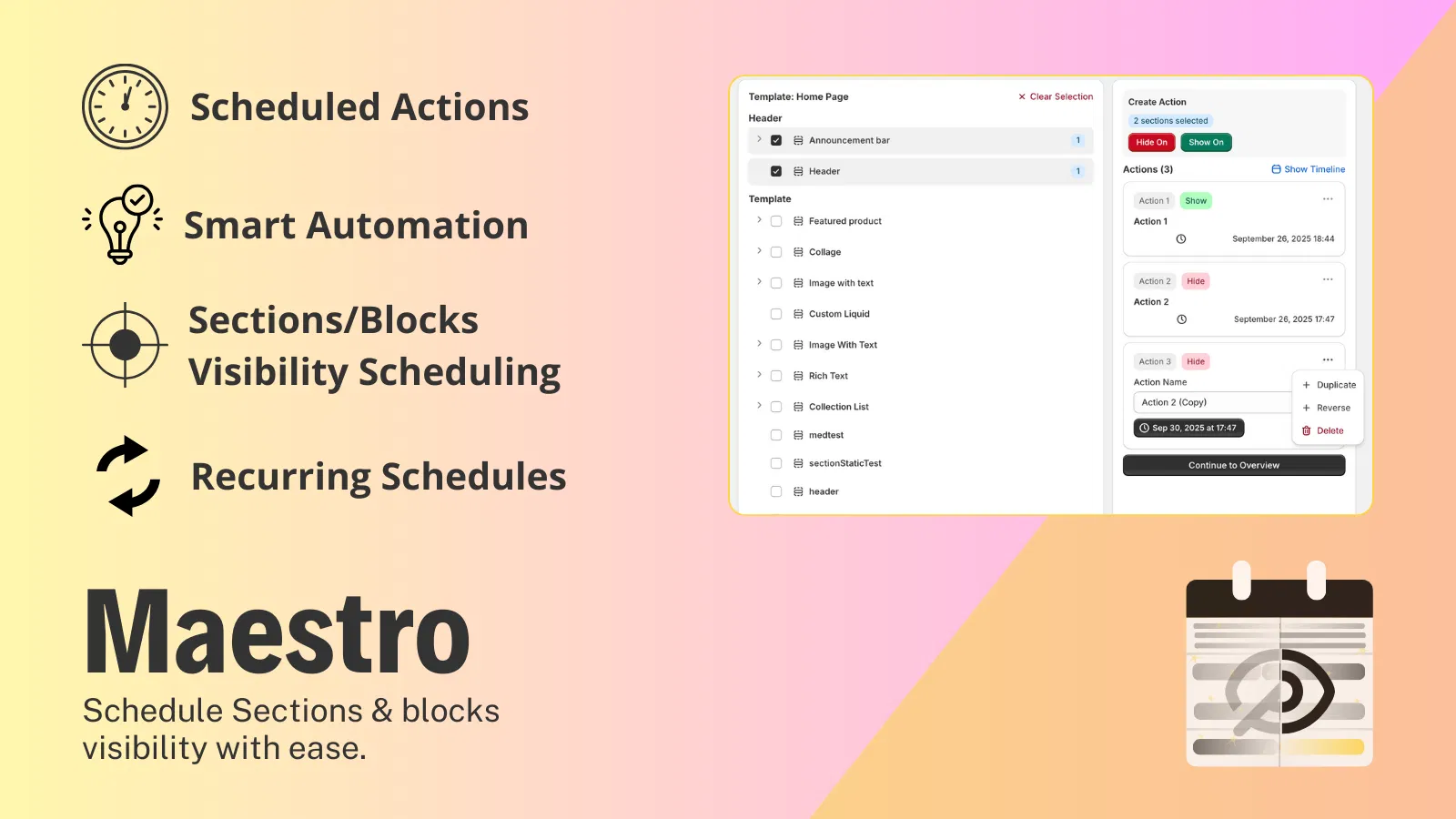
One of the standout features of the Maestro Theme Scheduler is its ability to control specific sections and blocks within a theme. You do not always need to swap your entire theme just to change a hero banner or a promotional announcement bar.
With section level scheduling, you can:
- Schedule Promotional Banners: Set a countdown timer or a discount banner to appear only during a 48 hour flash sale.
- Automate Slideshows: Rotate seasonal imagery in and out based on your marketing cycle.
- Control Product Highlights: Feature specific collections on your homepage only during the days they are on sale.
- Manage Recurring Updates: If you have a "Deal of the Week," you can set those sections to appear every Monday and disappear every Sunday night without lifting a finger.
Mastering Seasonal Promotions and Flash Sales
The true test of any Shopify store is its performance during peak periods like Black Friday Cyber Monday (BFCM). During these windows, merchants are often running multiple overlapping promotions. Managing these manually is a recipe for disaster.
For a successful flash sale, you need your site to reflect the urgency of the moment. If your marketing emails go out at 9:00 AM, but your site banners do not update until 9:15 AM, you have created a friction point for your customers. Maestro ensures that your digital storefront is perfectly synced with your marketing communications.
How to structure a "Set It and Forget It" sale campaign:
- Preparation Phase: Create a duplicate of your main theme and apply all sale specific styling, such as red "Sale" badges or special fonts.
- Section Updates: Identify specific blocks on your homepage that should only be visible while the sale is active.
- Scheduling: Navigate to the Maestro Theme Scheduler interface and input the start and end times for both the full theme and the specific sections.
- Verification: Review your scheduled actions in the app dashboard to ensure all time zones and dates are correctly aligned with your campaign launch.
Advanced Automation for Shopify Plus Merchants
For high volume brands using Shopify Plus, the stakes are even higher. Large inventories and global customer bases mean that updates need to be handled with enterprise level precision. Shopify plus development often involves complex logic and multiple app integrations that must work in harmony.
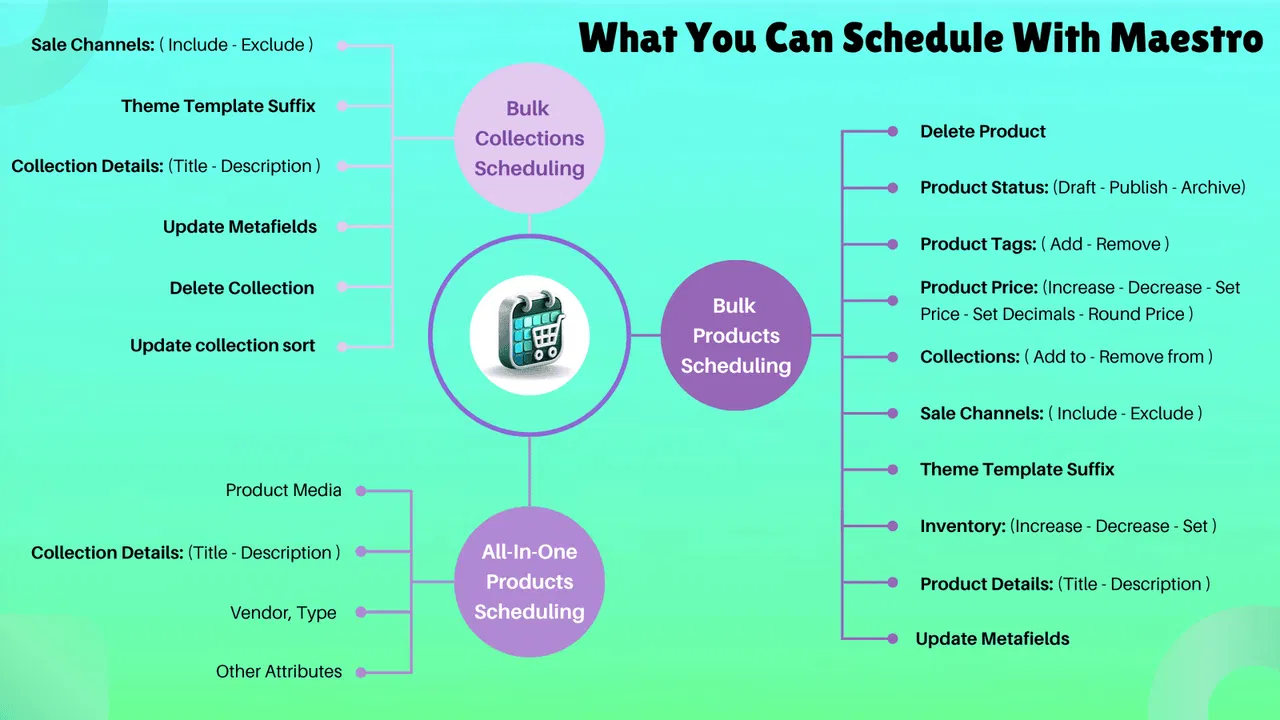
Maestro facilitates this by offering bulk scheduling capabilities. You can manage updates across different markets and ensure that your UK store updates at midnight GMT while your US store waits until midnight EST. This level of coordination is vital for maintaining brand integrity on a global scale.
Furthermore, the app provides a detailed history of all published changes. If something looks incorrect, you can quickly audit who scheduled the change and when it occurred, providing a layer of accountability that is often missing in manual workflows.

Step by Step Guide to Getting Started
If you are ready to stop manual updates and start automating, the process is straightforward. Here are the simple steps to implement your first scheduled storefront change.
Step 1: Duplicate and Prepare Your Theme
Always start by creating a copy of your current live theme. This allows you to make changes in a safe environment without affecting your current customers. Name this theme clearly, such as "Summer Sale 2026."
Step 2: Configure Your Scheduled Sections
Within the Shopify Theme Editor, you can use Maestro's integration to mark specific sections for scheduling. Decide which banners or product grids are temporary and which should remain permanent.
Step 3: Set Your Schedule in Maestro
Open the Maestro app and select your prepared theme. Enter the "Start Date" and "Start Time." If you want the store to revert to its previous state after a sale, ensure you also set an "End Date" and "End Time."
Step 4: Review and Activate
The app will display a timeline of your upcoming changes. Ensure there are no overlapping schedules that might conflict. Once satisfied, activate the schedule. Shopify will guide the process from there, executing the changes precisely at the moment you specified.
The ROI of "Set It and Forget It"
When you calculate the cost of manual storefront management, you have to consider more than just the hours spent. You must also account for the cost of missed opportunities, the stress of high pressure launches, and the potential for errors that could lead to lost sales.
By investing in automation through the Maestro Theme Scheduler, you are essentially hiring a 24/7 digital site manager. This allows your creative and technical teams to focus on high impact tasks, like improving conversion rates or developing new custom shopify themes, rather than performing basic maintenance.
For merchants seeking long term stability, incorporating these tools into your ecommerce maintenance services plan is a proactive step that pays dividends in both operational efficiency and peace of mind.

Final Thoughts on Storefront Mastery
Automating your Shopify storefront is no longer a luxury reserved for the biggest brands. It is a vital step for any merchant who wants to scale without being overwhelmed by the technical minutiae of day to day operations. Maestro Theme Scheduler provides the tools necessary to turn your storefront into a dynamic, responsive environment that works for you, even while you sleep.
Whether you are managing a single boutique or a complex international Shopify Plus store, the "set it and forget it" approach ensures that your brand is always putting its best foot forward. If you are ready to reclaim your time and optimize your store updates, now is the time to explore what automation can do for your business.
Ready to transform your storefront operations? Discover how XCO Agency can help you implement advanced automation and custom development strategies to fuel your growth. Contact our team today or book a meeting to discuss your specific needs. For more information on the app itself, visit our Maestro Theme Scheduler page.