
As a Shopify expert, I often work with high-growth merchants who have dominated their local market and are now seeking the next logical step: global expansion. In the past, going international was a logistical nightmare that required managing multiple expansion stores, fragmented inventory, and complex currency conversions. However, the introduction of Shopify Markets has fundamentally changed the landscape of cross-border e-commerce.
Shopify Markets is a unified commerce platform that allows you to manage your entire international business from a single storefront. It centralizes the tools needed to identify, set up, launch, and optimize overseas markets. If you are looking to scale your brand across borders, understanding the nuances of this tool is vital.
Here are 10 essential things you should know about Shopify Markets to power up your international growth strategy.
1. Centralized Management Over the Multi-Store Model
For years, the standard approach to internationalization was creating separate Shopify stores for different regions (e.g., yourbrand.co.uk and yourbrand.ca). While this offered flexibility, it created an operational burden. You had to sync inventory across multiple backends, manage separate apps, and duplicate every theme update.
Shopify Markets replaces this fragmented model by allowing you to manage multiple countries, currencies, and languages from one centralized location.
- Unified Inventory: You no longer need to split your stock across different store backends.
- Operational Efficiency: Updates made to your theme or product descriptions can be pushed to all markets simultaneously or customized for specific ones.
- Reduced App Costs: Instead of paying for a separate subscription for every expansion store, you manage your apps in one place.
If you are currently struggling with multiple stores, our team at XCO Agency specializes in migration to Shopify and consolidating expansion stores into a unified Shopify Markets setup.
2. Localization Through Translate and Adapt
Success in a new market requires more than just offering shipping; it requires making local customers feel at home. Shopify Markets integrates deeply with the Shopify Translate & Adapt app, allowing you to create a truly localized storefront.
- Language Support: You can add multiple languages to your store and provide manual or machine translations.
- Contextual Content: You can adjust product descriptions or marketing copy to resonate with local cultural nuances or seasonal differences.
- SEO Optimization: Shopify automatically adds hreflang tags, ensuring that search engines direct customers to the correct version of your site based on their location.
3. Sophisticated Domain Strategies
Your domain is the first thing a customer sees in search results. Shopify Markets offers the flexibility to choose a domain strategy that fits your brand and SEO goals.
- Subdirectories: For example, yourstore.com/en-ca. This is often the easiest to set up and consolidates your domain authority.
- Subdomains: For example, ca.yourstore.com.
- Top-Level Domains (ccTLDs): For example, yourstore.ca. This often builds the highest level of local trust.
At XCO Agency, we help merchants develop growth strategies that determine which domain structure will yield the best search engine visibility for their specific industry.
4. Multi-Currency Checkout and Local Payment Methods
Conversion rates drop significantly when customers are forced to pay in a foreign currency or use a payment method they do not trust. Shopify Markets, powered by Shopify Payments, solves this by offering:
- Auto-Currency Conversion: Prices are automatically converted based on real-time exchange rates.
- Rounding Rules: You can set consistent rounding rules (e.g., always ending in .99) to maintain a professional look across all currencies.
- Local Payment Options: Enable region-specific methods like iDEAL in the Netherlands or Bancontact in Belgium to increase checkout trust.
5. Automated Duties and Import Taxes
One of the biggest hurdles in international shipping is the "surprise" bill for duties and taxes upon delivery. This leads to refused packages and poor reviews.
Shopify Markets allows you to calculate and collect duties and import taxes at checkout. This provides total cost transparency for the customer, ensuring a "Delivery Duty Paid" (DDP) experience. This eliminates shipping friction and significantly improves the post-purchase customer experience.
6. Strategic Content Scheduling for Global Time Zones
When you are operating in multiple markets, your promotional calendar becomes complex. A sale that starts at midnight in New York starts at 5:00 AM in London. Managing these shifts manually is nearly impossible.
This is where Maestro Theme Scheduler becomes an essential part of your toolkit.
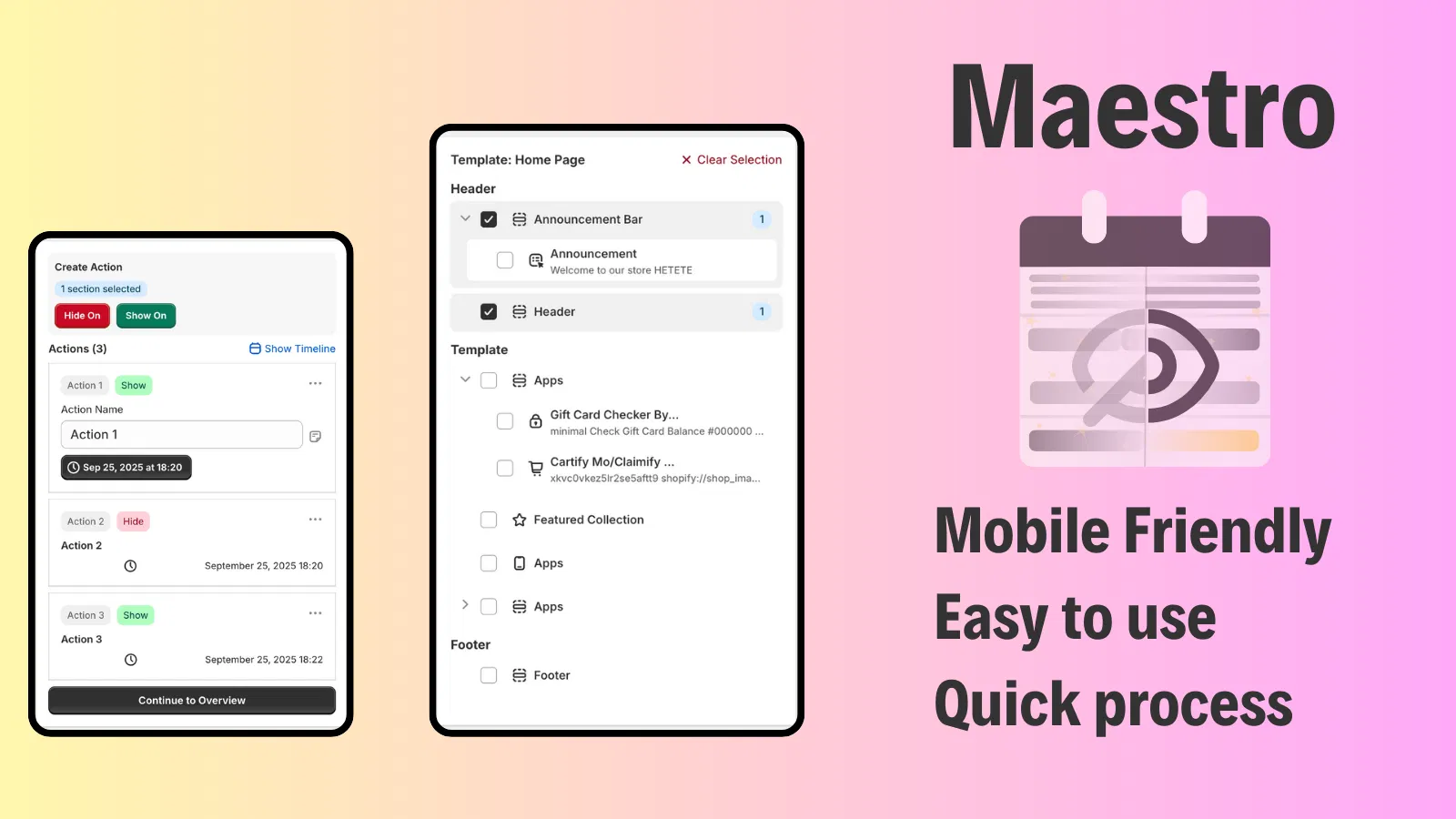
As a Shopify expert, I recommend using Maestro Theme Scheduler to automate your content visibility. You can schedule specific theme sections or banners to appear and disappear at specific times in specific markets. This ensures your "Early Access" sale in Australia doesn't accidentally show up for your customers in the United States who are still in the previous day.
- Automated Transitions: Schedule homepage banners to change based on local holiday schedules.
- Precision Control: Use the mobile-friendly interface to manage store content on the go.
7. Shopify Managed Markets (Merchant of Record)
For brands that want to expand rapidly without worrying about the legalities of international taxes and compliance, Shopify Managed Markets (formerly Markets Pro) is a game-changer.
In this model, Shopify acts as the "Merchant of Record." They take on the legal responsibility for:
- Collecting and remitting sales tax and duties.
- Ensuring compliance with local regulations.
- Guarding against international fraud.
- Providing discounted international shipping rates with premium carriers like DHL.
This allows you to scale to 150+ countries almost overnight without hiring a massive international accounting team.
8. Bulk Product Management and Price Lists
International growth often means that not every product is suitable for every market. You might have different pricing strategies based on local competition or different product availability due to shipping restrictions.
Managing these variations requires a robust automation strategy. Product Maestro Scheduler allows you to handle these bulk updates with ease.
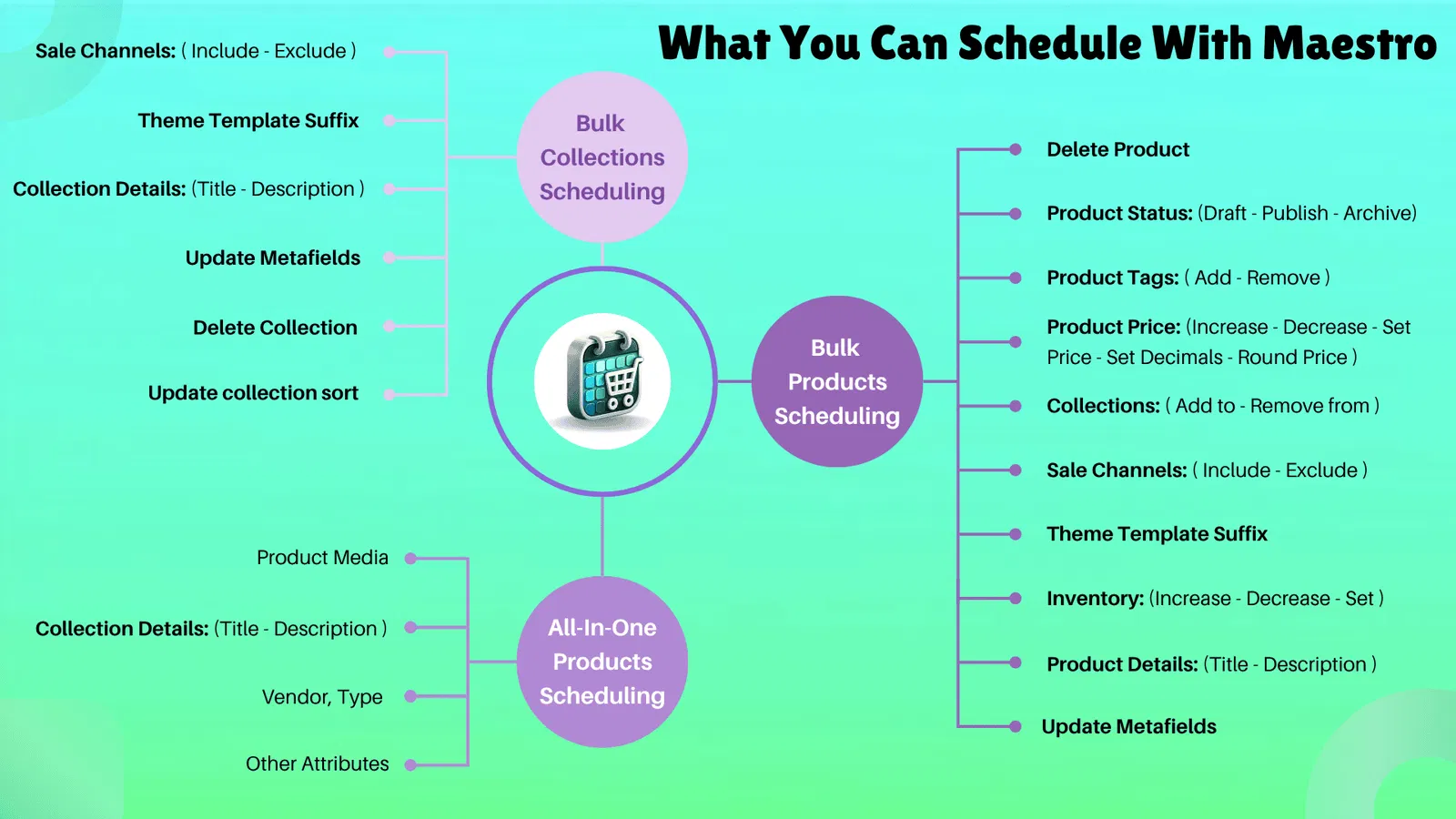
Here are simple steps to optimize your product management for Shopify Markets:
- Set Market-Specific Prices: Use Product Maestro to schedule price adjustments across thousands of SKUs for specific regions.
- Automate Availability: Schedule products to be "active" or "draft" based on seasonal launches in different hemispheres.
- Manage Metafields: Use bulk scheduling to update market-specific product details without manual entry.
Effective product management is a vital step in ensuring your margins stay healthy as you scale globally.
9. Streamlined International Claims and Support
When you sell internationally, the distance between you and the customer increases, and so does the risk of shipping mishaps. A package lost in transit between the US and Germany is a much bigger headache than a local shipment.
To maintain trust, you need a professional way to handle issues. Claimify is our recommended solution for managing these instances.
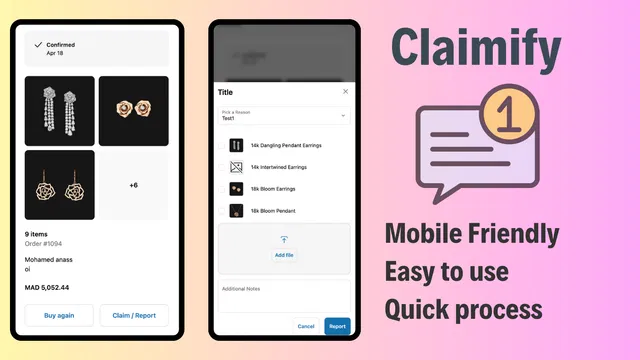
By integrating Claimify, you provide your international customers with a dedicated portal to report issues:
- Self-Service Portal: Customers can submit claims for damaged or lost items without waiting for a customer service representative to wake up in a different time zone.
- Visual Evidence: Allow customers to upload photos of damaged goods directly through the mobile-friendly interface.
- Quick Resolution: Standardizing the claim process allows your team to resolve international issues faster, preserving your brand reputation.
10. Rapid Market Entry and Testing
Perhaps the greatest advantage of Shopify Markets is the ability to test new regions with minimal risk. Before Shopify Markets, entering a new country was a major capital investment. Now, you can simply "turn on" a new market.
- Data-Driven Decisions: Use Shopify’s built-in analytics to see where your organic international traffic is coming from.
- Low-Stakes Testing: Open a market with basic currency conversion and standard shipping to test the waters.
- Scaling Up: Once a market shows promise, you can invest more in localized content, custom domains, and local marketing.
This agile approach allows high-growth merchants to be proactive rather than reactive in their global expansion.
Scaling Your Global Presence
Shopify Markets has removed the technical and logistical barriers that once prevented small and medium-sized brands from becoming global powerhouses. By centralizing management, automating compliance, and allowing for deep localization, it provides a foundation for sustainable international growth.
However, technology is only half the battle. Success in global e-commerce requires a clear strategy, from SEO-friendly domain structures to automated content scheduling and robust claims management.
At XCO Agency, we specialize in helping merchants navigate these complexities. Whether you need help with Shopify speed optimization for global users or setting up a complex Shopify B2B wholesale channel for your international partners, our team is here to help.
Are you ready to take your brand to the global stage? Book a meeting with us today to discuss how we can optimize your Shopify Markets setup and integrate the tools you need for worldwide success.