
As a Shopify expert, I often work with high-growth merchants who are seeking more efficient ways to manage their store updates. One of the most common pain points I encounter is the manual nature of launching new custom shopify themes or promotional layouts. Merchants find themselves staying up until midnight to hit the publish button or waking up at dawn to ensure a seasonal sale starts on time.
In the fast-paced world of shopify plus development, manual processes are not just exhausting, they are a liability. A missed click or a delayed launch can result in lost revenue and a poor customer experience. This is why automated scheduling is no longer a luxury but a vital component of professional ecommerce maintenance services.
In this guide, I will show you how to take back your time and eliminate the stress of manual updates by scheduling your Shopify theme launch in under five minutes using the Maestro Theme Scheduler.
Why Merchants are Seeking Automated Theme Scheduling
Before we dive into the technical steps, it is important to understand why automation is a game changer for your workflow. Most store owners start by doing everything manually, but as you scale, that becomes impossible to manage. Here are the primary benefits of moving to an automated system:
- Precision Timing: Ensure your theme goes live at the exact second your marketing campaign starts.
- Reduced Human Error: Avoid the mistakes that happen when you are tired or rushing to meet a deadline.
- Operational Freedom: "Set it and forget it" logic allows your team to focus on strategy rather than execution.
- Better Work-Life Balance: Stop forcing your developers or marketing team to work outside of standard business hours for launches.
- Seamless Transitions: Coordinate theme changes with product launches and price updates without missing a beat.
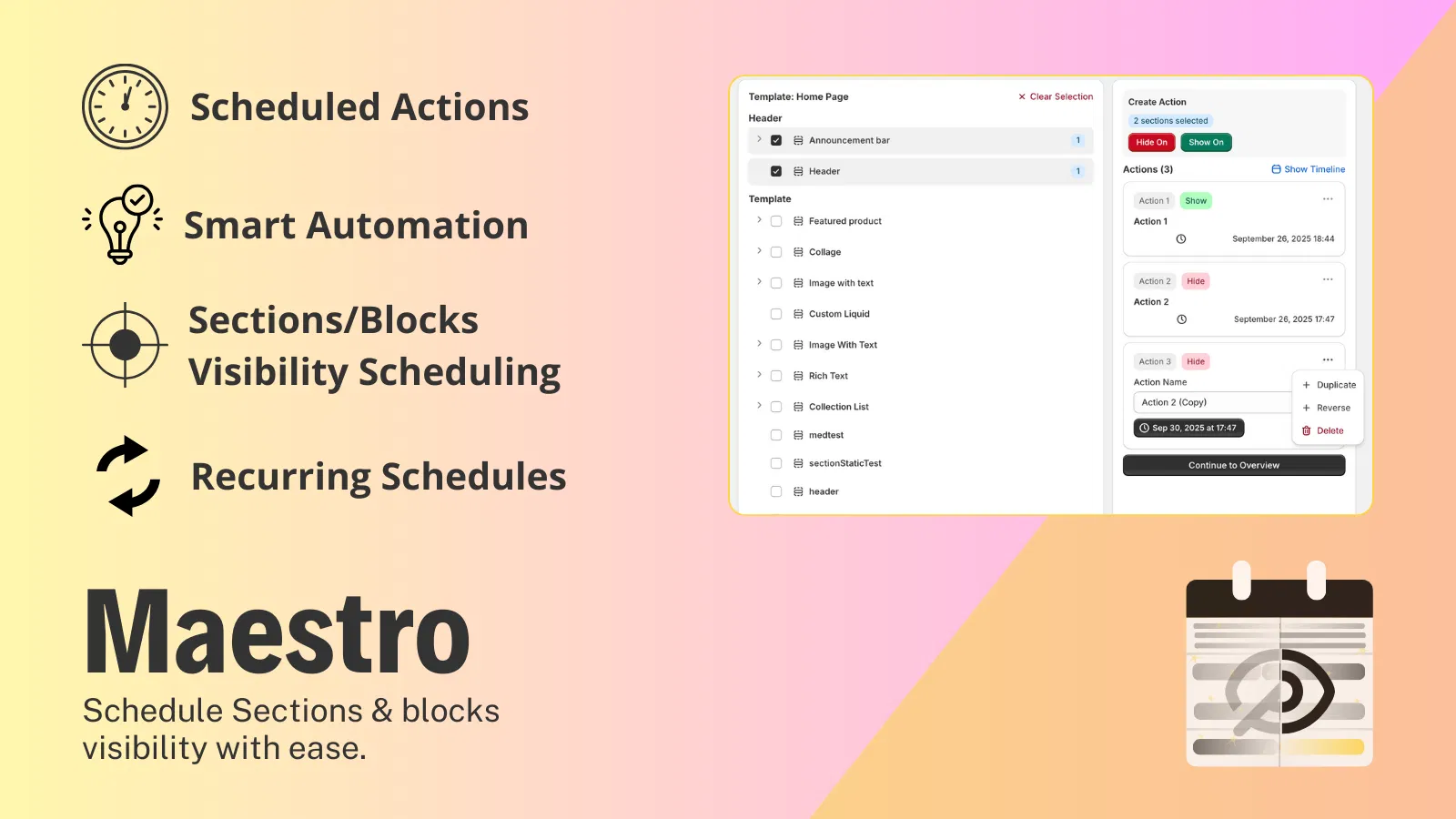
Step 1: Install and Initialize Your Scheduler
The first step in taking control of your launch cycle is integrating a robust scheduling tool. While Shopify offers some basic native features for Shopify Plus members via Launchpad, many merchants require more flexibility and a simpler interface that works across all Shopify plans.
Navigate to the Maestro Theme Scheduler page to get started. Once the app is installed in your Shopify admin, you will find it under the Apps section.
Upon opening the app, ensure you have your target theme ready. This should be the theme you have been working on in your "Theme Library" that is not yet live. Whether you are building custom shopify themes from scratch or making minor adjustments to an existing template, the scheduler treats every theme in your library as a candidate for a future launch.
Step 2: Create a New Schedule
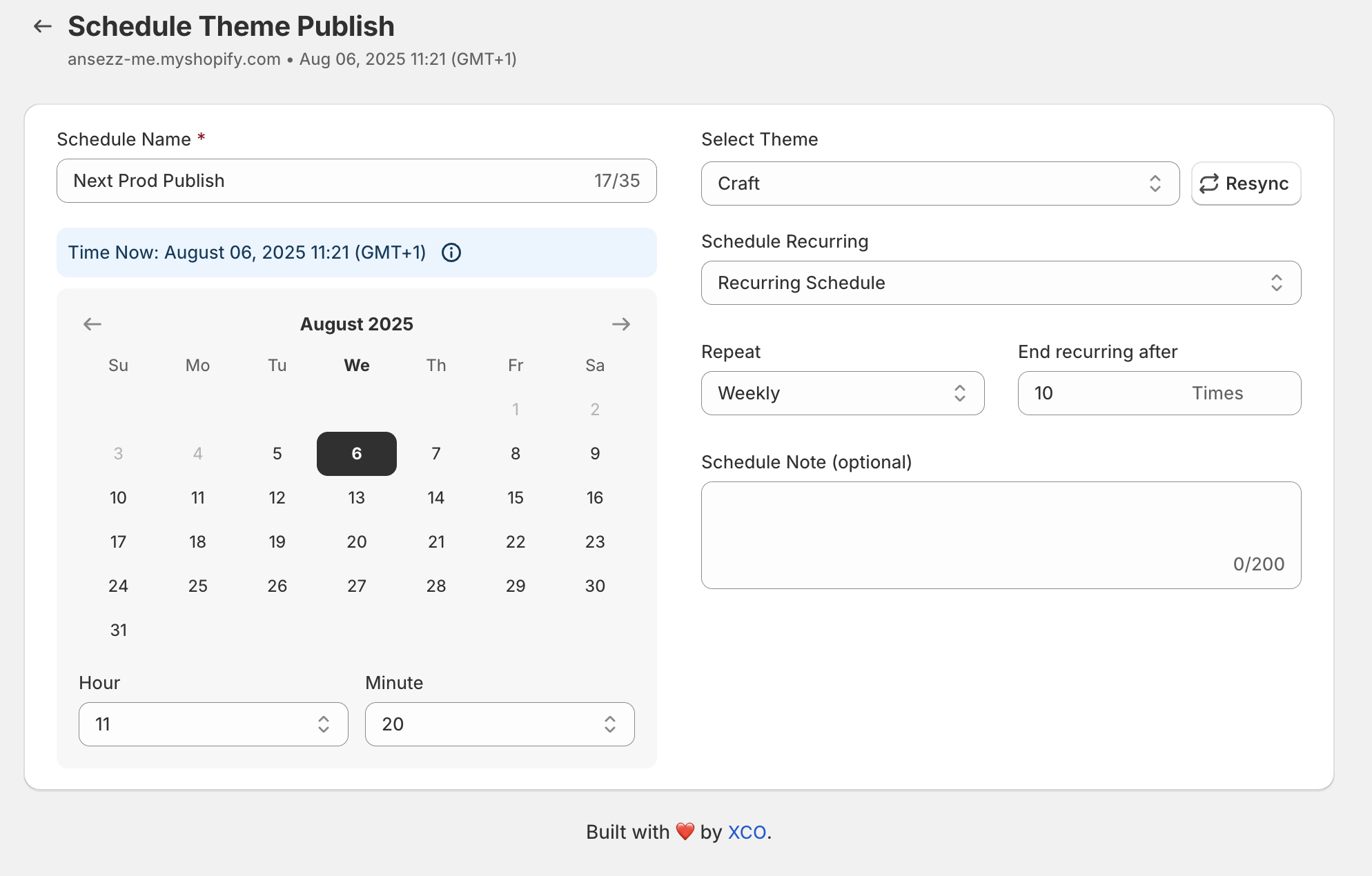
Once you are inside the Maestro interface, you will see a clear dashboard designed for ease of use. Click on the button to create a new "Theme Publish" schedule. This is where the 5-minute magic happens.
Here are the specific details you will need to enter:
- Name Your Schedule: Give it a clear name like "BFCM 2026 Main Theme" or "Spring Collection Launch." This helps for internal tracking and auditing.
- Select the Theme: Choose the specific theme from your library that you want to move to the "Live" position.
- Set the Date and Time: Use the calendar picker to select your launch date. Pay close attention to your store's time zone settings to ensure the launch aligns with your local marketing efforts.
Step 3: Configure Recurring or One-Time Actions
One of the standout features of Maestro is the ability to not just schedule a one-time launch, but to create recurring automations. This is particularly useful for stores that run weekly sales or weekend-only themes.
For example, if you have a specific theme designed for "Flash Sale Fridays," you can set it to publish every Friday at 8:00 AM and revert to your standard theme on Friday at midnight. This level of automation is a core part of the ecommerce maintenance services we provide at XCO Agency, as it ensures the store is always fresh without requiring constant manual intervention.
Step 4: Add Internal Notes and Sync
Documentation is often overlooked in the rush of a launch. Maestro allows you to add custom notes to each scheduled event. Use this field to describe what changes are included in this theme version.
- Note Examples: "Includes new homepage hero for MG 22s launch" or "Updated navigation for B2B wholesale channel."
- Why it matters: When you look back at your timeline of published themes, these notes will be invaluable for understanding your store's evolution and troubleshooting any past issues.
After you have filled in the details, click the save or schedule button. The app will now sync with your Shopify store and prepare the automated trigger.
Step 5: Verify and Monitor Your Timeline
After completing the setup, you should verify that your task appears correctly in your publish timeline. The timeline view provides a chronological history and a future forecast of all theme changes.
Monitoring this timeline is a proactive step that every store manager should take. It allows you to see if there are any conflicting schedules and ensures that your shopify plus development pipeline is moving according to plan.

Beyond Theme Publishing: Section and Block Visibility
While scheduling an entire theme is powerful, sometimes you only need to change a small part of your page. This is where Maestro truly excels. Beyond the 5-minute theme launch, you can use the same logic to schedule specific sections and blocks.
Imagine you have a promotional banner for a 24-hour flash sale. Instead of changing your whole theme, you can schedule just that banner section to appear at a specific time and disappear when the sale ends. This "set it and forget it" nature of the app significantly reduces the workload for your marketing team.
This feature is vital for:
- Holiday Banners: Automatically showing Christmas headers on December 1st.
- Product Drops: Highlighting a new arrival section the moment the inventory goes live.
- Limited Time Offers: Displaying countdown timers or discount codes that expire automatically.
How This Integration Fits Into Your Growth Strategy
In my experience as a CEO at XCO Agency, the brands that scale the fastest are those that remove friction from their operations. By automating your theme launches, you are not just saving 5 minutes of work, you are buying back the mental energy of your entire team.
If you are invested in shopify plus development, you know that the complexity of your store can grow quickly. Managing multiple themes, B2B channels, and international expansion requires a disciplined approach to maintenance. Using a scheduler like Maestro ensures that your store remains agile and responsive to market trends without needing a massive team to manage every update.
For those looking to dive deeper into optimization, I highly recommend checking our Shopify speed optimization services, as a well-timed theme launch is only effective if the store performs at peak speed once it is live.
Common Pitfalls to Avoid During a Scheduled Launch
Even with the best tools, there are a few things you should keep in mind to ensure a smooth transition:
- Check Your App Embeds: Ensure that any third-party apps used in your new theme are correctly configured and won't break upon publishing.
- Preview Everything: Always use the Shopify preview link to walk through your new theme one last time before the scheduled launch.
- Time Zone Alignment: Double check that your store's time zone in Shopify settings matches the time zone you are targeting for your campaign.
- Inventory Sync: Ensure your products are published and have stock before the theme that features them goes live.
Conclusion: Take the First Step Toward Automation
Scheduling your Shopify theme launch is a vital step in professionalizing your e-commerce operations. By moving away from manual updates and embracing the "set it and forget it" power of Maestro, you ensure accuracy, save time, and protect your team from the burnout of midnight launches.
Whether you are launching a brand new set of custom shopify themes or simply preparing for a weekend sale, the process takes less than five minutes but pays dividends in peace of mind.
If you are ready to streamline your store management, I encourage you to explore the Maestro Theme Scheduler today. For more complex needs or a full audit of your store's performance, feel free to book a meeting with our team at XCO Agency. We are here to help you optimize every aspect of your Shopify journey.