
As a Shopify expert, I often work with high-growth merchants who are victims of their own success. They spend more time clicking through the Shopify admin than they do on actual strategy. The promise of the e-commerce dream is often overshadowed by the reality of 2:00 AM product launches and the frantic manual updating of tags during a flash sale. If you find yourself manually toggling product visibility or sweating over price changes at midnight, you are not running a store: your store is running you.
Most merchants seeking professional ecommerce maintenance services are looking for one thing: freedom. They want a shopify store setup that operates like a well-oiled machine, requiring minimal manual intervention. This is where the Maestro Product Scheduler app becomes your most valuable employee. It transforms your daily grind into a set-and-forget workflow, allowing you to focus on conversion rate optimization rather than data entry.
The Problem with Manual Ecommerce Maintenance
Running a successful Shopify store requires constant updates. From seasonal rotations to inventory restocks, the sheer volume of tasks can lead to significant burnout. Manual maintenance is not just boring: it is risky.
- Human Error: One misplaced decimal point or a forgotten tag can ruin a marketing campaign.
- Wasted Time: Spending hours on repetitive tasks prevents you from focusing on growth strategies.
- Inconsistency: Without automation, the customer experience suffers when products appear or disappear at the wrong times.
- Lost Revenue: If a seasonal collection is hidden for even an hour after the promotion starts, you are losing money.
By automating these processes, you ensure that your store remains professional and reliable 24/7.
Step 1: Mastering Product Launches with the Draft Helper
One of the biggest headaches in shopify store setup is managing new arrivals. Traditionally, you have two choices: publish the product manually the second it goes live, or leave it in draft mode and hope you remember to flip the switch.
As a Shopify expert, I recommend using the Draft Helper feature within the Maestro app. This allows you to prepare everything in advance without the fear of an accidental early leak.
- Prepare your product details: Navigate to your Shopify admin and create your product listing with all necessary descriptions and images.
- Keep it in Draft: Save the product as a draft to ensure it stays hidden from the public.
- Schedule the Publish Date: Open the Maestro Product Scheduler and select the Draft Helper action.
- Set the Trigger: Pick the exact date and time you want the product to go live.
- Automate the Archive: If the product is a limited run, you can also schedule it to be archived or deleted automatically once the sale period ends.
This workflow ensures your launches are always on time, even if you are out of the office or asleep.

Step 2: Automated Tag Management for Seasonal Sales
Tags are the invisible threads that hold your Shopify store together. They control everything from automated collections to filtering and search results. However, managing them manually during a busy sale season is a nightmare.
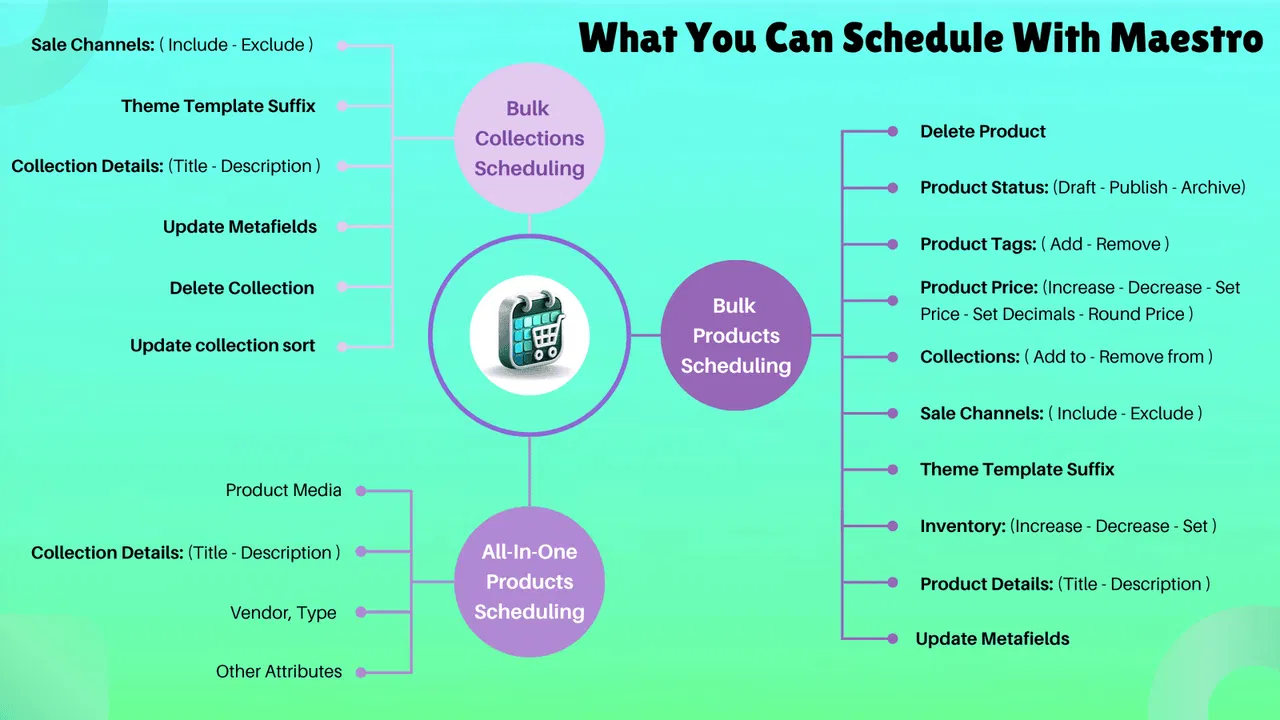
When you use ecommerce maintenance services focused on automation, tag management is usually the first priority. With Maestro, you can schedule the addition and removal of tags based on your promotional calendar.
- Seasonal Promotions: Schedule a "Summer Sale" tag to be added to specific collections on June 1st and removed on August 31st.
- Badging: Use tags to trigger "New Arrival" or "Best Seller" badges on your theme.
- Collection Sorting: Dynamically move products into sale collections by scheduling the "Sale" tag.
This level of precision significantly improves your conversion rate optimization by ensuring customers always see the most relevant products and labels.
Step 3: Scheduling Price Changes and Rounding Rules
Pricing strategy is a dynamic part of e-commerce. Whether you are running a Black Friday sale or adjusting for inflation, manual price updates across hundreds of SKUs is a recipe for disaster.
Maestro allows you to schedule bulk price changes with built-in rounding rules. This is vital for maintaining a clean, professional look for your store.
- Select Your Products: Use filters to target specific vendors, types, or collections.
- Apply Price Adjustments: Choose to increase or decrease prices by a percentage or a fixed amount.
- Implement Rounding Rules: Ensure all your sale prices end in .99 or .95 to maintain brand consistency.
- Schedule the Reversal: Automatically set the prices back to their original state once the sale concludes.
By automating this, you eliminate the risk of "sale creep," where old sale prices linger long after the promotion has ended.
Step 4: Inventory Automation for Restocks
Nothing kills conversion rate optimization faster than a "Sold Out" button. While you can't always control your supply chain, you can control how your store reacts to inventory changes.
Maestro helps you manage the visibility of your inventory without manual monitoring. You can schedule products to hide when they hit zero and reappear the moment they are restocked.
- Set Thresholds: Choose specific inventory levels that trigger visibility changes.
- Manage Sales Channels: Schedule which products are available on which channels (like POS or Facebook) based on stock levels.
- Coordinate with Marketing: Ensure your ads aren't running for products that have been automatically hidden due to low stock.
This proactive approach to inventory management keeps your storefront looking fresh and avoids the frustration of customers clicking on out-of-stock items.
Step 5: Managing Collection Visibility and Sorting
Your homepage and collection pages are your digital storefront windows. If they look the same for six months, your returning customers will get bored.
As a Shopify expert, I often suggest a rotating "Featured" collection. Using the Maestro collection scheduler, you can automate the entire look of your site.
- Schedule Collection Visibility: Set specific collections to appear or disappear based on the day of the week or time of day.
- Automate Sorting Rules: Change how products are sorted within a collection (e.g., sort by "Newest" for the first week of the month, then "Best Selling" for the remainder).
- Sync with Promotions: Align your collection visibility with your email marketing campaigns for a seamless customer journey.

The ROI of a Hands-Off Store
The true value of using a tool like Maestro for your ecommerce maintenance services is found in the time you get back. When you are not bogged down by the minutiae of shopify store setup, you can focus on high-level strategy.
- Reduced Labor Costs: Automation replaces the need for an assistant to perform manual updates.
- Better Data Accuracy: Automation removes the "oops" factor from your data entry.
- Scalability: A hands-off store can handle a 500% increase in SKU count without a 500% increase in work hours.

Conclusion: Take the Leap to Automation
Running a Shopify store should not be a test of your endurance. By utilizing the Product Scheduler by Maestro, you can transform your operations from reactive to proactive. Whether it is through the Draft Helper for flawless launches, automated tag management for your next big sale, or precision price scheduling, the goal remains the same: a hands-off store that converts.
Don't let manual maintenance be the bottleneck that stops your brand from scaling. Implementing these simple steps will significantly improve your efficiency and your bottom line. If you are ready to professionalize your shopify store setup and focus on true conversion rate optimization, it is time to let automation do the heavy lifting.
Ready to automate your success? Explore our full range of services or learn more about the Maestro app today.