
As a Shopify expert, I often see merchants who are essentially tethered to their laptops, waiting for the clock to strike midnight so they can manually publish a new collection or update a sale price. It is a grueling cycle that turns the dream of a passive income stream into a high pressure manual labor job. If you find yourself manually toggling product visibility or stressing over tag consistency during a flash sale, you are not just working hard. You are working inefficiently.
The reality of modern ecommerce is that manual maintenance is the enemy of scale. When you are focused on the minutiae of daily store operations, you lose the bandwidth to focus on high level growth strategies. This is where the concept of a hands-off business becomes vital. By leveraging the right tools for shopify store setup and ongoing ecommerce maintenance services, you can reclaim your time while actually improving your store performance.
Why Automation is the Secret to Conversion Rate Optimization
Before we dive into the how, we must understand the why. Many store owners view automation as a luxury, but it is actually a core component of conversion rate optimization. Think about it. If a seasonal sale starts five minutes late because you were stuck in traffic, you lose revenue. If a product goes out of stock but the sale tag remains, you frustrate customers.
Automation ensures that your store is always accurate, timely, and professional. The Maestro Product Scheduler app is designed to bridge the gap between Shopify default limitations and the needs of a scaling brand. While Shopify is a powerhouse, it lacks a robust built-in product scheduler. Relying on third party apps is not just an option, it is a necessity for anyone looking to automate their workflow.
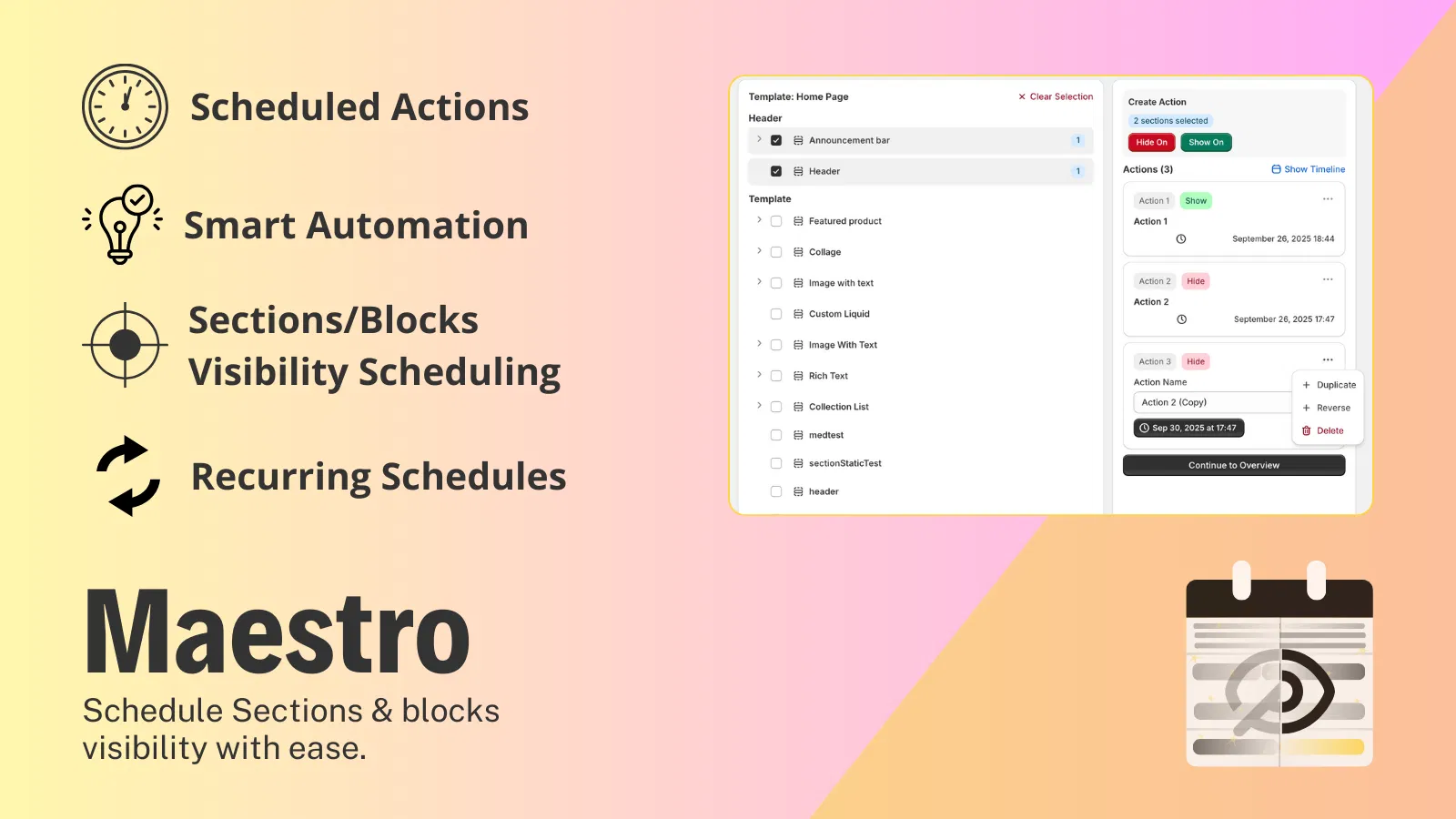
The Draft Helper: Your Scheduled Launch Partner
One of the most common headaches in ecommerce is the product launch. You have the assets, the descriptions are written, and the inventory is ready. But Shopify requires you to either publish immediately or manually set a future date for each individual item, which can be cumbersome for large catalogs.
The Draft Helper feature in the Maestro app changes the game. It allows you to organize your upcoming releases in a draft state and schedule their transition to "Active" across multiple sales channels simultaneously.
- Create your product listings as usual and keep them in draft mode.
- Navigate to the Maestro Product Scheduler dashboard.
- Select the products you wish to launch.
- Set the exact date and time for the status change.
- Review and confirm the schedule.
This functionality is essential for a hands-off business. It means you can set up an entire month of product drops in a single afternoon and spend the rest of the month focusing on your marketing.
Automated Tag Management for Seasonal Sales
Tags are the invisible threads that hold your Shopify store together. They dictate which products appear in which collections, how filters work, and even how some apps process discounts. However, manual tag management is a recipe for disaster. It is incredibly easy to forget to remove a "Winter Sale" tag, leading to awkward customer experiences where discounted items linger in the wrong sections.
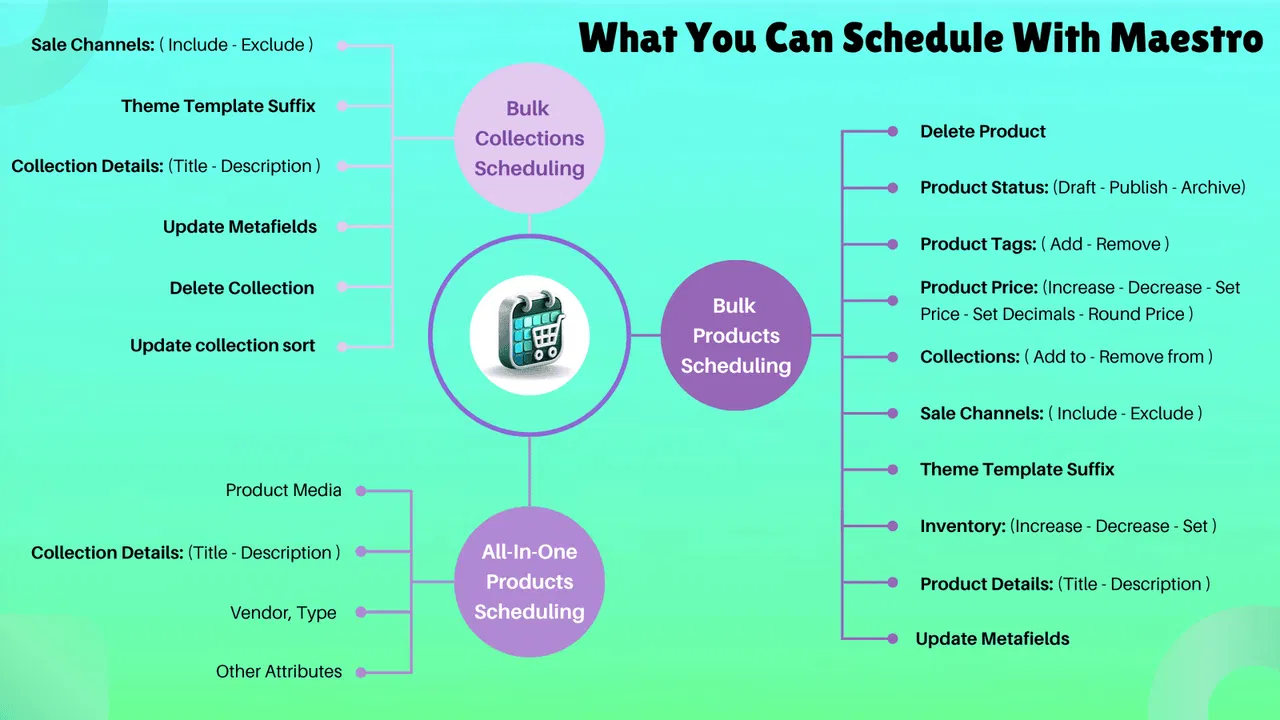
With Maestro, you can automate tag management to align with your promotional calendar. You can schedule the addition of tags like "New Arrival" at the start of a launch and set an expiration date for those tags to be removed automatically.
This level of precision is a key part of professional ecommerce maintenance services. It ensures your site navigation remains clean and your collection filters remain relevant without you ever having to lift a finger after the initial setup.
Scheduling Price Changes and Rounding Rules
Pricing strategy is a dynamic part of ecommerce. Whether it is a weekend flash sale or a long term holiday promotion, changing prices manually is a nightmare. It is even worse when you have to revert those prices back to their original state at 3 AM on a Monday.
The Product Scheduler allows you to automate these price fluctuations. You can set a start and end time for specific pricing rules. But the real magic lies in the rounding rules.
Consistency in pricing builds trust. If your brand uses the .99 or .95 ending for prices, Maestro can ensure that all your scheduled price changes follow these rules automatically. This prevents the "messy" look of unrounded prices that often occurs during percentage-based sales. By keeping your pricing professional and consistent, you are directly contributing to your conversion rate optimization.
Inventory Automation and Restock Management
Inventory levels are constantly in flux. A truly hands-off business needs a way to handle restocks and out-of-stock scenarios gracefully. As a Shopify expert, I recommend using the inventory automation features to manage how products are displayed based on their availability.
You can schedule products to move to a "Draft" or "Archived" status the moment they hit zero stock, or better yet, schedule them to reappear the moment a new shipment is logged in your warehouse. This prevents customers from landing on "Out of Stock" pages, which is a major bounce factor.
For more advanced setups, you can integrate these workflows with shopify-integrations to ensure your warehouse data and your storefront are always in perfect sync.

Managing Collection Visibility and Sorting
Your homepage and collection pages are your digital storefront windows. In a physical store, you wouldn't leave a summer bikini display up in the middle of a snowstorm. In ecommerce, your collection visibility needs to be just as reactive.
Maestro allows you to schedule when specific collections should be visible to the public. This is perfect for holiday-specific collections like Valentine's Day or Black Friday. You can build the collection weeks in advance, optimize it for SEO, and then set it to go live exactly when your marketing campaign starts.
Furthermore, you can manage collection sorting. If you want your best-sellers or new arrivals to jump to the top of the page during a specific weekend, you can schedule those sorting changes. This ensures that your most profitable or relevant products always get the most eyes.
The Step-By-Step Integration Guide
Setting up the Maestro Product Scheduler is a straightforward process, but doing it correctly is vital for long term success. Follow these steps to integrate the app into your workflow.
Step 1: Installation and Permissions
Navigate to the Shopify App Store and search for Maestro Product Scheduler. Click "Add app" and authorize the necessary permissions. The app needs access to your product and collection data to perform the automated tasks you will be setting up.
Step 2: Define Your First Campaign
Once inside the app, start by defining a specific goal. Are you launching a new line? Or are you running a 48-hour sale? Navigate to the "Schedules" tab and click "Create New Schedule."
Step 3: Select Your Products
Use the built-in product picker to select the items you want to include. You can select products individually, by collection, or by using specific tags. This flexibility is what makes the tool so powerful for bulk updates.
Step 4: Set Your Actions
This is the core of the automation. Choose the actions you want the app to take. This could include:
- Changing product status from Draft to Active.
- Updating the "Compare at" price and the actual "Price."
- Adding or removing specific tags.
- Changing the theme template suffix for a custom landing page look.
Step 5: Schedule and Monitor
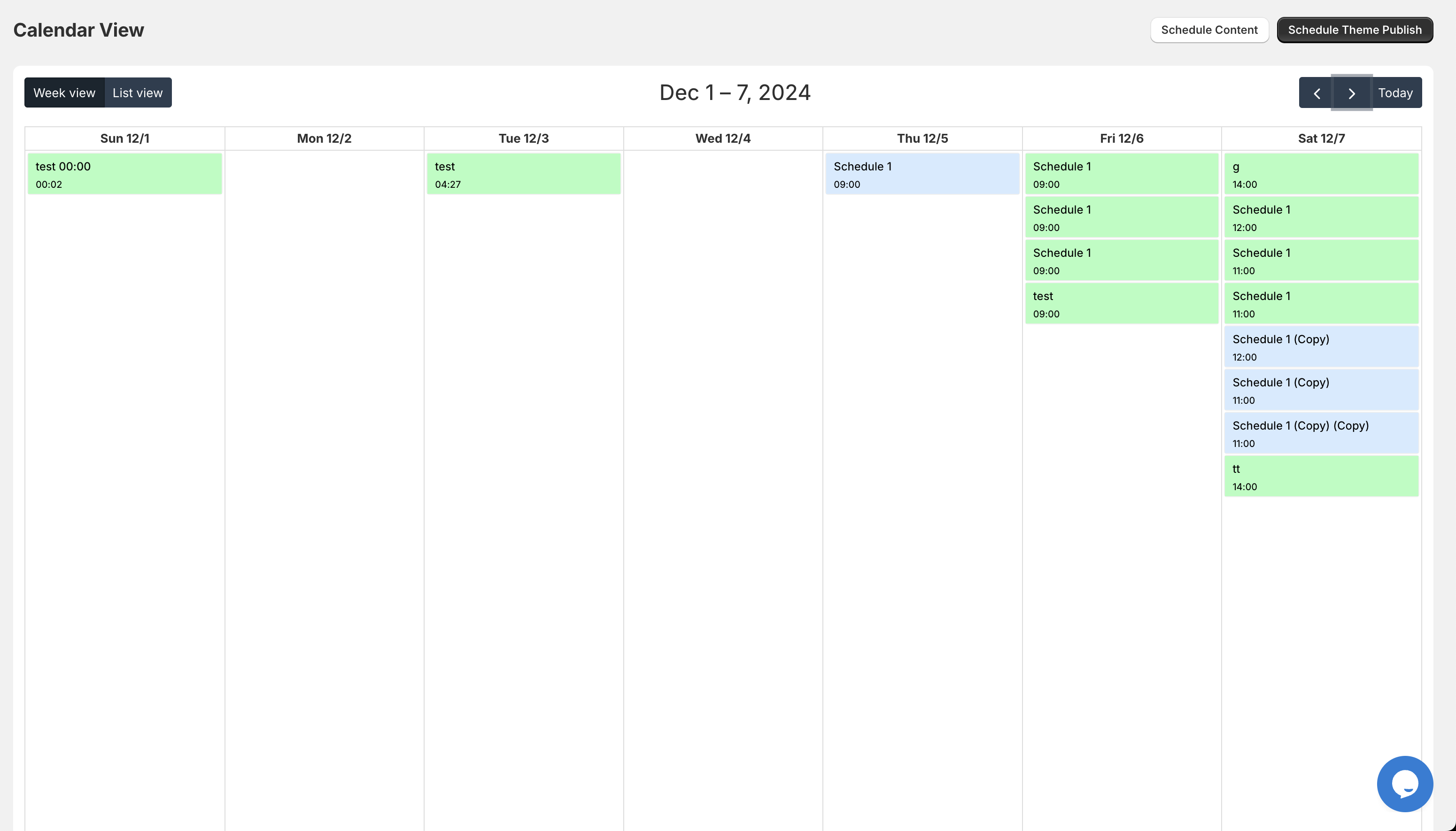
Set your start date and end date. One of the best features of Maestro is the ability to see a calendar view of all your upcoming changes. This bird's eye view is essential for ecommerce maintenance services, as it allows you to spot any scheduling conflicts before they happen.

Building a Scalable Future
Integrating a product scheduler is not just about saving a few hours a week. It is about changing the way you operate as a business owner. When you move away from manual tasks, you reduce human error. There are no more typos in prices, no more forgotten tags, and no more missed launch windows.
For those looking for a comprehensive shopify store setup, automation should be at the top of the priority list. It allows you to run a leaner operation, meaning you can achieve more with a smaller team or even as a solo founder.
If you are curious about how these automations can fit into a broader growth plan, you might want to explore our growth-strategies. Automation provides the foundation upon which aggressive marketing and scaling can be built.
Conclusion: Take the Leap Toward Automation
As a Shopify expert, my goal is always to help merchants work smarter, not harder. The transition to a hands-off business model is a vital step for any merchant who wants to grow beyond the limitations of their own schedule. By integrating the Maestro Product Scheduler, you are taking a proactive step toward a more efficient, profitable, and stress-free ecommerce journey.
The days of staying up late to hit "Publish" are over. Your store should work for you, not the other way around. If you are ready to optimize your workflow and see the benefits of true automation, now is the time to act.
If you need help setting up advanced workflows or want to discuss a custom strategy for your store, feel free to book-a-meeting with our team. We specialize in helping Shopify Plus merchants and growing brands reach their full potential through smart development and strategic marketing. For more information on our specific services, visit our about-us page or check out our faqs.