
As a Shopify expert, I often work with merchants who treat product launches like a high-stakes NASA countdown. They are hunched over their laptops at midnight, frantically toggling products from draft to active, manually typing in sale tags, and praying the site doesn't break while they update the homepage. It is a recipe for burnout and human error. If you are seeking a way to reclaim your weekends and stop acting like a manual switchboard operator for your own store, you are in the right place.
The secret to a hands-off store is not hiring a massive team to pull all-nighters. It is about using the right automation tools to handle the heavy lifting. Specifically, the Maestro Product Scheduler allows you to turn a month of work into five minutes of setup. By automating the technical details of your Shopify store setup, you can focus on high-level growth strategies while your store runs itself.
The High Cost of Manual Management
Before we dive into the "how," we need to address the "why." Merchants often underestimate how much time they waste on ecommerce maintenance services that could be automated. Manual launches lead to several common issues:
- Inconsistent Launch Times: If you are manually publishing products, they might go live at 12:05 PM one day and 1:15 PM the next. Consistency builds trust with your audience.
- Pricing Blunders: Forgetting to update a price or failing to apply rounding rules can eat into your margins or confuse customers.
- Dead Links and Empty Collections: Leaving seasonal tags on products after a sale ends creates a messy user experience and hurts your conversion rate optimization.
- The Midnight Grind: Your brain is not at its best at midnight. That is when mistakes happen, like accidentally deleting a collection or setting a price to $0.00.
By implementing automated scheduling, you eliminate these risks and ensure your store remains professional and polished at all times.
Step 1: Using the Draft Helper for Seamless Launches
The cornerstone of any successful launch strategy is the ability to prepare in advance. Most merchants leave their new products in "Draft" status until the moment they want them to go live. This creates a bottleneck.
As a Shopify expert, I recommend using the Draft Helper feature within Maestro. This tool allows you to select a batch of draft products and schedule the exact moment they should transition to "Active" status.
- Select Your Products: Navigate to your product list and choose the items you want to launch.
- Define the Timeline: Set the specific date and time for the launch.
- Automate the Shift: Maestro handles the status change in the background.
This means you can spend Monday morning setting up the entire month's releases. While your competitors are frantically clicking "Save" on a Friday night, you can be out to dinner, knowing your products will appear exactly when they should.
Step 2: Automated Tag Management for Seasonal Sales
Tags are the invisible engine of your Shopify store. They control everything from collection filtering to automated marketing flows. However, managing them is a nightmare if you do it manually.
During a Shopify store setup, we often use tags like "New Arrival," "Summer Sale," or "Limited Edition." The problem occurs when the sale ends and those tags remain. Nothing kills a professional vibe faster than a customer clicking on a "Black Friday" collection in the middle of March.
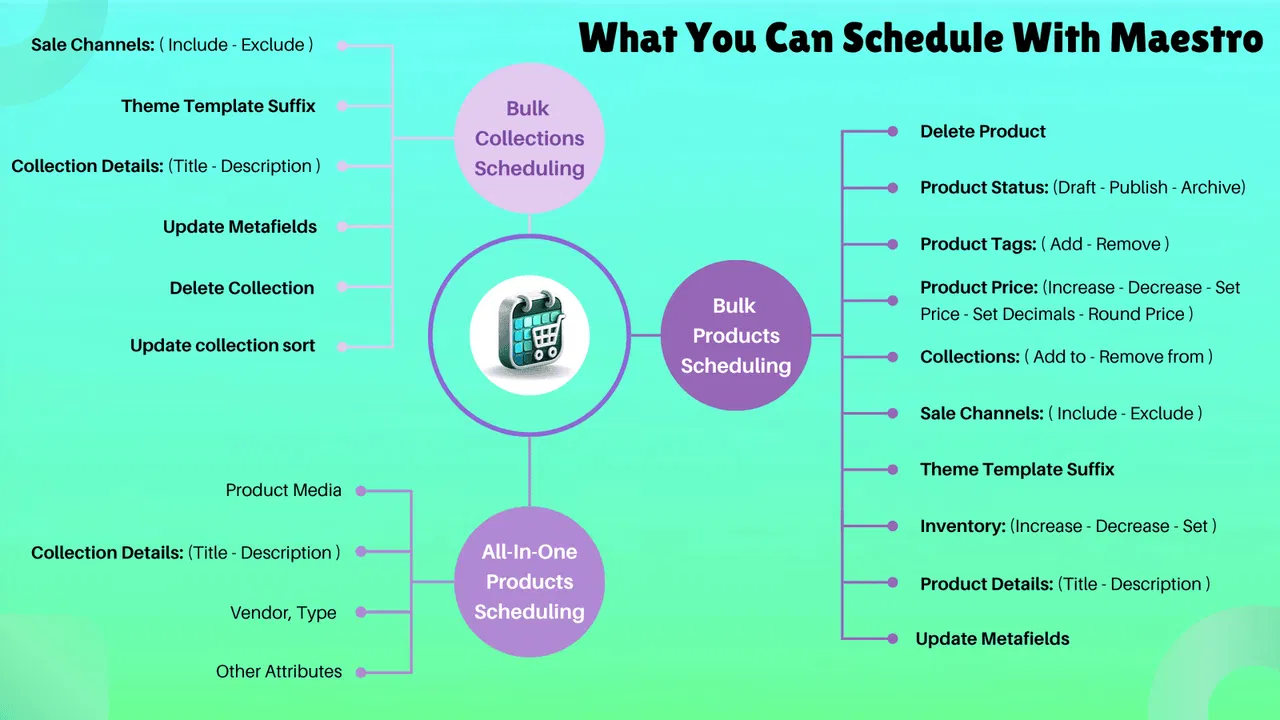
Maestro allows you to schedule the addition and removal of tags. You can set a rule to add a "Summer-Sale" tag on July 1st and automatically remove it on July 31st. This ensures your collections remain relevant without you having to lift a finger. This level of precision is vital for maintaining a clean site architecture and improving the customer journey.
Step 3: Scheduling Price Changes and Rounding Rules
Pricing is a psychological game. If you are running a promotion, you want your prices to look intentional. A price of $19.99 feels much different to a consumer than $20.03.
When you are updating hundreds of products for a month of launches, manual price adjustments are a recipe for disaster. Maestro provides a sophisticated interface for scheduling price changes in bulk.
- Percentage or Flat Discounts: You can schedule a 20 percent discount to trigger at the start of a weekend and revert on Monday morning.
- Smart Rounding Rules: You can ensure that every price ends in .95 or .99 automatically. This maintains brand consistency across your entire catalog.
- Compare At Prices: Automate the "Compare At" price field so customers see the savings clearly, which is a key driver for conversion rate optimization.
By automating these rules, you ensure that your margins are protected and your store always looks sharp.
Step 4: Inventory Automation and Restock Alerts
Nothing frustrates a customer more than seeing a "Sold Out" badge on a product they just saw in an advertisement. Conversely, having a product sit in "Active" status with zero inventory can hurt your search engine rankings and user experience.
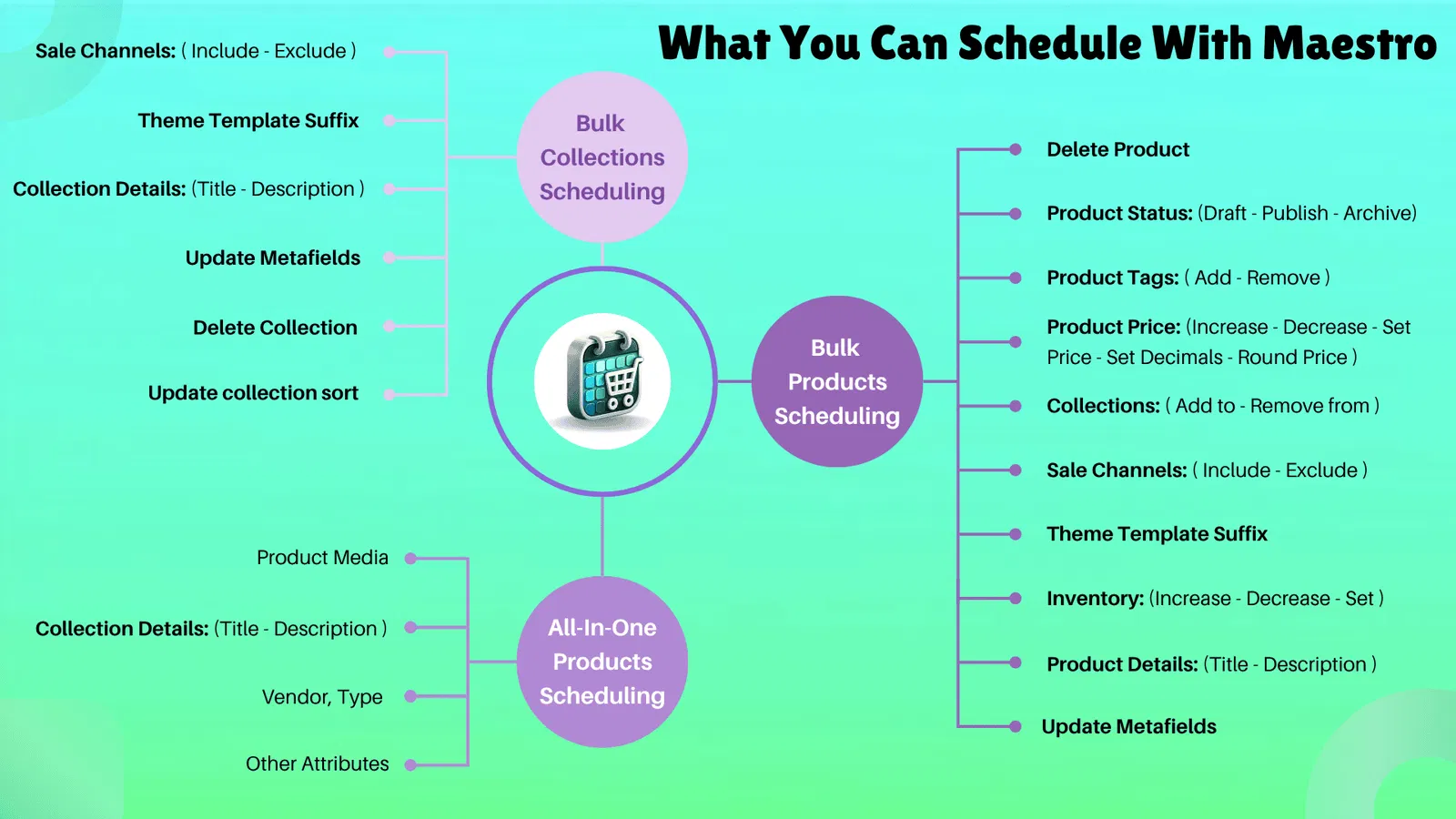
Maestro's inventory automation helps you manage restocks without constant monitoring. If you know a shipment is arriving on the 15th of the month, you can schedule the inventory levels to update and the product status to change from "Draft" or "Hidden" to "Active" at that exact time.
This proactive approach to inventory management is a core part of effective ecommerce maintenance services. It ensures that your marketing efforts are always aligned with your stock levels, preventing wasted ad spend on out-of-stock items.

Step 5: Managing Collection Visibility and Sorting
The order in which products appear in a collection significantly impacts sales. Most customers never scroll past the first page of a collection. Therefore, you need your best, newest, or most profitable products at the top.
Maestro allows you to schedule collection sorting and visibility. If you have a "Monthly Drops" collection, you can schedule it to appear in your navigation menu at the start of the month and disappear when the drop is over.
- Visibility Scheduling: Show or hide entire collections based on your marketing calendar.
- Smart Sorting: Automate the way products are ordered within those collections. For example, you can set a rule to move products with high inventory to the top automatically.
- Cross-Template Coordination: Ensure that your homepage sections and collection pages are updated simultaneously for a cohesive brand experience.
This level of automation ensures that your most important content is always front and center, leading to a significant boost in your store's performance.

Creating a Hands-Off Store for Long-Term Growth
The transition from a manual store to an automated powerhouse does not happen by accident. It requires a shift in mindset. Instead of reacting to events, you plan for them.
When you use Maestro to schedule your launches, you are not just saving time. You are creating a scalable system. As your product catalog grows from 50 items to 5,000, the manual workload remains the same (essentially zero) because the systems are doing the work for you.
If you find yourself overwhelmed by the technicalities of Shopify, you might want to explore our Shopify design services or look into Shopify speed optimization to ensure your site can handle the traffic your new automated launches will bring.
The Vital Step Toward Efficiency
Mastering your Shopify store setup is about more than just aesthetics. It is about operational excellence. By utilizing the features of the Maestro app, you can automate:
- Product statuses to ensure you never miss a launch.
- Tagging systems to keep your collections clean and searchable.
- Pricing logic to maintain margins and psychological triggers.
- Visibility rules to keep your storefront fresh and engaging.
Taking five minutes on a Monday morning to schedule your entire month is the smartest move you can make for your business. It reduces human error, frees up your mental energy for creative tasks, and allows you to run a professional, high-converting store without the stress of constant manual updates.
If you are ready to stop being a slave to your Shopify admin and start acting like a CEO, it is time to embrace automation. You can book a meeting with us to discuss how we can help you streamline your operations, or visit our FAQs page for more information on how our tools can transform your workflow.
Your store should work for you, not the other way around. Start scheduling, start automating, and watch your efficiency (and your sanity) reach new heights. For further assistance with your growth journey, consider checking out our growth strategies to see how we help brands scale effectively.