
As a Shopify expert, I often see merchants dreading the arrival of Black Friday and Cyber Monday. It is not because they fear the sales volume, but because they fear the "midnight scramble." For years, the standard procedure for high-growth brands involved a developer or a store manager sitting at a computer at 11:59 PM, frantically clicking publish on a new theme and praying that the cache clears instantly. This manual approach is not only stressful but also prone to human error that can cost thousands in lost revenue during peak hours.
High-growth brands seeking to scale require more sophisticated solutions. They need the ability to plan their marketing campaigns weeks in advance and trust that their storefront will reflect those changes exactly when intended. This is where automation transforms a chaotic weekend into a streamlined operation. By leveraging tools like the Maestro Theme Scheduler, you can transition your store from a standard layout to a high-conversion Black Friday powerhouse in under five minutes of actual setup time.
The High Cost of Manual Storefront Management
Before we dive into the how, it is vital to understand the why. Manual updates are a significant liability for any serious e-commerce business. When you rely on manual intervention, you introduce several points of failure that can compromise your brand's professional image and conversion rates.
- Human Error and Timing Delays: Even a five-minute delay in launching a sale can lead to customer frustration and lost sales. Manual clicks are never as precise as automated triggers.
- The Reversion Problem: Many merchants remember to turn the sale on, but they forget to turn it off. Having a Black Friday banner live on Tuesday morning looks unprofessional and can lead to customer service headaches regarding expired discount codes.
- Operational Burnout: Your team should be focused on customer support and fulfillment during the busiest weekend of the year, not on babysitting theme files in the Shopify admin.
- Inconsistency Across Templates: Managing seasonal promotions often requires updates to homepage sections, product pages, and collection headers. Keeping these synchronized manually is nearly impossible.
By moving toward an automated workflow, you ensure that your custom shopify themes perform exactly as designed without requiring your constant presence.
Streamlining Your Workflow with Maestro Theme Scheduler
The goal of any automation tool is to provide a "set it and forget it" experience. As a team that specializes in shopify plus development, we built the Maestro Theme Scheduler to solve the exact pain points we observed in the field. The app allows you to schedule theme publishing, manage section visibility, and coordinate complex content updates from a single interface.

This timeline view illustrates how a merchant can map out an entire week of promotions. You can see the transition from a standard theme to a "Black Friday Early Access" theme, followed by the main event, and finally a "Cyber Monday" refresh. Each of these transitions happens automatically based on the schedule you define.
Step-by-Step: Automating Your Black Friday Launch in 5 Minutes
Setting up your automation does not have to be a complex project. Here are the simple steps to ensure your storefront is ready for the BFCM rush without the late-night stress.
Step 1: Prepare Your Seasonal Theme
Before you set the schedule, ensure your Black Friday theme is fully designed and tested in your library.
- Duplicate Your Current Theme: Create a copy of your live theme to use as the base for your Black Friday version.
- Apply Your Branding: Add your promotional banners, update your announcement bar, and ensure your "Shop the Sale" buttons are prominent.
- Test on Mobile: Since a vast majority of BFCM traffic comes from mobile devices, ensure your custom sections are responsive.
Step 2: Configure the Maestro Theme Scheduler
Once your theme is ready, open the Maestro app within your Shopify admin. This is where the heavy lifting happens.
- Select "Schedule Theme": Navigate to the scheduling interface.
- Choose Your Target Theme: Select the Black Friday theme you just prepared from the dropdown menu.
- Set the Date and Time: Input your exact launch time. Most brands choose 12:00 AM on Friday, but you may want to start earlier for "Early Access" VIPs.
Step 3: Schedule the Reversion
The most important part of automation is the "exit strategy." You must decide when the sale ends and what the store should look like afterward.
- Create a Second Schedule: Set a new task to publish your "Post-Sale" or standard theme.
- Align with Your Marketing: If your sale ends at midnight on Cyber Monday, schedule the reversion for 12:01 AM on Tuesday.
- Verify the Sequence: Review your timeline to ensure there are no gaps or overlaps in your theme publishing schedule.
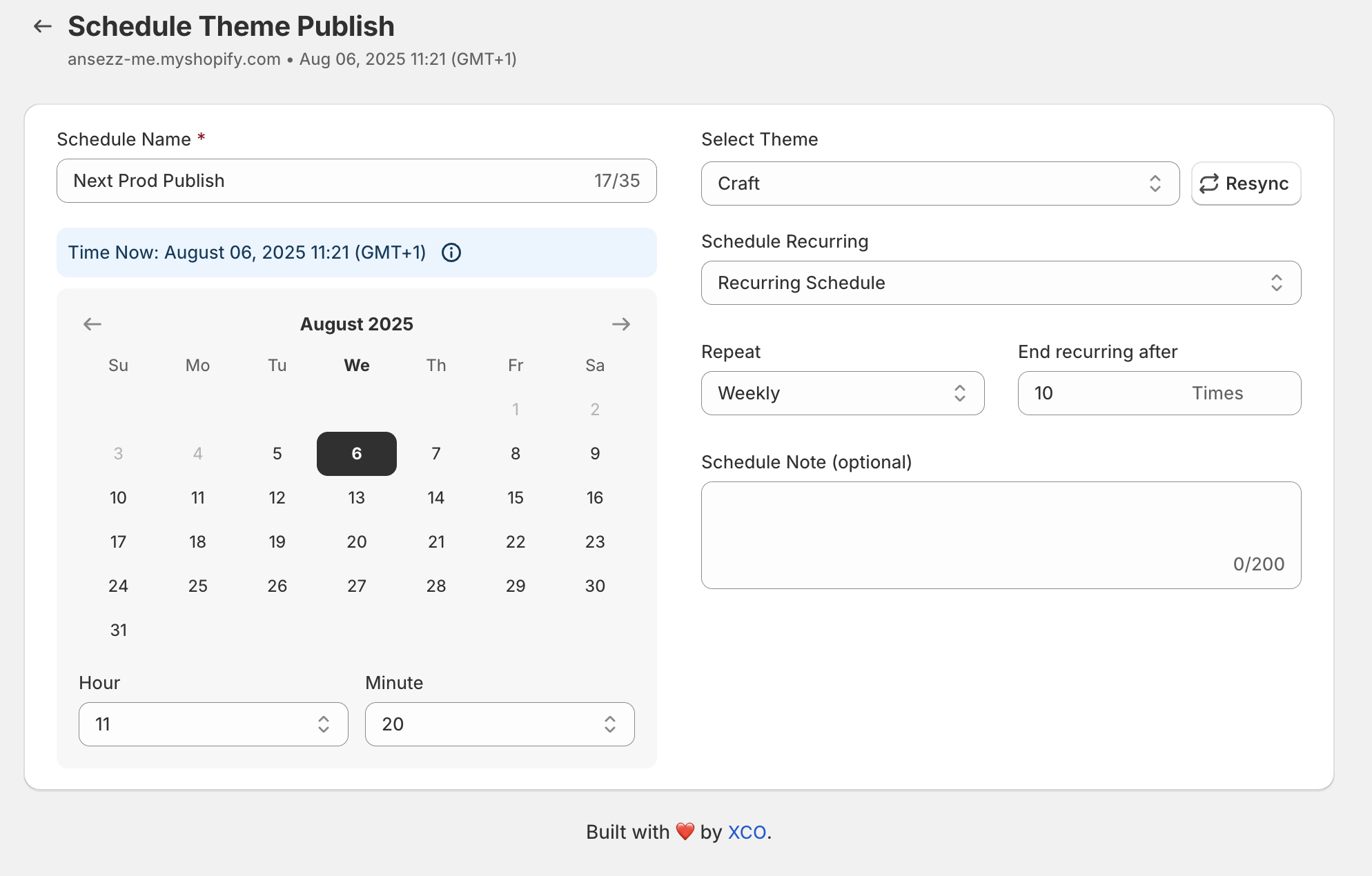
This interface shows how easy it is to name your schedule and set the recurring or one-time automation. The simplicity of this setup means you can complete the entire process in less time than it takes to brew a cup of coffee.
Automating Section and Block Visibility
Sometimes, a full theme change is overkill. You might only want to swap out a specific hero banner or hide a promotional section once a flash sale ends. Maestro provides the flexibility to automate at the section and block level, which is a game-changer for ecommerce maintenance services.

Using the Advanced Scheduling Tools, you can control specific elements of your site:
- Timed Promotional Banners: Set a countdown timer or a "Last Chance" banner to appear only during the final six hours of the sale.
- Dynamic Collection Headers: Automatically switch collection images to highlight discounted products during the promotional window.
- Flash Sale Sections: Create a dedicated "Deal of the Hour" section that cycles through different products throughout the day without manual updates.
This level of granular control allows for a highly dynamic storefront that keeps customers engaged and creates a sense of urgency, which is the primary driver of BFCM success.
Why Shopify Plus Merchants Need This Level of Control
For merchants on Shopify Plus, the stakes are significantly higher. Managing multiple markets, high traffic volumes, and complex integrations requires a level of precision that manual workflows simply cannot provide. Shopify Plus development often involves coordinating changes across different regional stores, and automation is the only way to maintain consistency.
Maestro integrates seamlessly with the advanced features of Shopify Plus, including:
- Market-Specific Changes: If you are running different promotions in the UK than in the US, you can schedule specific theme changes for each market.
- Workflow Integration: Use scheduling in conjunction with Shopify Flow to trigger backend processes like inventory alerts or tagging customers when a new theme goes live.
- Performance Optimization: By scheduling changes in advance, you can avoid the performance lag that sometimes occurs when many manual changes are made simultaneously during high-traffic periods.

The screenshot above highlights the range of settings you can automate, from simple text and images to complex product pickers and URL redirects. This ensures that every element of your custom shopify themes is optimized for the specific needs of the moment.
Maximizing ROI with Proactive Maintenance
Automation is not just about saving time: it is about maximizing your return on investment. When your team is not bogged down by technical tasks, they can focus on growth strategies and customer engagement.
Consider the following benefits of a proactive, automated approach:
- Confidence in Execution: You can go to sleep on Thanksgiving night knowing that your store will transform at midnight exactly as planned.
- Consistent Customer Experience: Automated transitions ensure that every customer, regardless of their time zone or when they visit, sees the correct promotional content.
- Reduced Support Burden: By eliminating errors like broken links or expired banners, you significantly reduce the number of support tickets your team has to handle during the rush.
If you are currently managing your store manually, moving to an automated system like Maestro is a vital step toward professionalizing your operations. It moves your business from a reactive state to a proactive one.
Conclusion: Take Control of Your Peak Season
As we have explored, the difference between a stressful Black Friday and a successful one often comes down to the tools you use. Automating your storefront changes with the Maestro Theme Scheduler is a simple yet powerful way to ensure your brand remains competitive and professional during the most important sales period of the year.
By following the five-minute setup guide, you can eliminate the "midnight scramble" and focus on what truly matters: serving your customers and growing your business. Whether you are managing a single storefront or a complex Shopify Plus environment, the "set it and forget it" nature of theme automation is a proactive step that every merchant should take.
If you are ready to stop babysitting your Shopify admin and start scaling with confidence, now is the time to implement these automation strategies. For more information on how to optimize your store for high-performance seasons, visit our Maestro Theme Scheduler page or book a meeting with our expert team to discuss your specific needs. Don't let manual tasks hold your brand back this year. Take control, automate your workflow, and prepare for your most successful Black Friday yet.