
As a Shopify expert, I often work with high-growth merchants who find themselves stuck in a cycle of manual updates. They are seeking ways to reclaim their time and ensure their store stays fresh without the dreaded midnight shifts required to click publish on a new campaign. Managing custom Shopify themes and handling complex Shopify Plus development requires a level of precision that manual workflows simply cannot guarantee. When you are managing a global brand, the margin for error is slim, and the cost of a missed promotion is high.
In the fast-paced world of e-commerce, the ability to automate repetitive tasks is not just a luxury; it is a competitive necessity. Many merchants spend hours every week coordinating theme launches, seasonal updates, and flash sales. This manual overhead often leads to human error, such as sections being published at the wrong time or broken layouts appearing during peak traffic hours. By shifting toward an automated model, you can transition from a reactive state to a proactive strategy.
Here are the primary benefits of automating your theme publishing workflow:
- Eliminate Midnight Launches: Stop staying up late to manually switch themes for a sale.
- Reduce Human Error: Ensure that the right content goes live at the exact second it is scheduled.
-
Enhance Operational Efficiency: Free up your team to focus on growth strategies rather than administrative tasks.
- Improve Brand Consistency: Maintain a perfectly timed storefront across different time zones.
- Scale Campaigns Effortlessly: Manage multiple promotions simultaneously without increasing your workload.
Step 1: Audit Your Current Ecommerce Maintenance Services
The first step in any automation journey is to understand exactly what needs to be automated. As a Shopify Plus developer, I recommend performing a full audit of your recurring tasks. Look at your marketing calendar for the next quarter. Are you planning weekly drops? Do you have seasonal banners that need to go up and come down?
Before you can automate, you must have a clean environment. This means organizing your theme library. Many stores have dozens of unpublished themes that create clutter and confusion. Identify which custom Shopify themes are your primary templates and which ones are used for specific events like Black Friday or Cyber Monday.
- Inventory your themes: Delete old or redundant themes to avoid publishing the wrong version.
- Document your triggers: List the specific dates, times, and events that require a theme change.
- Define your goals: Determine if you need to publish an entire theme or just specific sections and blocks.
Once your environment is clean, you can better visualize how an automation tool like the Maestro Theme Scheduler will fit into your workflow.
Step 2: Configure Your Automation Tool for Scheduled Publishing
Once you have your plan, it is time to set up the engine that will drive your automation. For Shopify Plus merchants, Shopify offers Launchpad, but many find that it lacks the granular control needed for specific section-level updates. This is where a dedicated tool like Maestro becomes vital.
Navigate to your Shopify admin and open your chosen automation app. If you are using Maestro, the interface is designed to be intuitive, allowing you to name your schedules and select the exact theme you want to go live.
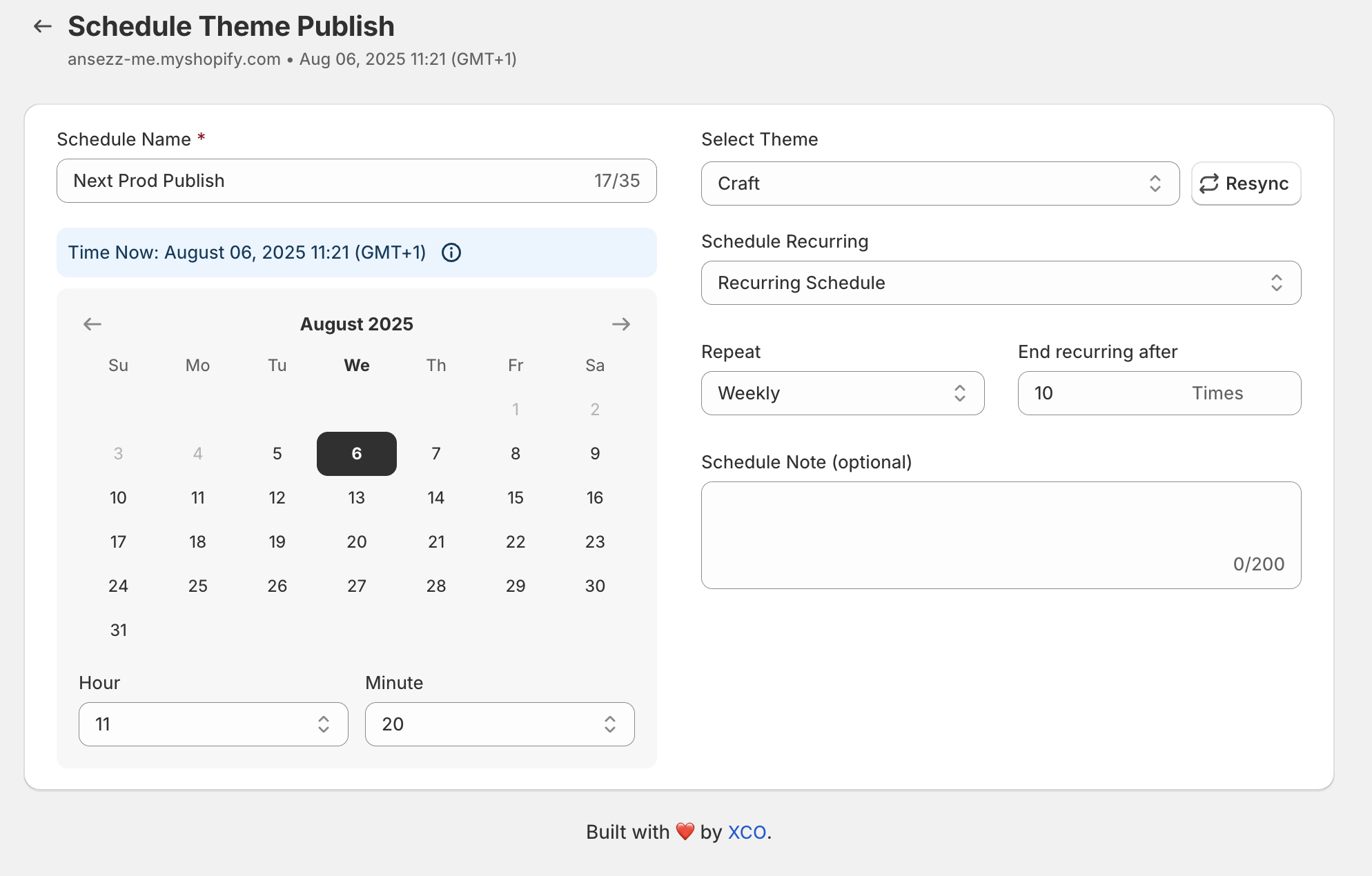
- Name your schedule: Give it a clear name like "Summer Collection Launch 2026."
- Select the theme: Choose the specific custom Shopify theme you have prepared in Step 1.
- Set the timing: Input the exact date and time. Ensure you are accounting for the correct timezone, especially if you are running global operations.
- Utilize recurring options: If you have a weekly "Flash Sale Friday," set the schedule to repeat weekly. This is the ultimate "set it and forget it" move.
Step 3: Automate Section and Block Visibility
One of the most common pain points in Shopify Plus development is the need to update specific parts of a page without changing the entire theme. Perhaps you want a promotional banner to appear only on Saturday morning, or you want a specific product block to highlight a limited-edition drop.
Traditional methods require a developer to manually comment out code or a manager to hide/unhide sections in the theme editor at the exact right moment. Automation allows you to schedule these specific elements ahead of time.

- Identify key sections: Determine which homepage banners, announcement bars, or product grids need to be time-sensitive.
- Assign visibility rules: Within the app, select the specific section and set its start and end times.
- Coordinate multi-template updates: If you are running a sitewide sale, ensure that the visibility rules are applied across all relevant templates, including collection pages and product pages.
This granular control ensures that your Shopify design services are fully utilized, as your beautiful designs will always appear exactly when they are most relevant to your customers.
Step 4: Manage Seasonal Promotions and Flash Sales
Managing a high-stakes event like Black Friday requires more than just a single theme change. It involves a series of coordinated updates. You might start with a "Coming Soon" teaser, move to an "Early Access" phase for VIPs, and finally transition to the full "Main Event" storefront.
As an expert in growth strategies, I recommend mapping out these transitions in a single automation timeline. This prevents the frantic rush often associated with major sales.

- Prepare your assets: Ensure all images and copy for the seasonal promotion are uploaded and tested in a draft theme.
- Set up the chain of events: Schedule the teaser theme to publish on Monday, the VIP theme on Wednesday, and the main sale theme on Friday.
- Automate the rollback: The most forgotten part of any sale is taking it down. Schedule your standard theme to republish automatically as soon as the sale ends.
This level of automation is a vital step in maintaining professional ecommerce maintenance services. It ensures your brand never looks "stale" by leaving a Christmas banner up until January 5th.
Step 5: Monitor, Test, and Optimize
The final step is to ensure that your automated workflows are performing as expected. Even with the best tools, a "set it and forget it" mentality should still involve a brief verification phase. Shopify will guide you through the process, but having a clear history of changes is essential for troubleshooting.
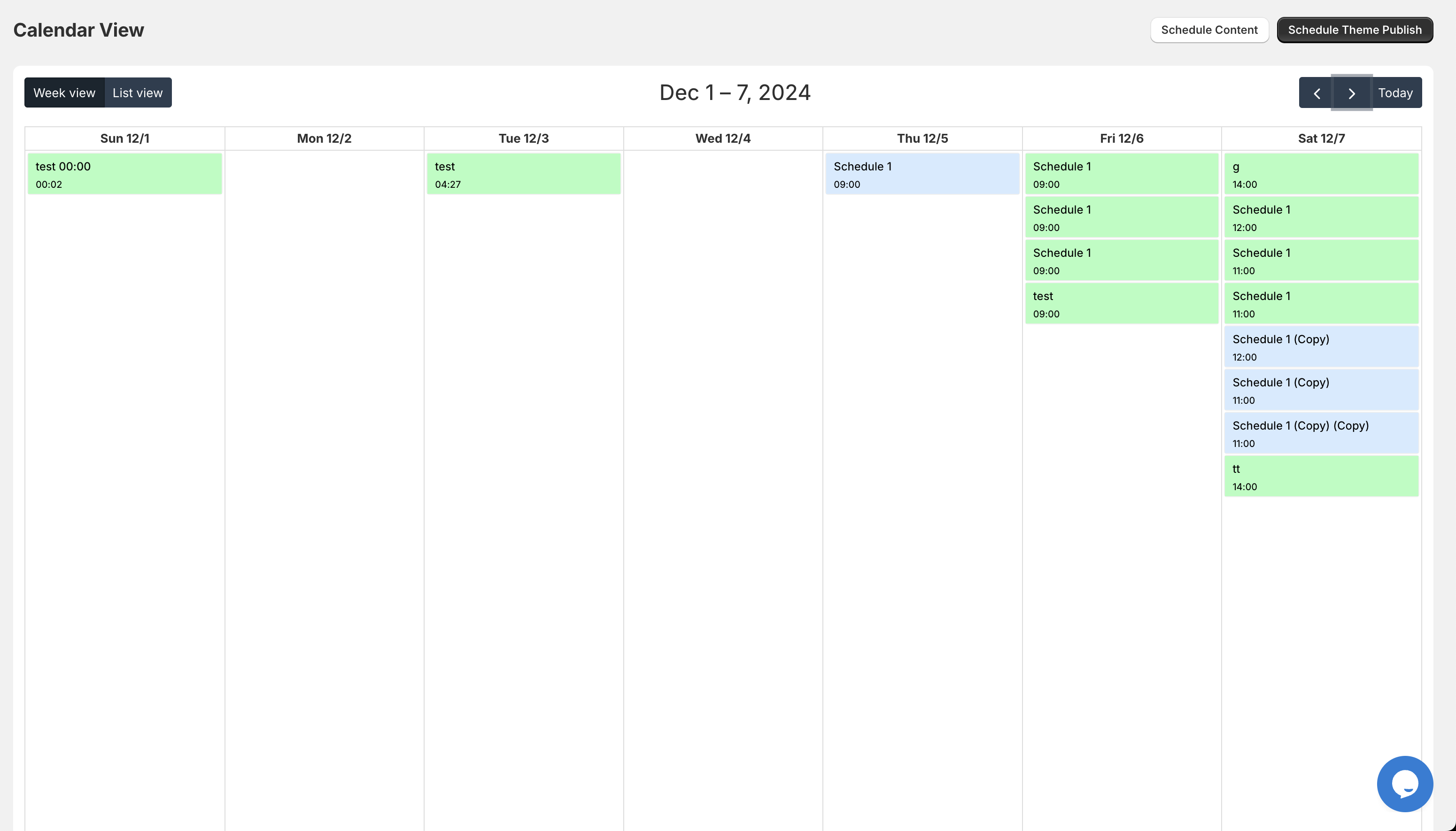
- Review the timeline: Use the app's history or calendar view to see exactly what is scheduled to happen and when.
- Perform a dry run: If your tool allows, use a preview mode to see how the scheduled changes will look on the live site before the trigger date.
- Check for conflicts: Ensure that two different automated schedules are not trying to publish different themes at the same time.
- Use the notes feature: Add custom notes to your schedules so other team members understand the purpose of each automation.
After completing these five steps, you will have a robust system that handles the heavy lifting of store management for you. Your custom Shopify themes will be more dynamic, your Shopify Plus development will be more efficient, and your team will finally be able to reclaim those lost hours.
Conclusion
Automating your theme publishing is a proactive step that transforms how you manage your e-commerce presence. By following these five steps, you move away from the risk of manual updates and toward a streamlined, professional operation. Whether you are managing complex seasonal promotions or simply want to automate your weekly content updates, the right tools and strategy will make all the difference.
As your business grows, the complexity of your store will only increase. Embracing automation now prepares you for that scale, ensuring that your customer experience remains flawless regardless of how many campaigns you run. If you are ready to stop clicking publish at midnight and start focusing on the high-level growth of your brand, it is time to implement these automation frameworks.
Ready to take your Shopify Plus store to the next level? You can explore the features of the Maestro Theme Scheduler to see how it fits your specific needs. If you require more personalized assistance with your store's development or automation strategy, feel free to book a meeting with our team at XCO Agency. We are here to help you optimize every aspect of your e-commerce journey.