
As a Shopify expert, I often see merchants burning the midnight oil just to hit a publish button at the stroke of midnight. Whether it is a Black Friday launch, a seasonal collection drop, or a flash sale, the manual workload behind the scenes of a high-growth store is often staggering. Merchants are seeking ways to reclaim their time and move away from the repetitive, error-prone tasks that come with managing a massive catalog.
The reality of modern e-commerce is that timing is everything. If your sale prices do not go live exactly when your email campaign hits inboxes, you lose trust. If your out-of-stock items stay at the top of your collections, you lose conversions. This is where the Product Scheduler by Maestro steps in. It is not just another utility tool; it is a full-scale automation engine designed to turn your Shopify store into a hands-off revenue machine.
The High Cost of Manual Store Management
Before we dive into the technical brilliance of Maestro, let us acknowledge the problem. Traditional Shopify store management involves a lot of "right place, right time" clicking. For many teams, this means:
- Setting alarms for late-night product launches to ensure the Draft status changes to Active.
- Manually adding and removing tags to trigger collection filters during a sale.
- Hand-calculating price drops and then manually reverting them once a promotion ends.
- Monitoring inventory levels constantly to move restocked items back to the top of the page.
This manual approach is the enemy of conversion rate optimization. When humans are tired, they make mistakes. A missed decimal point in a price change or a forgotten tag can break your site's navigation. By shifting toward automated ecommerce maintenance services, you eliminate the risk of human error while freeing up your team to focus on growth strategies rather than administrative maintenance.
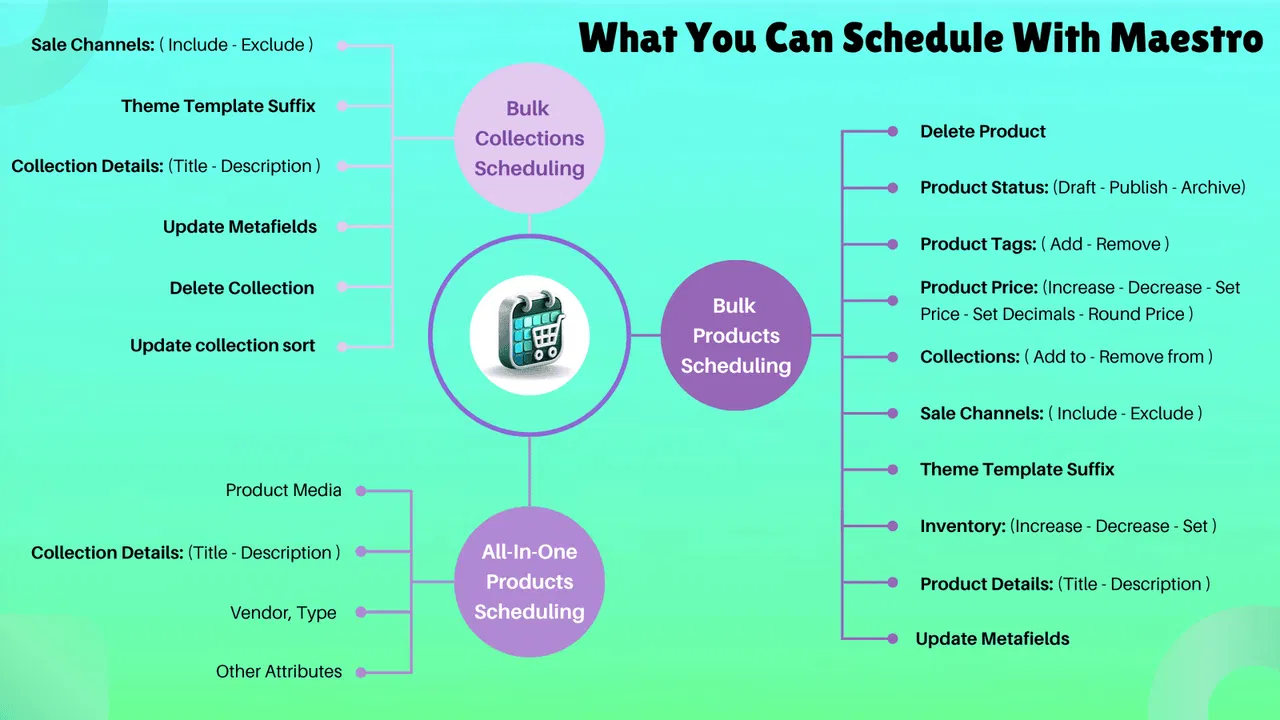
Launching with Confidence Using the Draft Helper
One of the most stressful parts of a shopify store setup is the big launch. Whether you are a new brand or an established player dropping a fresh line, the Draft Helper feature within Maestro is a game-changer.
Most merchants prepare their products weeks in advance, keeping them in Draft mode. However, Shopify's native scheduling can sometimes feel limited when you have hundreds of SKUs to coordinate across various sales channels. The Draft Helper allows you to:
- Select products in bulk and set a precise date and time for them to transition from Draft to Active.
- Coordinate with sales channels so your products appear on Facebook, Instagram, and your Online Store simultaneously.
- Automate the "Cleanup" by scheduling products to be archived or deleted after a limited-time drop ends.
This level of control ensures that your store always looks fresh and updated, even if you are halfway across the world or fast asleep when the clock strikes twelve.
Strategic Tag Management for Seasonal Sales
Tags are the invisible threads that hold a Shopify store together. They power your filters, your automated collections, and even some of your SEO logic. During a seasonal sale, managing these tags can become a nightmare.
As a Shopify expert, I often recommend using automated tag management to maintain store hygiene. Product Scheduler by Maestro allows you to schedule tag additions and removals. Here is why that matters for your bottom line:
- Temporary Sale Badges: You can schedule a "Sale" tag to appear on specific products the moment your promotion begins. This tag can trigger "On Sale" badges on your product cards, instantly boosting visual urgency.
- Automated Collection Routing: If your collections are built on "Tag equals Winter," you can schedule products to join or leave that collection automatically. This keeps your navigation clean without you having to move products manually.
- SEO and Search Filtering: Ensure that your "New Arrivals" tag actually reflects products that are new, and schedule its removal after 30 days to keep your search results relevant.
Mastering Pricing and Rounding Rules
Pricing is one of the most powerful levers for conversion rate optimization. However, changing prices across a 500-item catalog for a 48-hour flash sale is a recipe for a headache. Maestro simplifies this by allowing you to schedule price changes and, more importantly, apply rounding rules.
When you decide to run a 20 percent off sale, the math often results in messy numbers like 19.83 dollars. In the world of premium e-commerce, those numbers look unpolished. Maestro allows you to:
- Schedule the discount start and end times: Your prices will automatically drop at the start of the sale and revert to the original MSRP the second the sale ends.
- Apply rounding logic: You can set rules to ensure all sale prices end in .99, .95, or .00. This maintains your brand's aesthetic and adheres to psychological pricing triggers that shoppers respond to.
- Bulk updates: You do not need to click into every product. Select your entire "Summer Essentials" collection and apply the price rule in one go.
If you are looking for more advanced ways to handle your store's backend, exploring Shopify integrations can help you connect these pricing strategies with your overall ERP or accounting software.

Inventory Automation and Restock Momentum
Nothing kills a customer's excitement faster than clicking a link only to find the item is out of stock. Conversely, when an item is restocked, you want to shout it from the digital rooftops. Maestro helps manage this through inventory automation.
When inventory levels hit a certain threshold, you can automate specific actions. For example, if a product goes out of stock, you can schedule it to move to the bottom of your collection or hide it from the store entirely after a set period.
When a restock occurs, the app can automatically:
- Move the product back to the top of its respective collection.
- Re-add a "Back in Stock" tag.
- Change the product status from "Draft" back to "Active" if it was hidden.
This ensures that your most "shoppable" items are always front and center, which is a vital step in maintaining high conversion rates.

Collection Visibility and Smart Sorting
Managing how your collections are viewed is just as important as the products themselves. If your "Best Sellers" collection hasn't changed in six months, your returning customers will get bored.
Product Scheduler by Maestro gives you the keys to the kingdom regarding collection visibility. You can schedule entire collections to appear or disappear based on your marketing calendar. Planning a Valentine’s Day gift guide? Build it in January, schedule it to go live on February 1st, and schedule it to vanish on February 15th.
Furthermore, you can manage collection sorting. If you want your high-margin items to appear at the top during a specific weekend, you can schedule that sort order. This level of granular control is usually reserved for enterprise-level stores with massive dev teams, but Maestro brings it to every Shopify merchant.
Why This Leads to a Hands-Off Store
The goal of every CEO I talk to is to move from "working in the business" to "working on the business." You cannot scale if you are spending four hours a day updating product descriptions and prices.
By implementing the Product Scheduler by Maestro, you are essentially hiring a 24/7 digital store manager who never sleeps and never makes a typo. This is a core component of our growth strategies at XCO Agency. We want our clients to focus on creative marketing and product development while the store maintains itself.
The benefits are clear:
- Time Savings: Save dozens of hours per month on manual updates.
- Reliability: Your sales launch exactly when they are supposed to.
- Scalability: Whether you have ten products or ten thousand, the workflow remains the same.
- Professionalism: Rounding rules and automated tags keep your store looking polished and trustworthy.
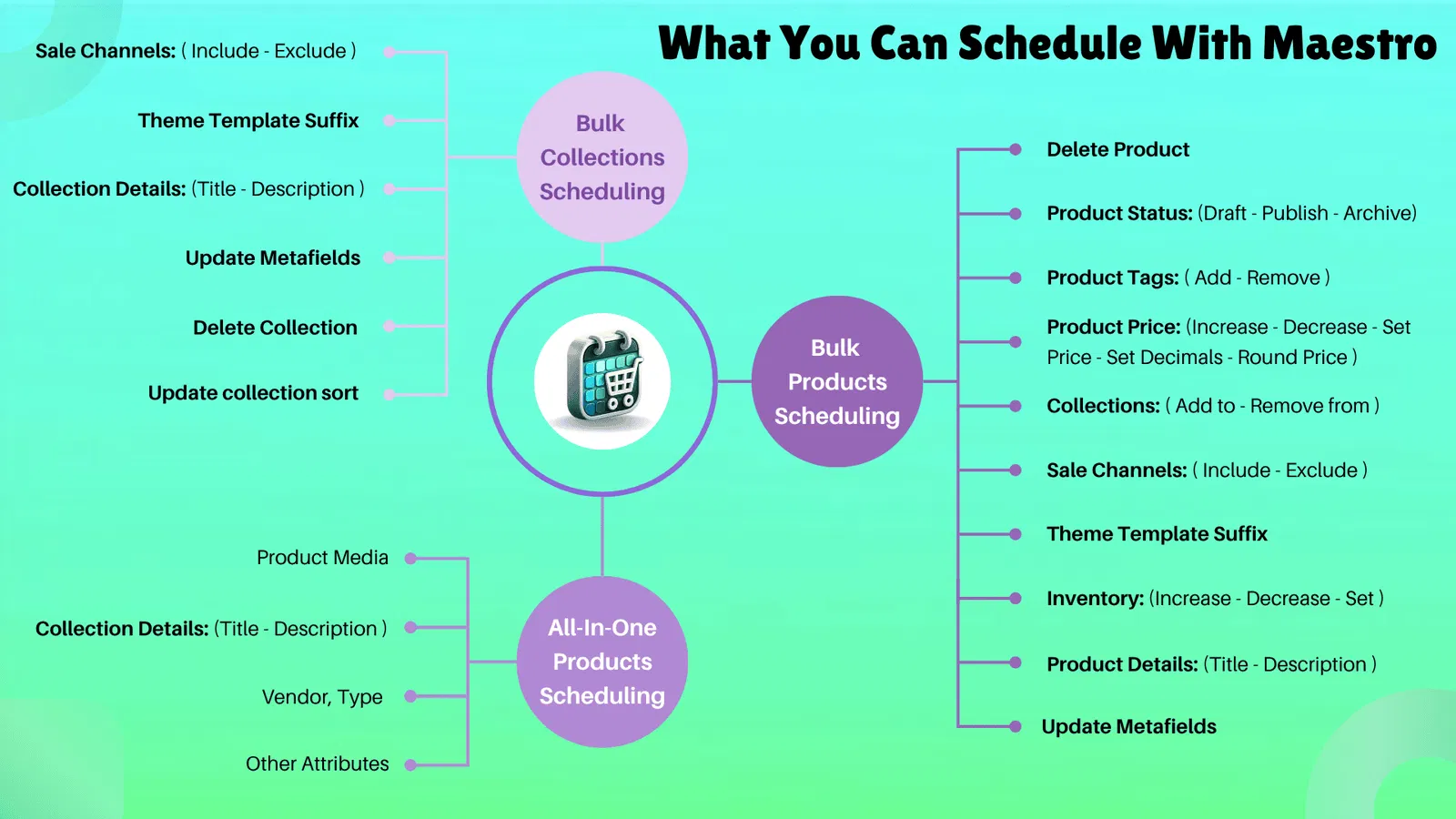
Taking the Proactive Step Toward Automation
As a Shopify expert, I can tell you that the gap between "good" stores and "great" stores is often the quality of their operations. A great store feels alive, updated, and reactive to the customer's needs.
If you are still handling your product launches and price changes manually, you are leaving money on the table and risking your sanity. It is time to embrace the power of automation. Whether you are just starting with your shopify store setup or you are looking for comprehensive ecommerce maintenance services, Maestro is the tool that will bridge the gap.
Automation is not about being lazy; it is about being efficient. It is about ensuring that your store is working for you, not the other way around. By utilizing the features within Product Scheduler by Maestro, you gain the freedom to grow your brand without being tethered to your Shopify admin panel.
If you are ready to stop the manual madness and start scaling with precision, we are here to help. You can book a meeting with our team to discuss how we can integrate these automations into your workflow or check out our FAQs to learn more about how we support Shopify Plus merchants. The future of your store is automated. It is time to join it.