
As a Shopify expert, I often see merchants drowning in the administrative swamp of manual inventory management. You know the drill. You spend your Monday mornings cross-referencing spreadsheets, logging into your Shopify admin, and manually updating stock levels for hundreds of SKUs. It is tedious, it is prone to human error, and frankly, it is a waste of your creative energy. If you are seeking a way to reclaim your time and ensure your store runs like a well-oiled machine while you sleep, you are in the right place.
Managing a growing e-commerce brand requires more than just great products. It requires sophisticated ecommerce maintenance services and a strategy that prioritizes automation. When you are scaling, the "manual way" becomes the "broken way." This is exactly why the Product Scheduler by Maestro has become a vital tool in our arsenal at XCO Agency. It transforms your Shopify admin from a static database into a dynamic, self-managing storefront.
The Hidden Cost of Manual Inventory Management
Before we dive into the "how," let's talk about the "why." Many store owners underestimate the negative impact of manual restocks on their conversion rate optimization. When inventory isn't updated in real-time or according to a strategic schedule, several things happen:
- Missed Sales Opportunities: Items sit in your warehouse but show as "Sold Out" online because someone forgot to update the quantity.
- Customer Frustration: Over-selling occurs because stock levels weren't adjusted quickly enough after a bulk shipment arrival.
- Marketing Misalignment: Your team runs an ad campaign for a product that hasn't actually been "pushed live" in the inventory settings yet.
- Operational Burnout: Your best talent is spent on data entry instead of growth-focused activities.
By automating these processes, you move toward a hands-off store model that allows you to focus on high-level strategy rather than clicking buttons in a warehouse app.
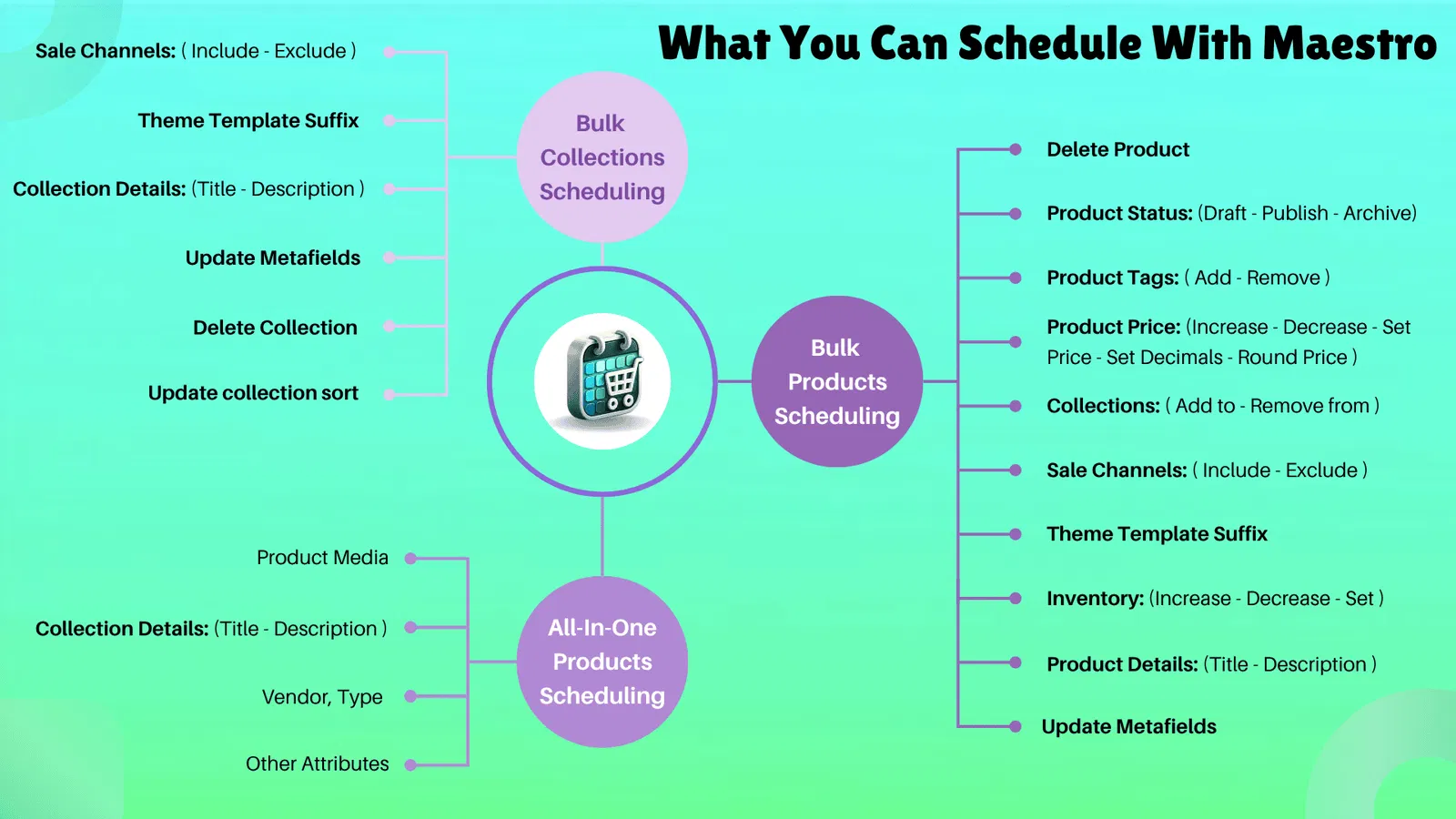
Automating Your Inventory Restocks with Maestro
The core brilliance of the Product Scheduler by Maestro lies in its ability to handle recurring inventory tasks without human intervention. Instead of remembering to update stock levels every Friday morning, you can set rules that handle it for you. This is a game-changer for businesses with predictable supply chains or those running shopify b2b wholesale channel operations where bulk quantities shift rapidly.
How to Set Up Automated Restocks
Setting up this automation is straightforward. Shopify will guide you through the initial connection, but Maestro takes it several steps further.
- Navigate to the Maestro App: Open the app within your Shopify admin dashboard.
- Select Inventory Actions: Choose the specific products or variants you want to automate.
- Define the Schedule: Choose whether you want the update to happen once or on a recurring basis (daily, weekly, or monthly).
- Set the Quantity Rules: You can choose to add a specific amount to current stock or set the stock to a fixed number.
- Enable Location-Specific Updates: If you have multiple warehouses, ensure you are updating the stock at the correct fulfillment center.
Once these steps are completed, the app works in the background. You no longer need to set reminders on your phone to "fix the inventory" at midnight.

Beyond Restocks: The Draft Helper for Scheduled Launches
During a new shopify store setup, one of the biggest headaches is the "Big Launch." You have fifty new products, and they all need to go live at exactly 9:00 AM on a Saturday. In the past, this meant someone had to be awake and clicking "Publish" frantically.
The Draft Helper feature in Product Scheduler by Maestro eliminates this stress. It allows you to prepare everything in a draft state and schedule the transition to "Active" status. This ensures that your shopify speed optimization remains intact because you aren't hitting the server with massive manual bulk edits all at once.
- Precision Timing: Align your product visibility with your social media posts and email marketing blasts.
- Status Management: Automatically move products back to "Draft" or "Archived" status once a limited-edition run is over.
- Channel Control: Choose exactly which sales channels (Online Store, POS, Facebook) the product appears on at the scheduled time.
Automated Tag Management for Seasonal Sales
Tags are the invisible backbone of a well-organized Shopify store. They power your collections, your filters, and even some of your automated marketing workflows. However, managing them manually during a seasonal sale is a nightmare.
Imagine a Black Friday scenario. You need to add a "Sale" tag to 500 items on Friday and remove it on Monday. If you miss five items, your collection filters are broken, and your conversion rate optimization takes a hit because customers can't find what they are looking for.
Maestro allows you to schedule the addition and removal of tags. This means your "Winter Collection" can automatically populate itself on December 1st and dismantle itself on March 1st. This level of automation is why we consider this app a cornerstone of modern shopify integrations.

Scheduling Price Changes and Rounding Rules
Pricing is a psychological game. Changing a price from $50.00 to $49.99 can significantly impact how a customer perceives value. But manually updating prices for a weekend flash sale? That is a recipe for a headache.
Maestro handles price scheduling with ease. You can set a start and end time for price drops, and even more importantly, you can apply rounding rules.
Why Rounding Rules Matter
When you apply a 15 percent discount across your store, you often end up with messy prices like $42.67. This looks unprofessional and can clutter your shopify design services layouts. With Maestro, you can:
- Schedule the Discount: Set the percentage or fixed amount decrease.
- Apply Rounding: Command the app to round every price to the nearest .99 or .00.
- Set the Revert Date: Ensure prices go back to normal the second the sale ends.
This ensures your store always looks polished and professional without you having to touch a single product page during the weekend.
Managing Collection Visibility and Sorting
Your homepage collections are your digital storefront windows. If the same products sit at the top of your "New Arrivals" collection for three months, your returning customers will think your brand is stagnant.
Maestro allows you to schedule changes to collection visibility and sorting orders. You can schedule a specific collection to become "hidden" after a promotion ends or change the sort order to "Best Selling" during high-traffic periods. This keeps your store feeling fresh and relevant, which is a proactive step in maintaining high engagement.
- Dynamic Sorting: Change how products are displayed based on the time of day or day of the week.
- Automatic Hiding: If a collection is tied to a specific holiday, schedule it to disappear the moment the holiday is over.
- Theme Integration: Works seamlessly with the Maestro Theme Scheduler to ensure your visuals match your product availability.

Step-by-Step Guide to a Hands-Off Store
If you are ready to transition from a manual operator to a strategic owner, follow these steps to implement Product Scheduler by Maestro:
- Audit Your Tasks: Identify which inventory and product updates you perform every week.
- Install Maestro: Add the app to your Shopify store and explore the dashboard.
- Start Small: Schedule one recurring inventory restock for your best-selling item.
- Batch Your Sales: Instead of setting up sales the day they happen, spend one hour on Monday scheduling all price changes and tag updates for the entire month.
- Monitor and Optimize: Use the app's logs to ensure everything is running smoothly.
After completing these steps, you will find that the time you used to spend on "maintenance" is now free for "growth."
Conclusion: The Vital Step Toward Scaling
As a Shopify expert, I can tell you that the difference between a store that plateaus and one that scales is automation. Product Scheduler by Maestro isn't just an app; it is an employee that never sleeps, never makes a typo, and never forgets a deadline. By automating your inventory restocks, price changes, and product launches, you are taking a vital step toward professionalizing your operations.
If you are feeling overwhelmed by the technical setup or want to explore how to further optimize your migration to shopify or your current store's performance, we are here to help. At XCO Agency, we specialize in helping merchants build systems that work for them, not the other way around.
Ready to stop manual data entry and start growing? Book a meeting with our team today, or contact us to learn more about our pricing and services. Let's make your Shopify store the powerhouse it was meant to be.