
As a Shopify expert, I often see merchants struggling with the same fundamental problem: they are slaves to their own clocks. Whether it is a midnight product drop, a Black Friday price change, or a seasonal tag update, store owners are frequently tethered to their laptops at the most inconvenient hours. This manual approach to Shopify store setup is not just exhausting; it is a significant bottleneck that limits your ability to scale.
Maintaining a high-growth store requires more than just good products. It requires efficient ecommerce maintenance services and a strategy that prioritizes conversion rate optimization. The Product Scheduler by Maestro is the tool that finally allows merchants to move from reactive management to proactive automation. In this guide, I will break down exactly how this app changes the game and why it is a vital addition to your tech stack.
The Problem with Manual Store Management
Most merchants start by doing everything by hand. You wait until the clock strikes twelve to hit "Publish" on a new collection. You manually change prices for a weekend sale and then manually change them back on Monday morning. While this works when you have ten products, it becomes an absolute nightmare when you have hundreds or thousands.
The risks of manual management include:
- Human error, such as forgetting to update a price or leaving a "Draft" product hidden when it should be live.
- Inconsistent customer experiences where tags do not align with current promotions.
- Wasted internal resources that could be spent on high-level growth strategies.
- Missed opportunities for conversion rate optimization due to delayed content updates.
Meet the Draft Helper: Your New Launch Strategy
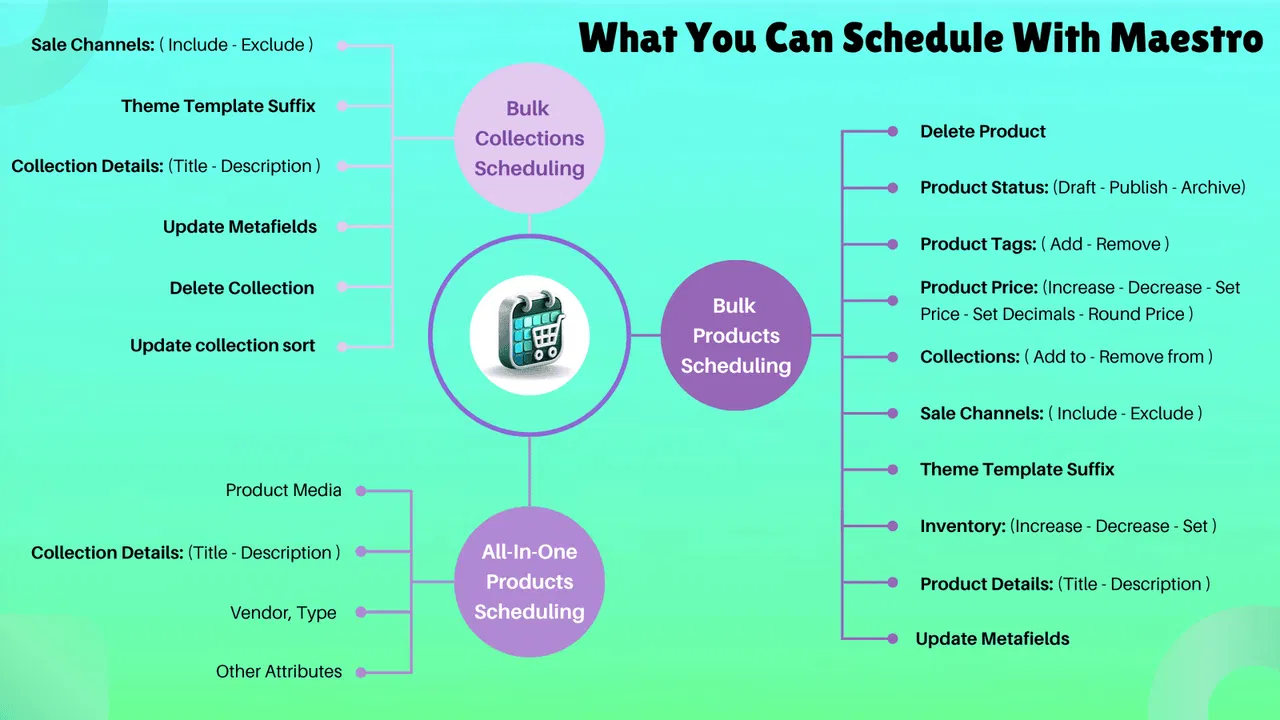
One of the most powerful features within the Maestro suite is what we call the Draft Helper. Traditionally, Shopify allows you to set a future publishing date, but it is often limited in scope. The Maestro Product Scheduler takes this much further by allowing you to schedule almost every attribute of a product launch.
Step 1: Prepare Your Product Data
Navigate to your Shopify admin and ensure your products are set to "Draft" status. This allows you to polish descriptions, images, and SEO settings without the pressure of the public eye.
Step 2: Configure the Schedule
Open the Maestro app and select the products you wish to launch. You can schedule the transition from "Draft" to "Active" with pinpoint accuracy.
Step 3: Automate the Reversion
If the product is a limited edition, you can also schedule the exact moment it should move back to "Draft" or "Archived" status.
By using these simple steps, you ensure that your Shopify store setup remains professional and timely without requiring you to be physically present at the moment of launch.
Automated Tag Management for Seasonal Sales
Tags are the invisible engine behind many Shopify features. They power your filters, your automated collections, and often your marketing triggers. However, managing tags manually during a sale is a recipe for disaster. If a product is on sale but the "Sale" tag is missing, it will not appear in your promotional collections, directly hurting your conversion rate optimization.
Product Scheduler by Maestro allows you to:
- Schedule Tag Additions: Automatically add a "Winter-Clearance" tag to 500 products at exactly 8:00 AM on Monday.
- Schedule Tag Removal: Ensure those tags disappear the moment the sale ends, so customers are not confused by expired labels.
- Maintain Collection Integrity: Since many collections are tag-based, automating the tags means you are effectively automating the entire structure of your storefront.
This level of automation is why many top-tier brands look for specialized ecommerce maintenance services to handle their backend logic. With Maestro, you can handle this complexity in-house with a few clicks.
Master Your Pricing and Rounding Rules
Price management is one of the most tedious aspects of Shopify store setup. If you are running a 20 percent off site-wide sale, updating every individual SKU is a monumental task. Furthermore, keeping your prices looking "clean" (e.g., ending in .99 or .95) is essential for psychological pricing and conversion rate optimization.
The Maestro app simplifies this by offering robust pricing schedules. You can set a start and end time for price changes and apply rounding rules automatically. For example, if a 20 percent discount results in a price of $14.32, the app can automatically round it to $13.99 or $14.00 based on your preference.
Why Rounding Rules Matter
- Professionalism: Clean prices create a more polished, trustworthy brand image.
- Consistency: Ensures all products across a category follow the same pricing logic.
- Efficiency: Eliminates the need for manual calculations or spreadsheet imports.
Once your pricing is automated, you can focus on the marketing side of the sale rather than the math.
Inventory Automation and Restock Management
There is nothing worse than running a marketing campaign for a product that is out of stock. Conversely, having a product sit in "Draft" mode while the warehouse is full of inventory is a waste of capital.
Maestro helps you manage these transitions by allowing you to schedule inventory updates. If you know a shipment is arriving on Friday, you can schedule the inventory count to increase at that time. This is particularly useful for pre-orders or "coming soon" campaigns where you want to build hype before the inventory is officially available for purchase.
By automating these updates, you reduce the risk of overselling or underselling, which are both detrimental to long-term growth. If you are unsure how to integrate this with your current warehouse flow, you can always book a meeting with our team to discuss custom integrations.
Controlling Collection Visibility and Sorting
Your homepage and collection pages are your digital storefront windows. Just like a physical store, you need to rotate your displays to keep things fresh for returning customers. Product Scheduler by Maestro allows you to schedule the visibility of entire collections.
You might want to:
- Show a "Summer Essentials" collection only from June through August.
- Hide a "Holiday Gift Guide" at midnight on December 26th.
- Change the sorting order of a collection to highlight new arrivals at the start of the month.
This level of control ensures that your store always feels current and curated. It prevents the common "stale store" feeling that occurs when seasonal items are left on the site for months after the season has passed.

Why This is a Game Changer for Ecommerce Maintenance Services
As an agency, we provide extensive ecommerce maintenance services to high-volume merchants. We have found that tools like Maestro significantly reduce the "overhead" of running a store. Instead of charging clients for hours of manual data entry, we can use that time to focus on growth strategies and Shopify speed optimization.
The ROI of this app is clear:
- Time Savings: Save dozens of hours every month on manual updates.
- Error Reduction: Eliminate the "oops" moments that cost sales.
- Agility: Launch campaigns faster than your competitors who are still doing things the old-fashioned way.
When you automate the repetitive parts of your Shopify store setup, you empower your team to think bigger. You are no longer managing a spreadsheet; you are managing a brand.
A Vital Step Toward a Hands-Off Store
The ultimate goal for many merchants is to run a "hands-off" store: a business that operates smoothly even when the owner is not at their desk. Achieving this requires a shift in mindset. You must view your store as a series of automated workflows rather than a series of manual tasks.
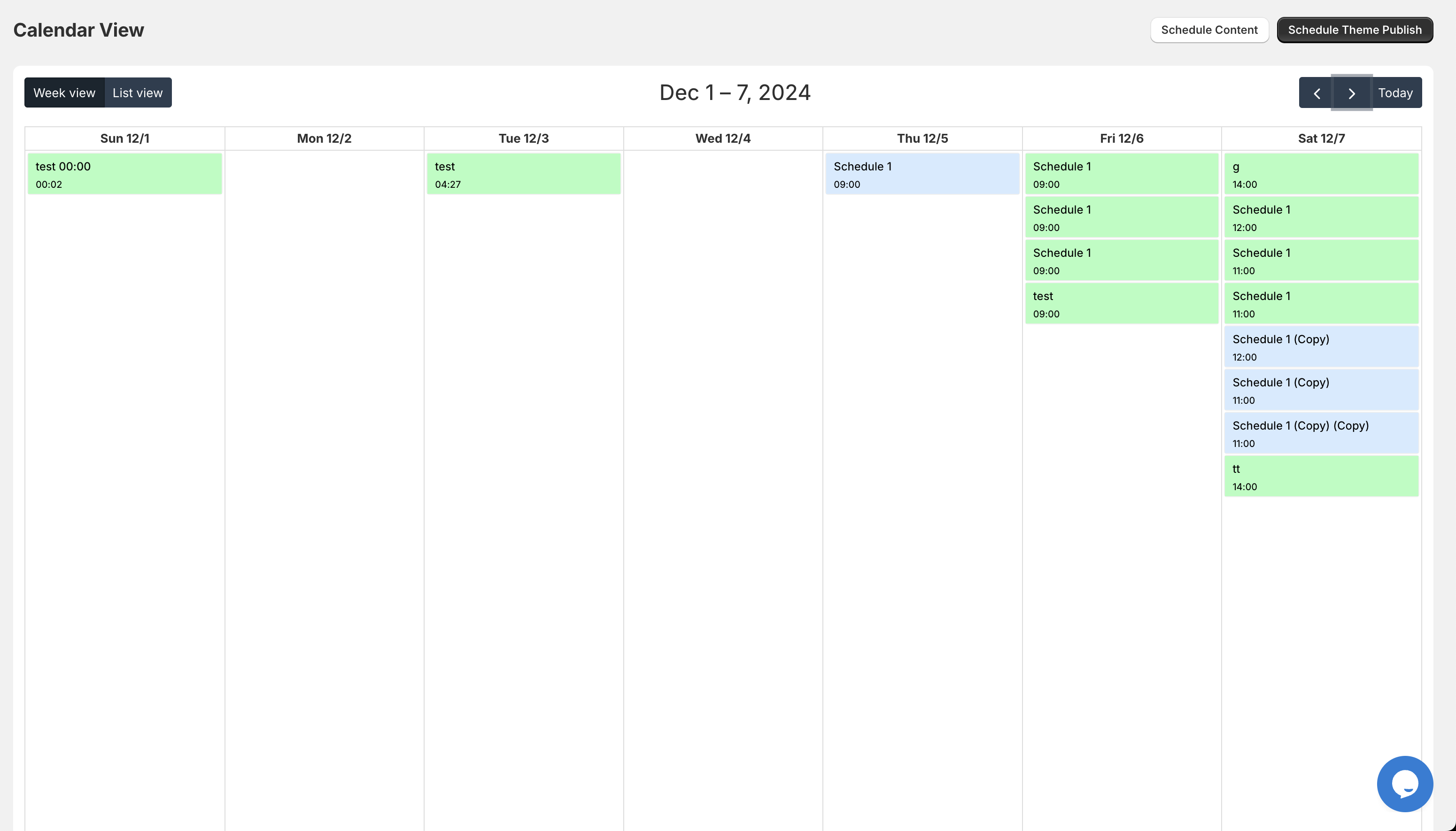
Maestro's Product Scheduler is a foundational piece of that automation puzzle. By handling the publishing, tagging, pricing, and inventory management, it removes the friction points that usually require human intervention. This not only improves your quality of life as a merchant but also optimizes your store for maximum performance.
If you are ready to take your Shopify store setup to the next level and stop living by the clock, it is time to look at how automation can work for you. Whether you are a small boutique or a Shopify B2B wholesale operation, the benefits of scheduled updates are undeniable.
Getting Started with Maestro
To begin your journey toward a more automated store, I recommend the following:
- Identify your most frequent manual tasks: Is it price changes? Tag updates?
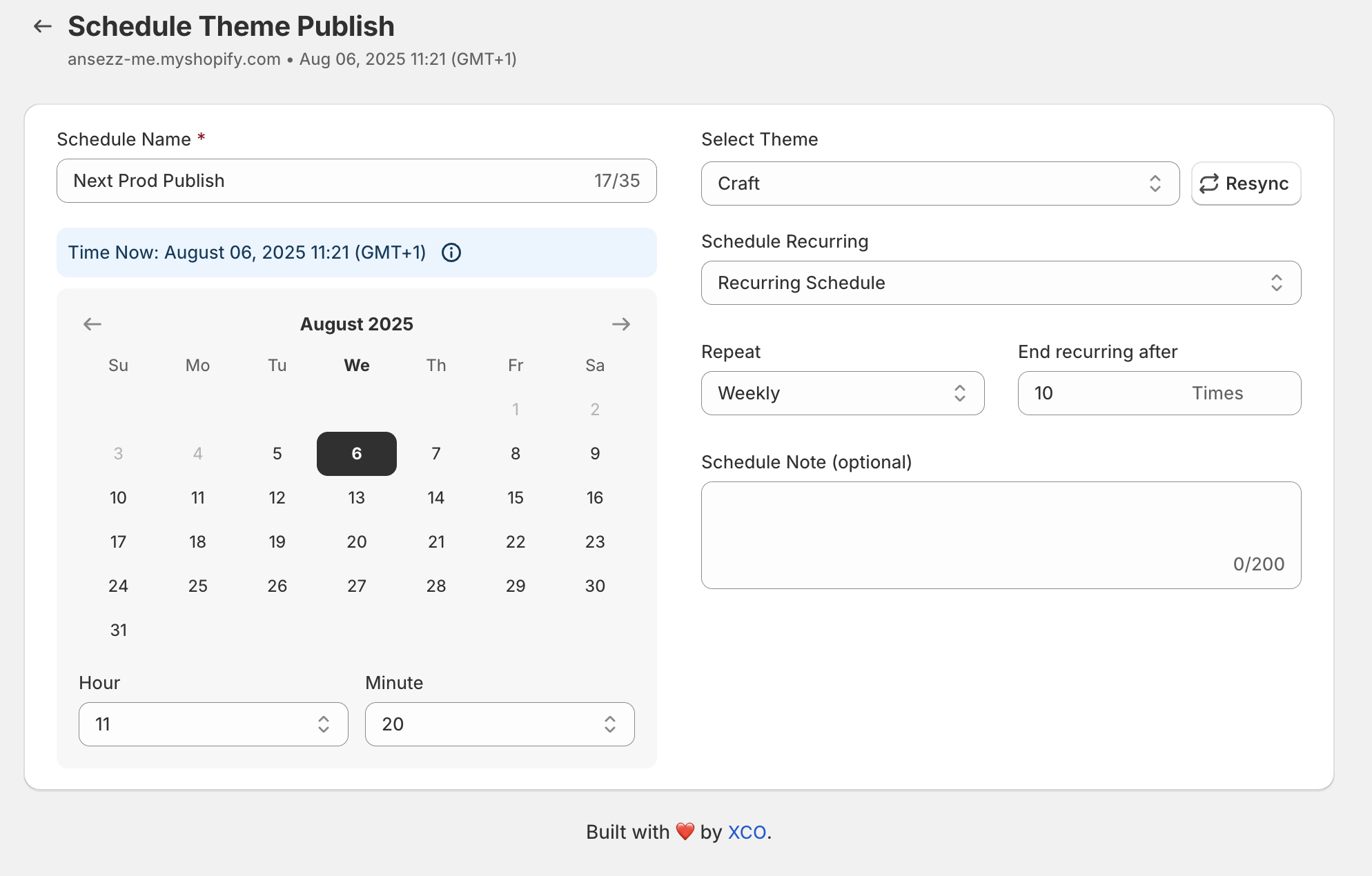
- Set up a recurring schedule: Use Maestro to automate these tasks for the next month.
- Review and Optimize: Check your results and see how the automation affects your conversion rate optimization.
If you have questions about how this fits into your broader digital marketing strategy, feel free to check our FAQs or reach out to us directly through our contact page. Taking this proactive step today will save you countless hours of stress tomorrow. Let the robots handle the midnight launches while you get some well-deserved sleep.