
As a Shopify expert, I often work with high-growth brands that find themselves trapped in a cycle of manual updates and midnight launches. For many merchants, managing custom Shopify themes feels less like professional brand management and more like a high-stakes fire drill. You are seeking a way to keep your storefront fresh and relevant without the constant anxiety of manual errors or the need to stay awake for a 2:00 AM sale launch.
In the fast-paced world of Shopify Plus development, the ability to automate your storefront appearance is no longer a luxury: it is a necessity. This is where the Maestro Theme Scheduler comes into play. It fundamentally changes the operating model of your store by turning live theme management from a reactive chore into a planned, automated workflow.
The Shift from Reactive to Proactive Theme Management
Most e-commerce teams are accustomed to a workflow that involves last-minute edits and stressful coordination. When you rely on ecommerce maintenance services to handle your updates, you often find that the bottleneck is the human element. You have to remember to publish the theme, you have to remember to hide the banner, and you have to be there to ensure nothing breaks during the transition.
Maestro Theme Scheduler introduces a "set it and forget it" philosophy that provides several key advantages:
- Operational Freedom: You can plan your entire month of promotions in a single afternoon and walk away knowing the app will handle the heavy lifting.
- Time Zone Independence: You can launch global campaigns that align with specific time zones without requiring your team to be online at odd hours.
- Design Consistency: By scheduling changes in advance, you have more time to QA your designs and ensure your custom Shopify themes look perfect before they go live.
Granular Control: Beyond Simple Theme Publishing
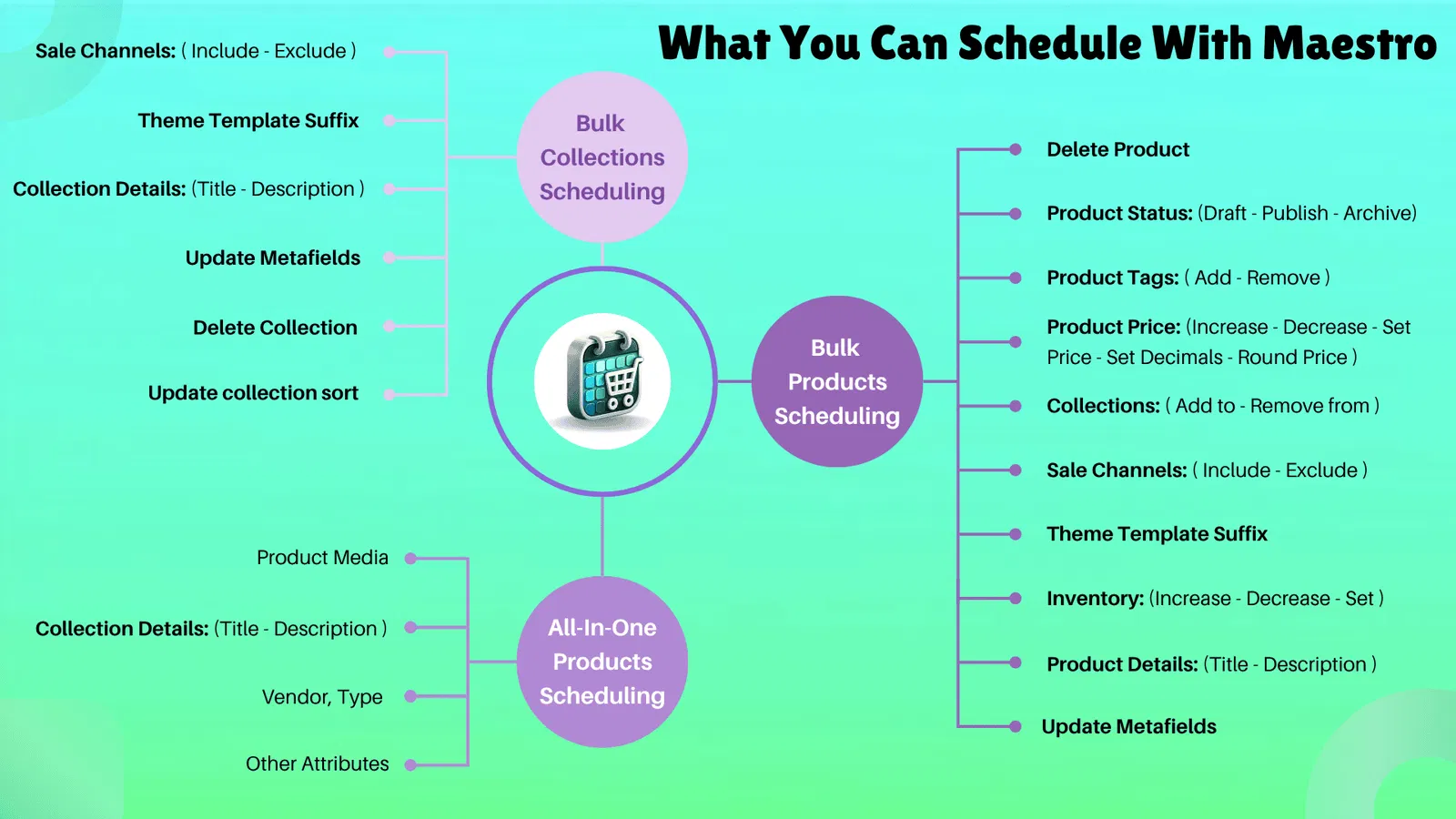
A common misconception in Shopify management is that scheduling only applies to full themes. While publishing a whole theme is a vital feature, Maestro goes much deeper. It allows for a granular level of control that is essential for complex Shopify Plus development projects where multiple teams might be working on different parts of the site.
Automating Full Theme Changes
The most straightforward use case is scheduling a full theme publish. This is perfect for major seasonal overhauls, such as transitioning from your standard brand look to a fully immersive Black Friday Cyber Monday (BFCM) experience.
- Duplicate your current theme: Create a staging version of your store.
- Apply custom designs: Use your Shopify design services to build out the promotional elements.
- Schedule the switch: Set the exact date and time for the new theme to go live and, more importantly, when it should revert to the original.
Orchestrating Sections and Blocks
The real power of Maestro lies in its ability to schedule specific sections and blocks within a theme. This means you do not have to swap the entire theme just to change a single announcement bar or hero image.
- Banner Automation: Swap out promotional banners on a schedule to keep the homepage feeling alive.
- USP Strips: Highlight different value propositions (like "Free Shipping for the Weekend") only when they are valid.
- Product Highlights: Show or hide specific product sections based on inventory drops or flash sale durations.

Transforming Campaigns into Predictable Workflows
When you treat your storefront as a series of scheduled events, your entire marketing calendar becomes more predictable. Maestro allows you to build a campaign lifecycle that moves through stages automatically.
Instead of a frantic "go live" moment, your workflow looks like this:
- Preparation Phase: Your designers and developers prepare all assets and theme modifications during normal business hours.
- Configuration Phase: You use the Maestro interface to select which sections or themes should be visible and when.
- Testing Phase: You use the preview functions to ensure that the scheduled state matches your expectations.
- Automation Phase: The app takes over, executing the transitions precisely as planned.
This structured approach significantly reduces the mental load on your team. It allows your marketing department to focus on strategy and growth strategies rather than technical execution.
Minimizing Risk and Eliminating Human Error
High-stakes days like product drops or holiday sales are exactly when manual errors are most likely to occur. Rushed edits often lead to broken layouts, missing links, or incorrect pricing displays. By utilizing ecommerce maintenance services powered by automation, you create a safety net for your brand.
Maestro reduces risk through several built-in mechanisms:
- Preview Future States: You can see exactly what your store will look like at a future date, allowing for thorough QA.
- Audit History: Keep track of what was published and when, making it easy to identify and rectify any issues.
- Targeted Edits: By changing only a specific block or section, you minimize the surface area for potential bugs compared to a full theme swap.

Real-World Use Cases for Maestro Theme Scheduler
To understand how this app changes your daily operations, consider these three common scenarios that many Shopify merchants face.
Scenario 1: The Recurring Weekend Flash Sale
If your brand runs a recurring sale every weekend, the manual effort adds up quickly. With Maestro, you can set a recurring schedule. You configure the "Sale Banner" and "Discounted Collection" sections to appear every Friday at 6:00 PM and disappear every Monday at 8:00 AM. Once this is set, you never have to think about it again.
Scenario 2: The Seasonal Brand Pivot
For a brand that pivots its aesthetic for Spring, Summer, Fall, and Winter, Maestro acts as a seasonal conductor. You can upload all your seasonal hero images and promotional blocks months in advance. You simply schedule the Spring assets to hide and the Summer assets to show on the first day of June. This ensures your store always feels fresh and aligned with the current season.
Scenario 3: Complex Product Drops
During a major product drop, you might want to show a "Coming Soon" countdown section that automatically flips to a "Shop Now" gallery the moment the products are released. Maestro handles this transition with millisecond precision, ensuring your customers have a seamless experience the moment your marketing emails hit their inboxes.
Scaling with Shopify Plus
For those invested in Shopify Plus development, the complexity of the store often scales with the revenue. Larger teams mean more moving parts and a higher chance of internal communication breakdowns. Maestro acts as a central source of truth for your storefront's timeline.
Because the app lives directly within the Shopify admin, it integrates perfectly into your existing environment. Whether you are managing a single flagship store or a suite of international expansion stores, having a centralized scheduler ensures brand consistency across all touchpoints. It allows your developers to focus on building new features while the marketing team manages the day-to-day content choreography.
Conclusion: A Vital Step Toward Maturity
The transition from manual theme management to automated scheduling is a vital step for any merchant looking to scale. By adopting the Maestro Theme Scheduler, you are not just buying an app; you are investing in a more professional, reliable, and stress-free way to run your business.
You move from a world of "don't forget to change the banner" to a world of "the campaign is already scheduled." This shift allows you to reclaim your time, reduce your operational risks, and provide a consistently high-quality experience for your customers.
If you are ready to stop babysitting your storefront and start orchestrating it, now is the time to integrate automation into your workflow. Whether you need help with custom Shopify themes or comprehensive ecommerce maintenance services, our team is here to help you optimize your store for the future.
Are you ready to automate your Shopify storefront?
Book a meeting with XCO Agency today to discuss how we can help you implement Maestro and streamline your Shopify Plus operations.