
As a Shopify expert, I often encounter high-growth merchants who feel like they have hit a glass ceiling with their current online store. They are seeking faster load times, more immersive brand experiences, and the ability to scale without the constraints of traditional theme architecture. If you have been keeping an eye on the e-commerce landscape lately, you have undoubtedly heard the name Hydrogen mentioned in every major conversation about the future of Shopify.
The buzz is not just hype. Shopify Hydrogen represents a fundamental shift in how we build and experience e-commerce. It is the platform answer to the growing demand for headless commerce, offering a toolkit that allows developers to create highly bespoke, lightning-fast storefronts using modern web technologies like React and Remix. At XCO Agency, we are seeing more brands move toward this architecture to stay competitive in a market where every millisecond of load time directly impacts the bottom line.
Why the Industry is Shifting Toward Hydrogen
For years, the Shopify ecosystem relied almost exclusively on Liquid, the flexible but traditional templating language. While Liquid is incredibly powerful for most stores, it has inherent limitations when it comes to complex, dynamic user interfaces and extreme performance optimization.
The Performance Imperative
Performance is the primary driver behind the Hydrogen movement. Research consistently shows that a one second delay in page load time can reduce conversions by up to 7 percent. In an era where mobile shopping dominates, speed is no longer a luxury, it is a survival requirement.
- Hydrogen uses a framework called Remix to deliver optimized data loading and fast initial page renders.
- By separating the front-end (what the customer sees) from the back-end (Shopify core logic), the browser has less weight to carry.
- Server-side rendering ensures that content is ready for the user immediately, improving both user experience and search engine rankings.

Complete Creative Freedom
Traditional Shopify themes, even those built with the latest Online Store 2.0 features, operate within certain layout constraints. For brands that want to push the boundaries of design with 3D product interactions, complex animations, or highly personalized content blocks, Hydrogen is the solution.
- Designers are no longer limited by the structure of standard Shopify sections.
- Developers can integrate custom APIs from third-party services without slowing down the site.
- You can create a truly unique brand identity that looks and feels nothing like a standard template.
If you are looking to reinvent your digital presence, our Shopify design services can help you navigate these advanced creative possibilities.
Understanding the Technical Advantage
Hydrogen is built with APIs at its core. This "API-first" approach means that your storefront communicates directly with the Shopify Storefront API to fetch products, collections, and customer data.
The Remix Acquisition
One of the biggest reasons everyone is talking about Hydrogen right now is Shopify's acquisition of Remix. Remix is a web framework that focuses on the fundamentals of the web to deliver a better user experience. By integrating Remix into Hydrogen, Shopify has made the development process more stable, faster, and more predictable.
- It simplifies data fetching and error handling.
- It leverages modern deployment strategies to ensure your store stays online during massive traffic spikes.
- It provides a more familiar environment for high-level developers, making it easier to build and maintain complex features.
Scalability and Global Reach
For merchants looking at growth strategies, scalability is a major concern. Hydrogen stores are inherently better at handling large volumes of traffic and complex data sets.
- Shopify uses hundreds of local servers distributed worldwide to deliver performance globally.
- Headless architecture allows you to scale specific parts of your front-end independently of your back-end operations.
- It integrates seamlessly with Shopify Markets, allowing for localized experiences across different regions without sacrificing speed.
Managing Operations in a Headless World
One common concern merchants have when moving to Hydrogen is how they will manage their day-to-day store operations. In a traditional theme, the Theme Editor is the hub for all changes. In a headless setup, things look a little different, but they don't have to be more difficult.
At XCO Agency, we specialize in ensuring that your operational efficiency remains high even as your technology becomes more sophisticated. This is where tools like our Maestro suite become vital.
Scheduling with Precision
Even on a high-performance Hydrogen storefront, you still need to manage sales, product launches, and content updates. Our Maestro Theme Scheduler is designed to help merchants automate their storefront changes.

Whether you are using a traditional theme or a hybrid approach, being able to schedule when specific sections or products go live is a game changer for seasonal campaigns.
- Automate the visibility of promotional banners.
- Schedule theme template changes to coincide with major sales.
- Reduce the need for manual midnight updates during Black Friday or Cyber Monday.
By using the Product Maestro Scheduler alongside a Hydrogen build, you can ensure that your product metadata, pricing, and availability are updated across the API exactly when they need to be, keeping your fast-moving storefront in perfect sync with your inventory.
Enhancing the Customer Experience with Claims Management
Performance and design are only two pieces of the puzzle. A high-growth brand also needs to handle post-purchase interactions with professional ease. When you build a custom storefront on Hydrogen, you have the opportunity to build custom account pages that go far beyond the standard Shopify offering.
This is where integrating an app like Claimify can significantly boost your brand's authority and trust.
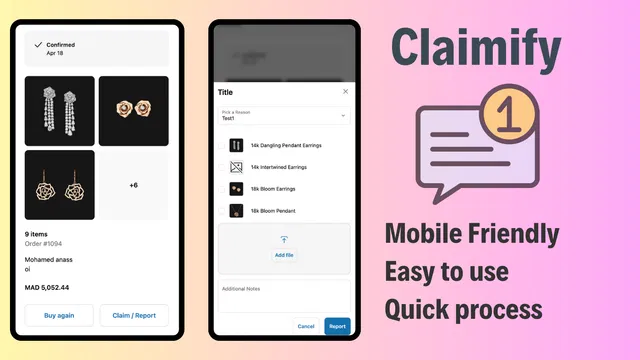
Claimify allows customers to submit product claims or report issues directly through their account page.
- It provides a professional interface for customers to upload photos and notes regarding order issues.
- It streamlines the workflow for your support team, ensuring that claims are handled quickly.
- By integrating this into your Hydrogen account portal, you maintain a seamless, high-end brand experience from discovery to resolution.
Is Hydrogen Right for Your Business?
While Hydrogen is a powerful tool, it is not a "one-size-fits-all" solution. It requires a dedicated development team and a larger initial investment than a standard theme. As a proactive step, you should evaluate your current growth trajectory.
When to Consider Hydrogen:
- Extreme Performance Needs: If your mobile conversion rate is lagging due to speed issues that cannot be solved by Shopify speed optimization alone.
- Unique Brand Requirements: If your design vision requires custom interactions that are impossible to achieve within Liquid.
- Complex Tech Stack: If you need to pull data from multiple different sources (ERPs, custom CRMs, third-party APIs) into a single, cohesive front-end.
- High-Volume Traffic: If you regularly run massive flash sales that put a strain on standard liquid rendering.

When to Stick with Liquid:
- Budget Constraints: If you are still in the early stages of growth and need to focus your capital on customer acquisition rather than custom infrastructure.
- Speed of Iteration: Traditional themes allow for very fast changes via the Shopify Theme Editor without requiring a developer for every small tweak.
- Simplicity: If a standard theme already provides everything you need to sell effectively, the added complexity of headless might not provide a sufficient ROI.
How to Start Your Hydrogen Journey
If you have decided that the performance and customization benefits of Hydrogen are what your brand needs to reach the next level, the transition requires careful planning. This is not a simple "switch," it is a full migration to Shopify headless architecture.
Step 1: Audit Your Current Setup
Examine your current tech stack. Identify which apps you are currently using and check if they have compatible APIs for a headless environment. Many popular apps now offer Storefront API support.
Step 2: Define the User Experience
Work with a design team to map out the "impossible" features you want to build. This is your chance to create something that sets you apart from every other store on the internet.
Step 3: Choose Your Development Partner
Building with Hydrogen and Remix requires a specialized skill set. You need developers who understand React, server-side rendering, and the intricacies of the Shopify Storefront API.
Step 4: Plan for Operational Continuity
Ensure your team is trained on how to manage the store post-launch. Implement scheduling tools like Product Maestro to maintain control over your automated workflows.
Conclusion
Shopify Hydrogen is more than just a trend, it is a vital step forward for the e-commerce industry. By prioritizing speed, developer experience, and creative freedom, Shopify has given high-growth merchants the tools they need to build the next generation of online stores.
While the technical barrier is higher, the rewards in terms of conversion rates, brand loyalty, and scalability are significant. At XCO Agency, we help brands navigate these complex decisions, ensuring that your move to headless is a strategic success rather than a technical headache.
If you are ready to explore how Hydrogen can transform your business, or if you simply want to optimize your current store for maximum performance, we are here to help. Book a meeting with us today to discuss your vision, or check out our Maestro apps to see how automation can power up your current operations.