
As a Shopify expert, I often find that the most successful merchants are not necessarily those who work the longest hours, but those who build the smartest systems. In the fast-paced world of digital commerce, timing is everything. Whether you are preparing for a massive Black Friday event or simply rotating seasonal banners, the manual labor involved in updating a storefront can become a significant bottleneck for growth.
Many merchants I work with are seeking ways to reduce the operational friction of managing custom shopify themes. They often struggle with late-night theme publishing, manual section updates, and the constant fear that a promotional banner might not go live on time. This is where automation becomes a vital competitive advantage.
The Maestro Theme Scheduler app was built specifically to address these pain points. It is designed to transform how merchants handle ecommerce maintenance services by introducing a "set it and forget it" workflow. This guide will walk you through everything you need to know to master this tool and reclaim your time.
Why Automated Storefront Management is Vital for Growth
Before we dive into the technical steps, it is important to understand the strategic value of automation. Managing a store manually is not just time-consuming; it is inherently risky. A missed update can mean lost revenue, while a broken layout during a high-traffic sale can damage your brand reputation.
By implementing an automated scheduling system, you can achieve several key advantages:
- Eliminate Manual Errors: Automation ensures that updates happen exactly when planned, without the risk of human oversight.
- Enhance Operational Efficiency: Your team can prepare promotional assets weeks in advance and schedule them to go live, freeing up resources for other tasks.
- Maintain Content Freshness: Regularly scheduled updates keep your storefront looking dynamic and engaging for returning customers.
- Improve Work-Life Balance: Stop staying up until midnight to hit the "Publish" button on a new theme.
- Coordinate Multi-Channel Campaigns: Align your website changes perfectly with email marketing and social media launches.
Understanding the Core Capabilities of Maestro Theme Scheduler
Maestro is not just a simple timer; it is a comprehensive suite for theme management. For those involved in shopify plus development, the granularity of control is particularly useful. Here are the primary features that make it a powerhouse for automation.
1. Automated Theme Publishing
The core functionality allows you to schedule the publication of any theme in your library. This means you can build a completely new version of your store, test it in a preview environment, and then set a specific date and time for it to become the live theme. This is essential for major site redesigns or large-scale seasonal transitions.
2. Section and Block Visibility Scheduling
Often, you do not need to change your entire theme. You might only want to show a specific promotional banner, a countdown timer, or a featured collection for a few days. Maestro allows you to schedule the visibility of individual sections and blocks within your current theme. This level of precision is a game-changer for daily marketing updates.
3. Recurring Schedules
If you run weekly sales or have content that needs to appear every weekend, you can set up recurring schedules. This ensures that your store remains updated on a consistent cycle without any ongoing manual input from your team.
4. Integration with Shopify Flow
For advanced users, Maestro integrates with Shopify Flow. This allows you to create complex automation triggers. For example, you could trigger a theme change based on inventory levels or customer tags, moving beyond simple time-based scheduling into true intelligent automation.
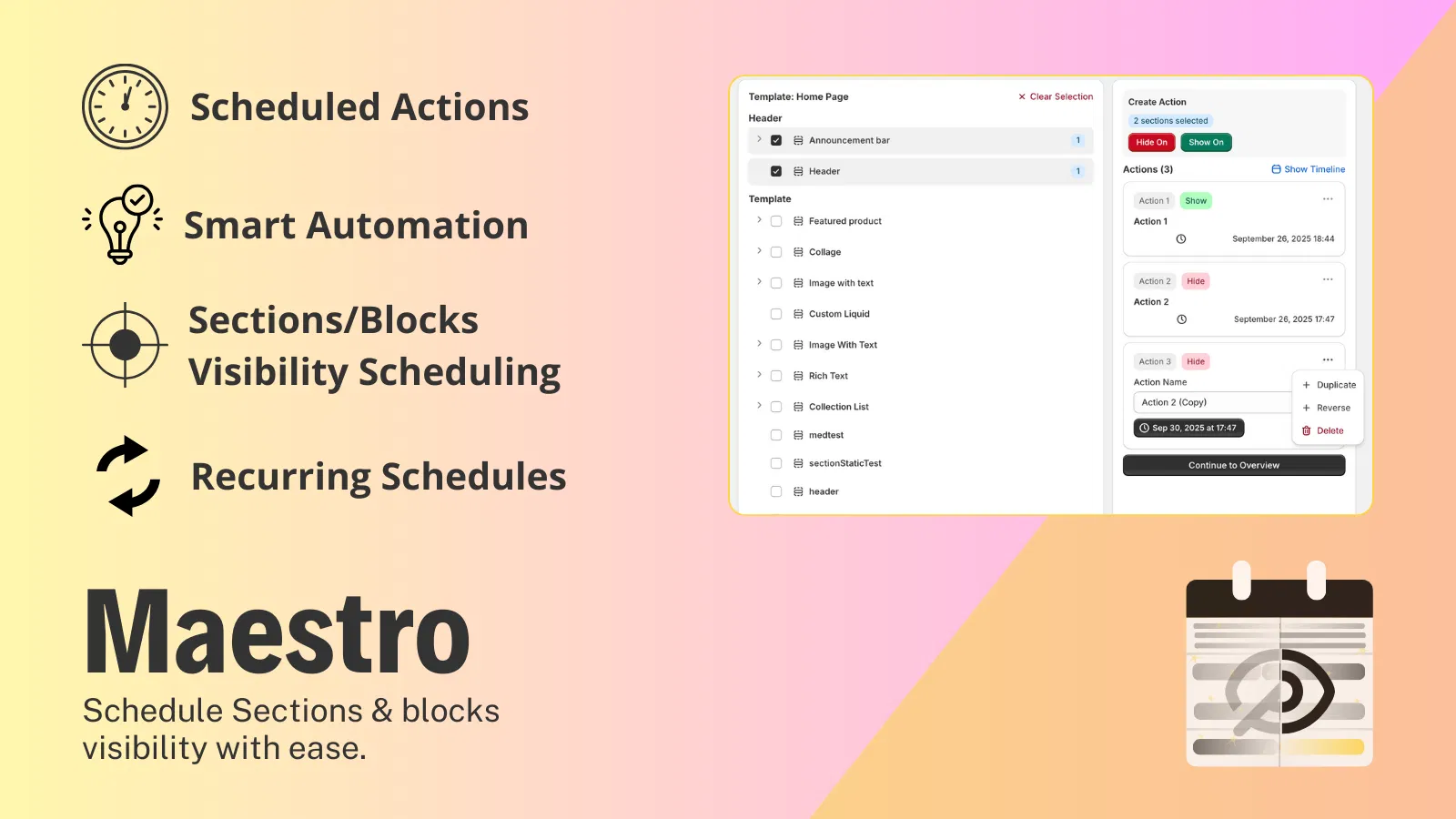
Step-by-Step: How to Schedule Your First Theme Update
Setting up your first schedule is a straightforward process. Follow these simple steps to automate your theme publishing.
Step 1: Prepare Your Theme
Before you schedule anything, you must ensure your theme is ready for the public. Navigate to your Shopify Admin and go to Online Store then Themes. Duplicate your current theme and make the necessary customizations. Once you have polished your custom shopify themes, you are ready to use Maestro.
Step 2: Access Maestro Theme Scheduler
Open the Maestro app from your Shopify Admin. You will be greeted with a clean, intuitive dashboard that gives you an overview of your active and upcoming schedules.
Step 3: Create a New Schedule
Click on the "Schedule Content" button. From here, you will select the specific theme you wish to publish.
Step 4: Define the Timing
Select the exact date and time you want the theme to go live. Ensure your time zone settings are correct to avoid any timing discrepancies. If you want the theme to automatically revert to a previous version after a certain period, you can schedule a second action to publish your original theme.
Step 5: Save and Monitor
Once you have set the parameters, click "Save Schedule." You can now see this action in your timeline. The app will handle the rest, and you can monitor the "Theme Publish History" to verify that everything executed as planned.
Managing Seasonal Promotions and Flash Sales
High-stakes events like Black Friday or limited-time flash sales are where Maestro truly shines. These events require precise timing and often involve multiple changes across the site.
As a Shopify expert, I often recommend the following framework for managing high-volume sale periods:
- The Pre-Sale Phase: Schedule a theme that features teaser banners and countdown timers to build anticipation.
- The Launch Phase: Set a theme to go live at the exact second the sale starts, featuring the discounted products and updated navigation.
- The Final Push: Use section scheduling to swap out banners mid-sale, highlighting "Final Hours" or "Selling Fast" messaging.
- The Cleanup: Schedule the store to revert to the standard theme immediately after the sale ends, ensuring no expired promotions are left visible to customers.
By breaking your promotion into these scheduled phases, you can manage complex ecommerce maintenance services with total confidence.

Advanced Tactics for Shopify Plus Merchants
For those operating on Shopify Plus, the requirements are often more complex. Large-scale brands often have multiple teams working on different aspects of the site. Maestro supports these enterprise-level needs through organized workflows.
When working on shopify plus development projects, we use Maestro to manage "Grouped Schedules." This allows us to coordinate changes across various templates simultaneously. For instance, if you are launching a new product line, you might need to update the Home Page, the Collection Page, and the Navigation Menu all at once. By grouping these schedules, you ensure a cohesive customer experience across the entire site.
Furthermore, the "Theme Publish History" feature provides an essential audit trail. In a large organization, knowing exactly who scheduled what and when it went live is vital for accountability and troubleshooting.
Essential Tips for Success with Automation
To get the most out of your automated storefront, keep these best practices in mind:
- Always Use Duplicates: Never edit your live theme directly. Always work on a duplicate and schedule the publication of that duplicate.
- Double-Check Time Zones: This is the most common cause of scheduling errors. Ensure your store's time zone matches your marketing launch plan.
- Test Section Visibility: Before a big sale, test the visibility of specific blocks in a preview theme to ensure they align correctly with the surrounding content.
- Leverage Recurring Cycles: If you have a "New Arrivals" section that updates every Tuesday, use the recurring feature to set it once and let it run for the rest of the year.
- Monitor Your History: Regularly check your publish history to ensure all tasks are completing successfully.

The Strategic Importance of Ecommerce Maintenance Services
Maintaining a Shopify store is not a one-time task; it is an ongoing process of optimization. Many merchants underestimate the amount of work required to keep a store looking professional and up-to-date. By utilizing tools like Maestro, you are effectively automating a significant portion of your ecommerce maintenance services.
This proactive approach allows you to focus on high-level growth strategies rather than getting bogged down in the minutiae of daily site updates. It also ensures that your store remains a high-performance sales tool that never sleeps and never misses a beat.
If you find that managing these technical aspects is still taking up too much of your time, it might be time to book a meeting with experts who can help streamline your operations.
Conclusion: Taking the Proactive Step Toward Automation
As we have explored in this guide, the Maestro Theme Scheduler is more than just a utility; it is a strategic asset for any ambitious Shopify merchant. By moving away from manual updates and embracing automated storefronts, you significantly reduce operational risk and increase your team's efficiency.
The transition to an automated workflow is a vital step for any brand looking to scale. Whether you are managing custom shopify themes for a boutique brand or overseeing complex shopify plus development for a global enterprise, the "set it and forget it" nature of Maestro provides the peace of mind you need to focus on what truly matters: growing your business.

Ready to transform your store management? You can learn more about our specialized apps on the Maestro Theme Scheduler page or visit our FAQ section for more information on how we support merchants like you. Don't let manual updates hold you back any longer. Start your automation journey today and experience the power of a truly automated Shopify storefront.