
As a Shopify expert, I often work with high growth merchants who feel they have hit a glass ceiling with traditional theme architecture. They are seeking faster load times, more creative freedom, and the ability to deliver a truly unique brand experience that goes beyond the constraints of a standard liquid template. This is where headless commerce comes into play.
In the past, going headless was a daunting task that required a massive budget and a dedicated team of developers to manage separate infrastructures. However, Shopify changed the game with the introduction of Hydrogen and Oxygen. These tools have democratized headless commerce, making it more accessible for brands that want to scale without the traditional technical headaches.
Understanding the Headless Shift
Headless commerce is the architectural approach of decoupling the front end of your website from the back end. In a traditional Shopify setup, the "head" (the storefront your customers see) and the "body" (the Shopify admin, database, and checkout) are tightly linked through the Liquid templating engine.
While Liquid is powerful and efficient for most stores, a headless approach allows you to build your storefront using modern JavaScript frameworks while Shopify continues to handle the heavy lifting of inventory, orders, and payments. By separating these layers, you gain significant advantages:
- Unmatched Performance: You can build a progressive web app (PWA) that loads instantly, providing a seamless transition between pages.
- Total Design Freedom: You are no longer limited by theme settings or layout constraints; if you can imagine it, you can build it.
- Omnichannel Consistency: Use a single source of truth for your product data across web, mobile apps, and even AR/VR interfaces.
- Faster Development Cycles: Front end and back end teams can work independently, speeding up the deployment of new features.

What is Hydrogen and Why Does it Matter?
Hydrogen is Shopify's proprietary, React based framework designed specifically for building custom storefronts. It is not just another framework; it is a specialized toolkit that includes everything a developer needs to build a world class commerce experience.
Hydrogen includes pre built components, hooks, and utilities that are already optimized for the Shopify Storefront API. This means developers do not have to spend weeks building basic functionality like "Add to Cart" buttons or image galleries from scratch.
The Core Benefits of Hydrogen
- React Based Efficiency: It leverages the power of React, which is the industry standard for building interactive user interfaces.
- Built in Components: It comes with commerce ready components that handle complex logic like variant selection and shopping cart management.
- Smart Caching: Hydrogen includes advanced caching strategies that ensure your data is always fresh without sacrificing speed.
- Server Side Rendering (SSR): This ensures that your site is SEO friendly and loads quickly for users by rendering the page on the server before it reaches the browser.
The Role of Oxygen Hosting
Building a custom storefront is only half the battle; you also need a place to host it. Oxygen is Shopify's global hosting solution built specifically for Hydrogen applications. It allows you to deploy your site directly from the Shopify admin, removing the need for third party hosting providers like Vercel or AWS for your front end.
Oxygen runs on Shopify's global edge network. This means your storefront is served from servers physically close to your customers, significantly reducing latency and improving the overall user experience. For Shopify Plus merchants, Oxygen is included in the platform costs, providing a high performance hosting environment without additional overhead.

Technical Requirements for Success
Before you dive into a headless project, it is vital to ensure your team is prepared for the technical shift. While Hydrogen simplifies the process, it still requires a higher level of technical expertise than managing a traditional theme.
Here are the primary requirements:
- Node.js Knowledge: Your development team must be comfortable working with Node.js for server side operations.
- React Proficiency: Since Hydrogen is built on React, a deep understanding of components, hooks, and state management is essential.
- Storefront API Familiarity: You will need to interact directly with the Storefront API to fetch product data and manage checkouts.
- Git Workflow: Professional version control is a must for managing code changes and deploying to Oxygen.
If your team does not have these skills in house, partnering with an experienced agency like XCO Agency can help you navigate the transition smoothly. We specialize in Shopify design services and custom development tailored for high growth brands.
Step by Step Implementation Strategy
Successfully launching a headless store requires a structured approach. I recommend following these steps to ensure a smooth rollout:
Step 1: Define Your Goals
Identify exactly why you are going headless. Is it for speed? Is it for a specific custom feature? Having clear objectives will help you make better architectural decisions throughout the project.
Step 2: Set Up Your Development Environment
Install the Shopify CLI and initialize a new Hydrogen project. Connect your project to your Shopify store and pull in your environment variables. Ensure that you have the Storefront API enabled in your admin settings.
Step 3: Build the Foundation
Start by building the core pages: home, collections, and products. Use Hydrogen's built in hooks to fetch data. Focus on creating a clean, modular structure that your team can easily update later.
Step 4: Implement Advanced Features
Once the basics are in place, start adding the custom interactions that motivated the shift to headless. This might include interactive 3D models, complex filtering, or personalized content based on user behavior.
Step 5: Test and Optimize
Performance is the primary driver for headless commerce. Use tools like Lighthouse to monitor your speed and optimize your queries to ensure they are as efficient as possible. Shopify will guide you through the deployment process within the admin.
Operational Excellence in a Headless World
One concern merchants often have is how to manage their store once it is headless. In a traditional setup, apps like Maestro Theme Scheduler allow you to automate changes to your visual layout. In a headless environment, you need to ensure your backend tools still talk to your front end effectively.
Even when decoupled, tools like the Product Maestro Scheduler remain essential for managing product launches and collection updates. These apps provide the automation and smart scheduling that high growth brands need to stay agile.
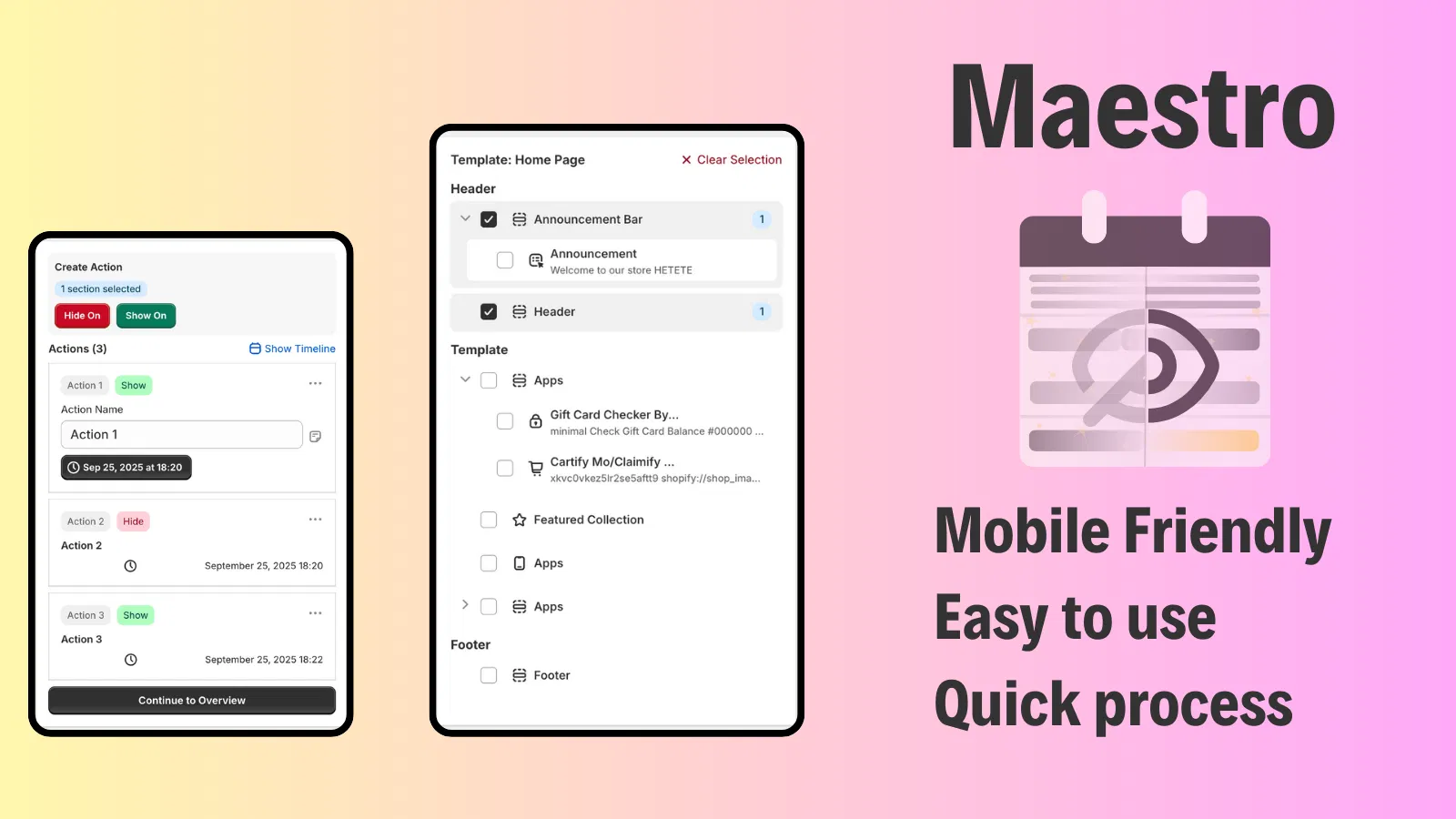
For example, if you are planning a major product drop, you can use scheduling tools to ensure that new inventory and promotional content appear exactly when they should, without needing a developer to push code changes manually at midnight. This allows your team to focus on growth strategies rather than manual site maintenance.
Performance Optimization and Best Practices
To get the most out of your Hydrogen store, you should follow these industry best practices:
- Minimize Third Party Scripts: Each script you add can slow down your site. Evaluate every tracker and widget to ensure it provides real value.
- Optimize Your Images: Use Hydrogen's built in image components to automatically serve the right size and format to your users.
- Prioritize Server Side Operations: Use React Server Components to handle data fetching. This keeps the client side bundle small and ensures the page is interactive as quickly as possible.
- Monitor Core Web Vitals: Keep a close eye on your Largest Contentful Paint (LCP) and Cumulative Layout Shift (CLS). Headless stores should excel in these areas.

Is Headless Right for You?
While the benefits are clear, headless commerce is not a one size fits all solution. It is a strategic investment that makes sense for brands with specific needs. You should consider going headless if:
- You have exceeded the capabilities of the Shopify Online Store 2.0 architecture.
- Your brand requires a highly bespoke user experience that cannot be achieved with Liquid.
- You need to integrate your store with multiple platforms or custom internal systems.
- You have the budget and technical resources to maintain a custom codebase.
For many merchants, a well optimized Liquid theme is more than enough. However, for those aiming for the absolute peak of performance and customization, Hydrogen and Oxygen represent the future of Shopify commerce.
Conclusion
Transitioning to a headless architecture with Hydrogen is a proactive step toward future proofing your brand. By decoupling your storefront, you unlock the speed and flexibility required to compete at the highest levels of e-commerce. It is a journey that requires careful planning, technical expertise, and the right tools.
At XCO Agency, we help brands navigate these complex transitions, from migration to Shopify to building high performance headless storefronts. If you are ready to explore how Hydrogen can power your next phase of growth, book a meeting with our team today. Whether you need help with shopify speed optimization or a full scale custom build, we are here to ensure your success in the evolving digital landscape.