
As someone who's built businesses in the e-commerce space, I've learned one hard truth: hustle will only get you so far. When I started working with Shopify merchants years ago, the grind was real. Store owners were manually scheduling theme changes at midnight, updating product collections every Monday morning, and drowning in spreadsheets trying to track shipping claims. The belief was simple: work harder, grow faster.
But here's what I discovered: systems beat hustle every single time.
The future of e-commerce isn't about working more hours. It's about building intelligent systems that work while you sleep, scale without breaking, and free you to focus on what actually moves the needle: strategy, relationships, and innovation.
The Hustle Trap: Why Manual Processes Kill Growth
I've watched talented founders burn out trying to do everything themselves. They're convinced that hands-on control equals better results. But manual operations create invisible ceilings that cap your growth potential.
Here's what happens when you rely on hustle over systems:
You hit volume bottlenecks. When order volume doubles, your workload doubles too. There's no leverage. You're trapped in a linear relationship between effort and output, which means you can't scale without hiring proportionally more people.
Errors multiply under pressure. Manual data entry, inventory updates, and order processing all carry human error risk. One mistaken inventory count leads to overselling. One missed email leads to an angry customer. These mistakes aren't just annoying: they're expensive.
Strategic work gets postponed. When you're buried in operational tasks, you don't have mental bandwidth for the work that actually grows your business. Marketing campaigns get delayed. Partnership opportunities slip through. You're too busy fighting fires to build fireproofing.
The reality is brutal: manual processes don't scale, and they certainly don't compound. Every hour you spend on repetitive tasks is an hour not spent on strategy.
The System Advantage: How Automation Creates Leverage
E-commerce automation isn't just about saving time: it's about creating exponential leverage. When you build systems that handle repetitive work automatically, something magical happens: you decouple growth from headcount.

Here's why automated systems outperform manual hustle:
Scalability without proportional cost increases. Automation allows you to handle double or triple your order volume with the same team size. Your systems process higher volumes while maintaining accuracy under pressure. This means you can grow revenue 300% without tripling your payroll.
Labor cost savings enable strategic reinvestment. When you're not paying people to do repetitive data entry, you can redirect those resources toward growth initiatives. Hire a marketing strategist instead of another VA. Invest in customer acquisition instead of manual inventory management.
Consistency at scale becomes possible. Real-time inventory syncing across sales channels prevents overselling disasters. Automated order confirmations fire within seconds. Stock levels update instantly across your website, Amazon, and retail channels. No amount of human hustle can match that speed and accuracy.
Error reduction protects your margins. Automated systems minimize costly mistakes in order processing, inventory management, and returns. When a customer requests a return, automation handles the workflow: no manual tracking, no missed refunds, no angry customers waiting days for responses.
Real-World Automation: The Tools That Changed Everything
At XCO Agency, we've built tools that embody this systems-over-hustle philosophy. Let me walk you through how modern automation actually works in practice.
Maestro Theme Scheduler: Set It and Forget It
I remember talking to a merchant who was literally setting alarms for 2 AM to manually publish seasonal themes. Black Friday prep meant staying up late. Holiday campaigns required weekend work. It was exhausting and unsustainable.
That's why we built Maestro Theme Scheduler. Instead of manual theme changes, you schedule them once and forget about them. Black Friday theme goes live automatically. Holiday banners appear on schedule. Sale countdowns activate precisely when you want them.
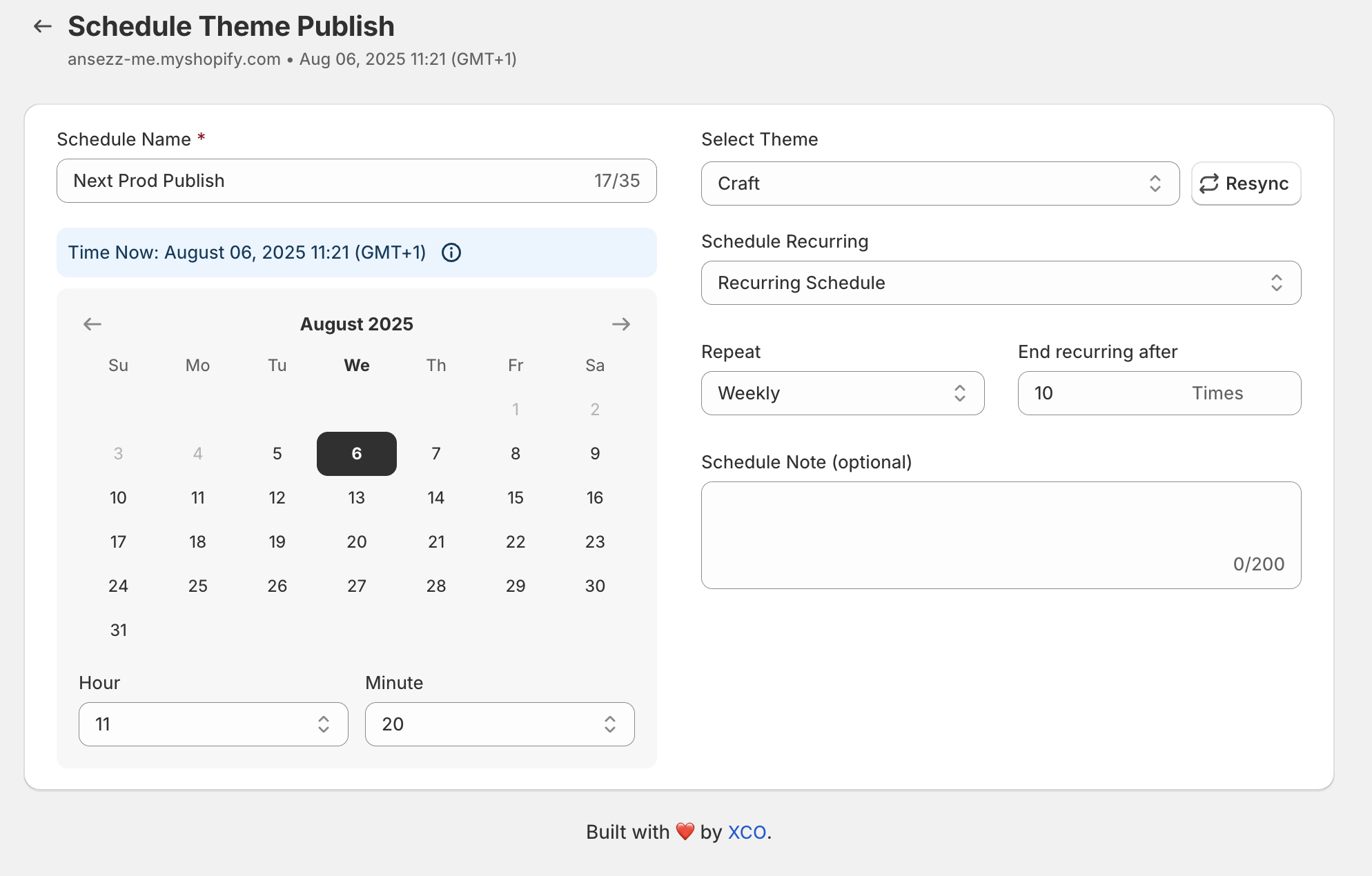
The beauty is in the recurring automation. Set your weekly promotional theme to rotate every Monday at 9 AM for 10 weeks straight. The system handles it. You're free to focus on what those promotions actually say, not the mechanics of publishing them.
Product Maestro: Smart Scheduling at Scale
Product visibility scheduling used to mean setting calendar reminders and hoping you remembered to manually hide/show products. Miss one deadline and your pre-order product stays hidden while customers complain it's sold out.
Product Maestro automates the entire lifecycle. Schedule products to appear when inventory arrives. Auto-hide items when stock runs low. Create recurring weekly product rotations for subscription boxes. The system manages the execution while you manage the strategy.
Claimify and Workify: Turning Problems into Systems
Shipping claims and team workflows are perfect examples of tasks that feel too complex to automate: until they're not. Claimify handles the entire shipping claim process automatically. Lost package? The system files the claim with carriers, tracks resolution, and keeps customers updated. What used to take hours of back-and-forth emails now happens automatically.
Workify brings that same automation philosophy to internal workflows. Task assignments, deadline reminders, project status updates: all handled systematically. Your team focuses on doing the work, not managing the work.
Manual vs. Automated: A Real Comparison
Let's break down what a typical week looks like with and without automation:
Manual Operations:
- Monday morning: Manually publish new product collections (45 minutes)
- Daily: Check and respond to shipping claim emails (2 hours)
- Wednesday: Update seasonal theme for weekend sale (30 minutes)
- Friday: Review inventory and manually adjust product visibility (1 hour)
- Total weekly time: 12+ hours on repetitive tasks
Automated Operations:
- Monday: Collections publish automatically on schedule
- Daily: Claimify handles shipping claims end-to-end
- Wednesday: Theme changes happen automatically via Maestro
- Friday: Product Maestro adjusts visibility based on inventory rules
- Total weekly time: Maybe 30 minutes reviewing dashboards
That's not a 10% improvement. That's a 95% reduction in operational overhead. Those 11.5 hours? That's where strategy happens. That's where growth lives.

The Competitive Reality: Automation Is No Longer Optional
Here's the uncomfortable truth: your competitors are already automating. The question isn't whether to adopt e-commerce automation: it's whether you'll do it before you're left behind.
Businesses that embrace automation routinely handle exponentially larger volumes than their manually-operated competitors. They respond faster, scale more efficiently, and operate with better margins. This creates a compounding advantage that's nearly impossible to overcome through hustle alone.
Automation enables operational agility. When labor shortages hit (and they will), automated businesses continue operating smoothly. When demand spikes unexpectedly, systems handle the load without breaking. When you want to test a new market or channel, you can do it without hiring a new team first.
The transformation is systemic. Teams shift from executing tasks to designing strategy. Customer service reps become customer success partners because they're not buried in manual order tracking. Marketing managers focus on creative campaigns instead of scheduling logistics.
Building Your Automated Future
If you're still manually managing your store operations, you're not just working harder than necessary: you're limiting your growth ceiling. The future belongs to founders who build systems that scale independently of their personal effort.
Start with the tasks that drain the most time and provide the least strategic value. Theme changes. Product scheduling. Shipping claims. Team workflows. These are perfect candidates for automation because they're repetitive, rule-based, and absolutely critical to operations.
The tools exist. The technology works. The only question is whether you're ready to stop hustling and start systematizing.
At XCO Agency, we help Shopify merchants make this transition every day. We've seen firsthand how automation transforms not just operations, but entire business trajectories. Founders go from firefighting to strategy. Teams go from exhausted to energized. Growth goes from linear to exponential.
The future of e-commerce is automated. The only question is whether you'll be leading that future or chasing it.
Ready to build systems that scale? Let's talk about how automation can transform your store. Because your time is too valuable to waste on tasks a system could handle better.