
As a Shopify expert, I often see merchants trapped in a cycle of "Admin Fatigue." You know the feeling. It is 11:30 PM on a Sunday, and instead of relaxing, you are hunched over your laptop manually changing prices for a Monday morning flash sale. Or perhaps you are clicking through dozens of product pages to add a "Summer Sale" tag because your current Shopify store setup lacks the automation required to scale.
If you are seeking a way to reclaim your time while actually improving your conversion rate optimization, you have come to the right place. Manual catalog updates are not just boring; they are a recipe for human error. A misplaced decimal point or a forgotten "out of stock" tag can cost you thousands in lost revenue and customer trust.
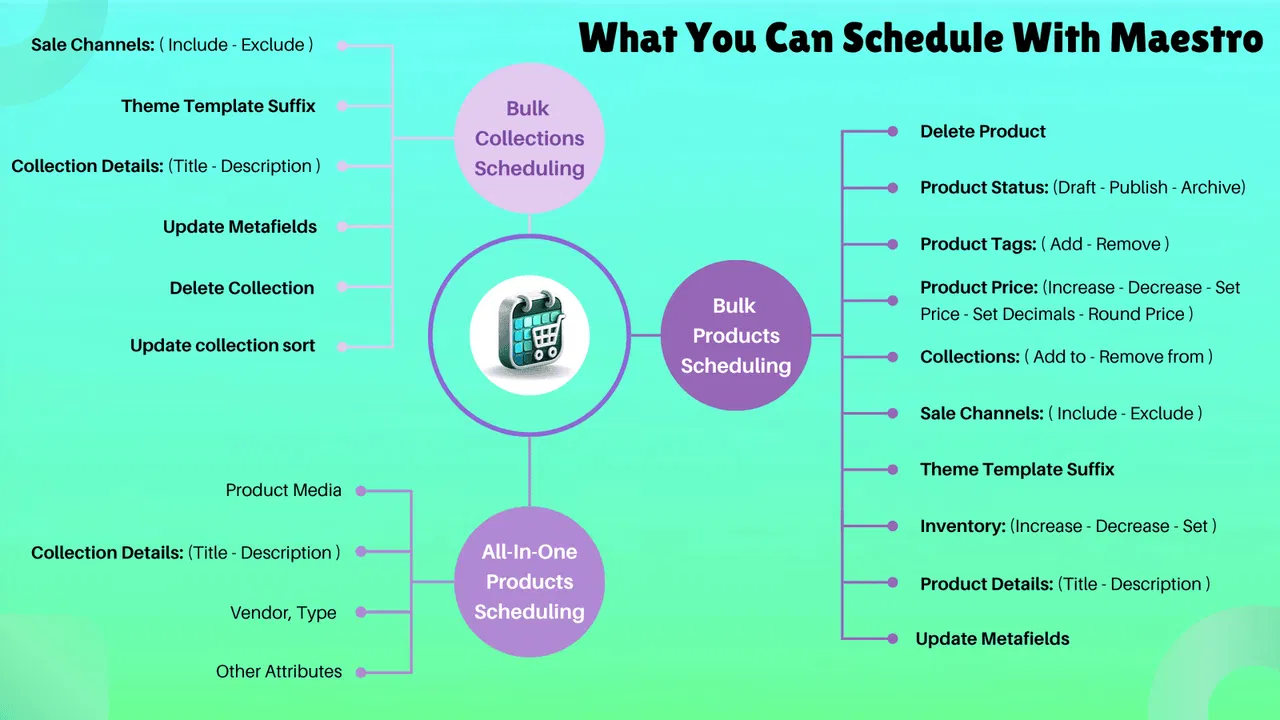
The goal is to transition from a manual operator to a strategic owner. By implementing a few clever automation hacks, primarily using the Product Scheduler by Maestro app, you can build a truly hands-off store. Here is how we do it at XCO Agency for our high-growth clients.
Why Catalog Automation is Vital for Growth
Before we dive into the "how," let's talk about the "why." Automating your catalog management offers several key advantages:
- Reduces Human Error: Automation ensures that prices, tags, and visibility settings are applied consistently across thousands of SKUs.
- Boosts Conversion Rates: By ensuring that sales start exactly when promised and that "New Arrival" collections are always fresh, you create a sense of urgency and reliability.
- Saves Significant Labor Costs: Every hour you or your team spends on manual data entry is an hour not spent on marketing or growth strategies.
- Enhances Scalability: You can manage a catalog of 10,000 items as easily as a catalog of 10.
1. Use the "Draft Helper" for Midnight Launches
As a Shopify expert, I have witnessed too many merchants sacrifice sleep for a product drop. The standard Shopify admin allows you to schedule a "published" date, but it often lacks the flexibility to handle complex launches involving multiple collections and theme changes simultaneously.
The "Draft Helper" feature within the Maestro app allows you to prepare your products in draft mode and schedule their transition to "Active" status with surgical precision.
How to implement this:
- Prepare your listings: Create your products as drafts. Ensure all descriptions, images, and SEO metadata are ready.
- Open Product Scheduler by Maestro: Navigate to the app inside your Shopify admin.
- Create a Scheduled Action: Select your draft products and set the exact date and time for them to go live.
- Sync with Marketing: Now you can schedule your email marketing and social media posts knowing the site will update itself while you sleep.
2. Automate Tag Management for Seasonal Sales
Tags are the engine behind your store's filtering and collection logic. However, manually adding "Sale" or "Holiday" tags to hundreds of items is a nightmare. This is a common bottleneck in ecommerce maintenance services.
Automated tag management allows you to apply or remove tags based on a schedule. This is perfect for limited-time promotions.
Key steps for automated tagging:
- Define your criteria: Decide which products need the new tag (e.g., all items in the "Accessories" collection).
- Set the start time: Use Maestro to apply the "Sale" tag at the start of your promotion.
- Set the end time: Schedule the automatic removal of the tag once the sale ends.
- Watch your collections update: Since your Shopify collections are likely based on these tags, your sale page will populate and depopulate automatically.
3. Schedule Price Changes and Rounding Rules
Nothing kills a conversion rate optimization strategy faster than inconsistent pricing. If your banner says "30% off" but the product page still shows the full price, customers will bounce.
Manual price updates are also dangerous because it is easy to forget to change them back after the sale. Product Scheduler by Maestro allows you to schedule price changes and even apply rounding rules to keep your store looking professional (e.g., ensuring all prices end in .99).
Pro-tip for pricing:
- Navigate to the Pricing tab in the Maestro app.
- Select your products or entire collections.
- Choose "Decrease by Percentage" for your sale.
- Enable Rounding Rules to maintain a clean aesthetic across your store.

4. Leverage Inventory Automation for Restocks
Managing "Back in Stock" announcements is a full-time job if done manually. If you have a popular item that frequently sells out, you need a hands-off way to handle its visibility.
Instead of manually checking inventory levels, use automation to change product tags or visibility status based on stock count. When a product hits zero, the app can automatically add an "Out of Stock" tag or move it to the bottom of the collection to prevent customer frustration.
5. Automate Collection Visibility and Sorting
A common mistake in Shopify store setup is leaving "Christmas" or "Black Friday" collections visible in January. It makes the brand look abandoned.
With advanced scheduling, you can hide or show entire collections based on specific dates. Furthermore, you can schedule the sorting order of your collections. For example, during a launch, you might want "New Arrivals" at the very top. After a week, you might want to revert to "Best Sellers."
How to automate collection flow:
- Go to Collection Management in the Maestro app.
- Select the collection you wish to modify.
- Schedule the "Visibility" status.
- Set a recurring schedule if you have monthly drops that follow a specific pattern.
6. Implement Bulk Uploads and Omnichannel Sync
If you are selling on Shopify, Amazon, and eBay, manual updates are your enemy. Based on our research into high-efficiency catalog management, a centralized cloud-based database is the way to go.
Instead of updating products individually, use bulk upload tools and API integrations. This ensures that when you change a description or a price in your Shopify "Source of Truth," it reflects everywhere. This is a vital part of our Shopify integrations service at XCO Agency.

7. Use AI for Data Enrichment and Cleaning
Data quality is often overlooked. Spelling mistakes and inconsistent formatting can hurt your brand authority. Modern catalog tools now leverage AI to automatically fill in data gaps.
AI Hacks for your catalog:
- Automatic Description Generation: Use AI to generate SEO-friendly descriptions from a few bullet points.
- Data Cleaning: Use automated scripts to remove HTML tags from imported data or to normalize values (e.g., changing "XL" to "Extra Large" across the whole store).
- Image Optimization: Ensure your images meet specific size and quality standards without manual resizing.

Strategic Implementation: Moving Toward a Hands-Off Store
Transitioning to a hands-off store does not happen overnight. It requires a mindset shift from doing the work to designing the system. Once your domain is connected and your basic Shopify store setup is complete, automation should be your next priority.
Start by auditing your weekly tasks. Which ones are repetitive? Which ones involve "clock-watching" to hit a deadline? Those are your primary candidates for automation.
At XCO Agency, we often recommend starting with the Maestro Theme Scheduler to handle the visual side of promotions, and the Product Scheduler by Maestro to handle the data side. Together, they create a powerful engine that runs your store while you focus on high-level growth strategies.
Conclusion
Stop being a slave to your Shopify admin. Manual catalog updates are a relic of the past and a barrier to your future growth. By utilizing the "Draft Helper," automating your tags, and scheduling your pricing through tools like Maestro, you can ensure your store is always accurate, fresh, and optimized for sales.
This proactive step not only saves you time but significantly boosts your conversion rate optimization by providing a seamless, professional experience for your customers. Whether you are a small boutique or a high-volume Shopify Plus merchant, these 7 hacks will transform your daily operations.
Ready to take your store to the next level? If you need expert help with your Shopify setup or ongoing ecommerce maintenance services, book a meeting with our team today. Let's build a store that works for you, not the other way around.