
As a Shopify expert, I often see high-growth merchants reach a critical plateau in their domestic market. You have optimized your conversion rates, mastered your local customer acquisition costs, and built a loyal following. However, the next level of scale often lies across borders. In the past, international expansion required complex workarounds, multiple store instances, or expensive third-party integrations.
Shopify Markets has fundamentally changed this dynamic. It provides a centralized hub within your Shopify admin to manage localized shopping experiences for different countries and regions. For a merchant seeking to boost global revenue without doubling their operational workload, mastering Shopify Markets is not just an option: it is a necessity.
Why International Expansion is the Next Frontier
High-growth brands are increasingly looking toward global markets to diversify their revenue streams and mitigate local economic fluctuations. By expanding internationally, you can:
- Access untapped customer bases in regions where your product category is growing.
- Extend product lifecycles by leveraging different seasonal trends across hemispheres.
- Improve brand authority by positioning your business as a global player.
- Optimize acquisition costs by targeting markets with lower advertising competition.
The challenge has always been the friction of the cross-border experience. Customers are significantly less likely to convert if they cannot pay in their local currency, read the site in their native language, or understand the final cost including duties and taxes. Shopify Markets solves these problems by allowing you to create tailored experiences from a single backend.
Understanding the Architecture of Shopify Markets
Before you begin the configuration process, you must understand how Shopify organizes international selling. At its core, Shopify Markets allows you to define specific geographic areas as "Markets."
Primary Market vs International Markets
Your primary market is typically the country where your business is based or where the majority of your sales currently occur. This market is dictated by your store's base currency and language. Any country not included in your primary market can be organized into individual markets (such as Canada or Japan) or regional markets (such as the European Union).
Grouping countries can be highly efficient for logistics and marketing. For example, you might group several Nordic countries into a single market if they share a similar shipping profile and pricing strategy. This allows you to manage settings in bulk rather than updating each country individually.

Core Features for High-Growth Scaling
To successfully scale, you need more than just a currency converter. You need a suite of tools that make a customer in Berlin feel as valued and understood as a customer in New York.
Localized Pricing and Currencies
High-growth merchants require granular control over their pricing strategy. Shopify Markets allows you to set specific price adjustments for different regions. You can choose to use automatic currency conversion based on real-time exchange rates, or you can manually set fixed prices for specific products in specific markets. This is vital if your distribution agreements or local competition require different price points in different countries.
Multi-Language Support
Language is one of the biggest barriers to conversion. Shopify Markets integrates with translation apps to allow you to offer your store in multiple languages. This is not just about translating product descriptions: it includes your checkout, policy pages, and automated email notifications. Providing a native language experience builds immediate trust and significantly reduces cart abandonment.
Transparent Duties and Import Taxes
Nothing kills a customer relationship faster than an unexpected bill from a courier for import duties. Shopify Markets allows you to calculate and collect these fees at checkout. By providing a "landed cost," you ensure that the price the customer sees is the final price they pay. This transparency is a cornerstone of high-growth international strategies.
Step-by-Step Implementation Guide
Setting up your first international market is a structured process. Follow these steps to ensure a smooth launch.
Step 1: Identify Your Target Market
Navigate to your Shopify admin and select Settings, then Markets. Before adding a country, analyze your existing traffic data. Look for regions where you already have "organic" interest but low conversion rates. This often indicates that customers want your product but are deterred by the checkout experience.
Step 2: Configure Your Domain Strategy
You must decide how your international store will be reached. You have three primary options:
- Subfolders: (e.g., yourstore.com/en-gb). This is the easiest to set up and is excellent for maintaining your main domain's SEO authority.
- Subdomains: (e.g., uk.yourstore.com). This provides a clear distinction for different regions.
- Top-Level Domains: (e.g., yourstore.co.uk). This is the best for local trust but requires managing multiple DNS settings and can be more complex to maintain.
Step 3: Enable Localized Payments
Ensure that your payment gateway supports the local payment methods preferred in your target market. While credit cards are universal, many regions prefer specific methods like iDEAL in the Netherlands or Bancontact in Belgium. Shopify Payments automatically handles many of these, but you must ensure they are activated within your market settings.
Step 4: Set Shipping and Fulfillment Rules
International shipping is complex. You must create shipping zones that align with your markets. Ensure you have clear, competitive rates and that you have partnered with carriers who provide reliable tracking. For high-growth brands, I often recommend using a distributed fulfillment strategy or a 3PL that specializes in cross-border logistics.

Optimizing the International Customer Journey
Once the technical foundation is in place, you must focus on the operational side of scaling. Managing an international brand requires more than just setting up the store: it requires constant optimization and automation.
Automating Market Content with Maestro
Managing different promotions across different time zones can become a nightmare for your marketing team. If you are running a "Bank Holiday" sale in the UK while keeping your US store at full price, you need a way to schedule these changes.
Our Maestro Theme Scheduler is a vital tool for this. It allows you to schedule specific theme sections and blocks to appear or disappear at precise times. When expanding into new markets, you can use Maestro to automate the visibility of market-specific banners, promotional codes, and product highlights. This ensures your store always looks relevant to the local audience without requiring manual updates at midnight.

Furthermore, using our Product Maestro Scheduler allows you to manage product availability across markets. If a product is only launching in Europe next week, you can schedule its publication specifically for that market while keeping it hidden elsewhere.
Managing Global Post-Purchase with Claimify
International returns and shipping issues are inevitable. The way you handle these problems will define your brand's reputation in a new market. High-growth merchants cannot afford to have their customer service teams bogged down by manual claim processing.
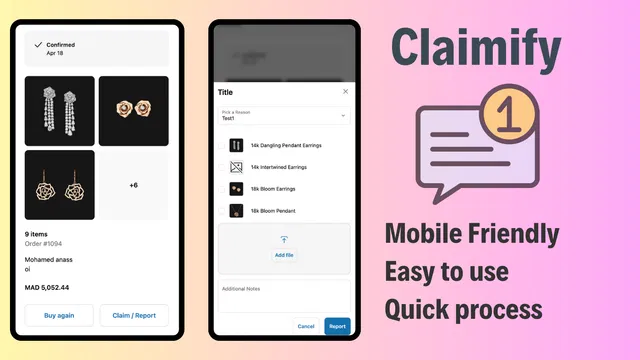
We recommend integrating Claimify to streamline the post-purchase experience. Claimify provides a user-friendly interface for customers to report issues with their orders. By automating the claims process, you provide international customers with a sense of security, knowing that if something goes wrong with their global shipment, there is a clear and professional way to resolve it.
Advanced Strategy: Moving Beyond the Basics
As you become more comfortable with Shopify Markets, you should explore more advanced optimizations.
- Market-Specific Catalogs: Use Shopify Markets to show different products to different countries. This is useful if certain items cannot be shipped internationally due to regulations or if you want to test specific collections in new regions.
- Custom Content per Market: Shopify is rolling out the ability to customize theme content by market. This means you can change the hero image or the copy of a section based on where the visitor is located.
- Checkout Extensibility: For merchants on Shopify Plus, you can use Checkout Extensibility to add custom fields or logic to your checkout for specific markets, such as collecting tax IDs required in certain countries.

Essential Checklist for Launch
Before you activate a new market, run through this final checklist to ensure a professional launch:
- Verify Currency Precision: Ensure that rounded prices look natural in the local currency (e.g., 29.00 instead of 28.94).
- Test the Checkout: Perform a test transaction using a VPN to ensure the correct taxes and shipping rates are being applied.
- Review Translations: Do not rely solely on machine translation for your homepage or high-converting product pages. Have a native speaker review the content.
- Update Your FAQ: Ensure your FAQs include information about international shipping times, return policies, and customs duties.
Conclusion
Mastering Shopify Markets is a proactive step toward transforming your business from a local success into a global powerhouse. By removing the technical barriers to international commerce, Shopify allows you to focus on what matters most: your products and your customers.
The transition to global selling does not have to be intimidating. By following the structured steps outlined above and leveraging automation tools like the Maestro suite, you can build an international presence that is both scalable and highly profitable.
If you are ready to take your Shopify Plus store to the global stage, our team at XCO Agency is here to help. From technical migrations to advanced growth strategies, we specialize in helping high-growth merchants navigate the complexities of e-commerce expansion.
Book a meeting with our experts today to discuss how we can optimize your Shopify Markets setup and accelerate your international growth.