
As a Shopify expert, I often see merchants stuck in a cycle of manual updates that eat away at their most valuable resource: time. Imagine it is midnight on a Friday. Instead of relaxing, you are hunched over your laptop, frantically clicking "Active" on twenty new products for a weekend launch. Or perhaps it is the morning after a major holiday sale, and you are manually removing "Sale" tags from hundreds of items because your discount ended at 3:00 AM.
This manual approach to a shopify store setup is not just exhausting; it is a recipe for human error. One wrong price entry or a forgotten tag can lead to lost revenue or a frustrated customer base. If you are seeking a way to reclaim your schedule and ensure your store runs like a well-oiled machine, automation is the answer. By moving to a hands-off product catalog, you can focus on growth strategies while your store handles the repetitive tasks on autopilot.
The Problem with Manual Catalog Management
Managing an e-commerce catalog manually is like trying to keep a dozen spinning plates in the air. As your inventory grows, the complexity increases exponentially. Merchants often struggle with several key pain points:
- Inconsistent Product Launches: Products go live at the wrong time or with incomplete metadata.
- Stale Collections: Seasonal items linger in the "New Arrivals" section long after the season has passed.
- Pricing Errors: Sales prices remain active longer than intended, or rounding rules are applied inconsistently.
- Inventory Lag: Restocked items do not appear as "Available" immediately, leading to missed sales opportunities.
- Visibility Issues: Hidden products remain hidden when they should be featured, directly impacting your conversion rate optimization.
Effective ecommerce maintenance services usually involve high monthly retainers for developers to handle these changes. However, with the right tools, you can automate these workflows yourself in just a few minutes.
Enter the Maestro: Your Catalog Conductor
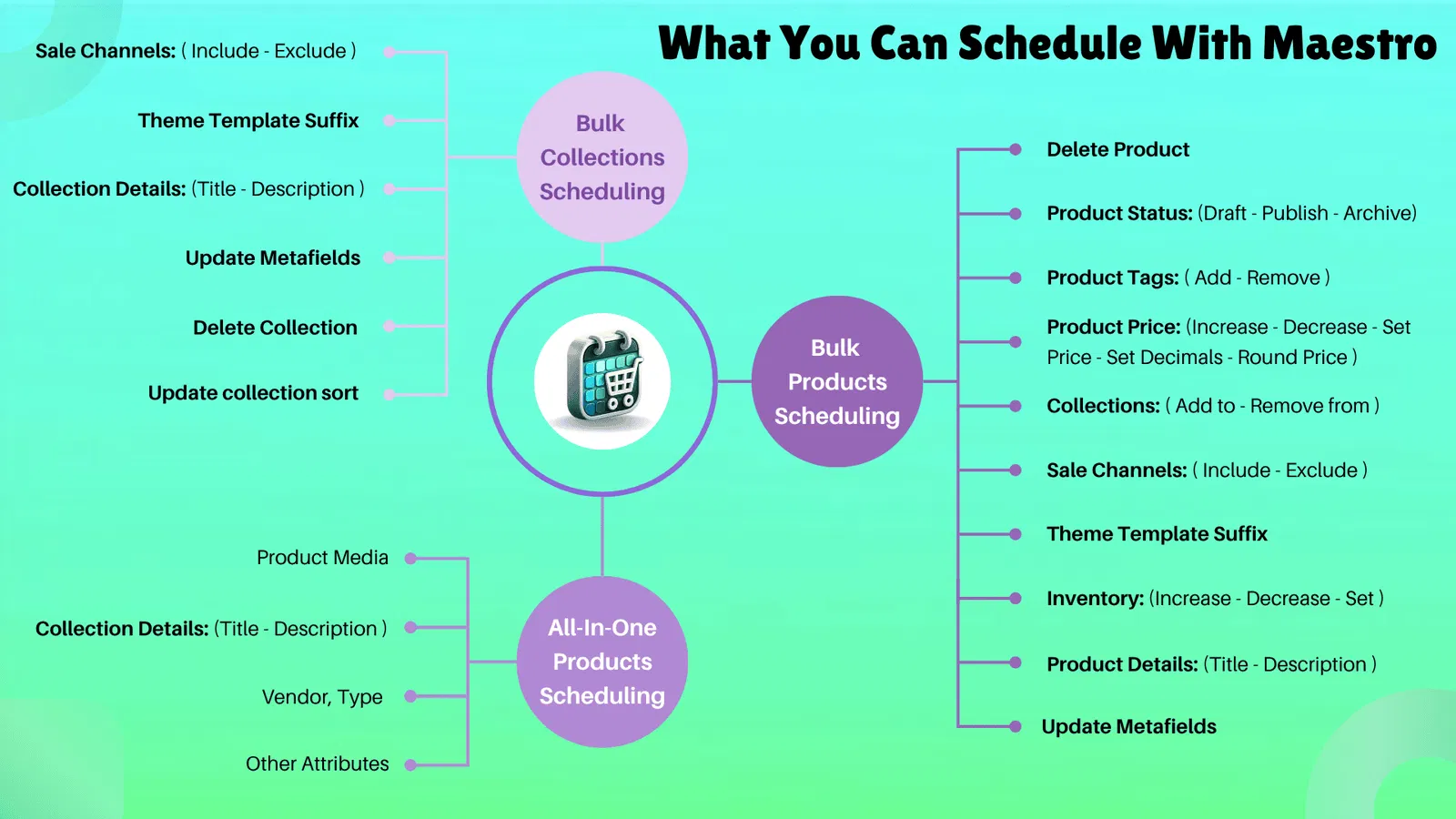
To achieve a truly hands-off catalog, we use the Product Scheduler by Maestro app. This tool acts as a bridge between your creative vision and the technical execution of your Shopify store. It allows you to schedule virtually every attribute of a product or collection in advance.
The Draft Helper: Scheduled Launches Without the Stress
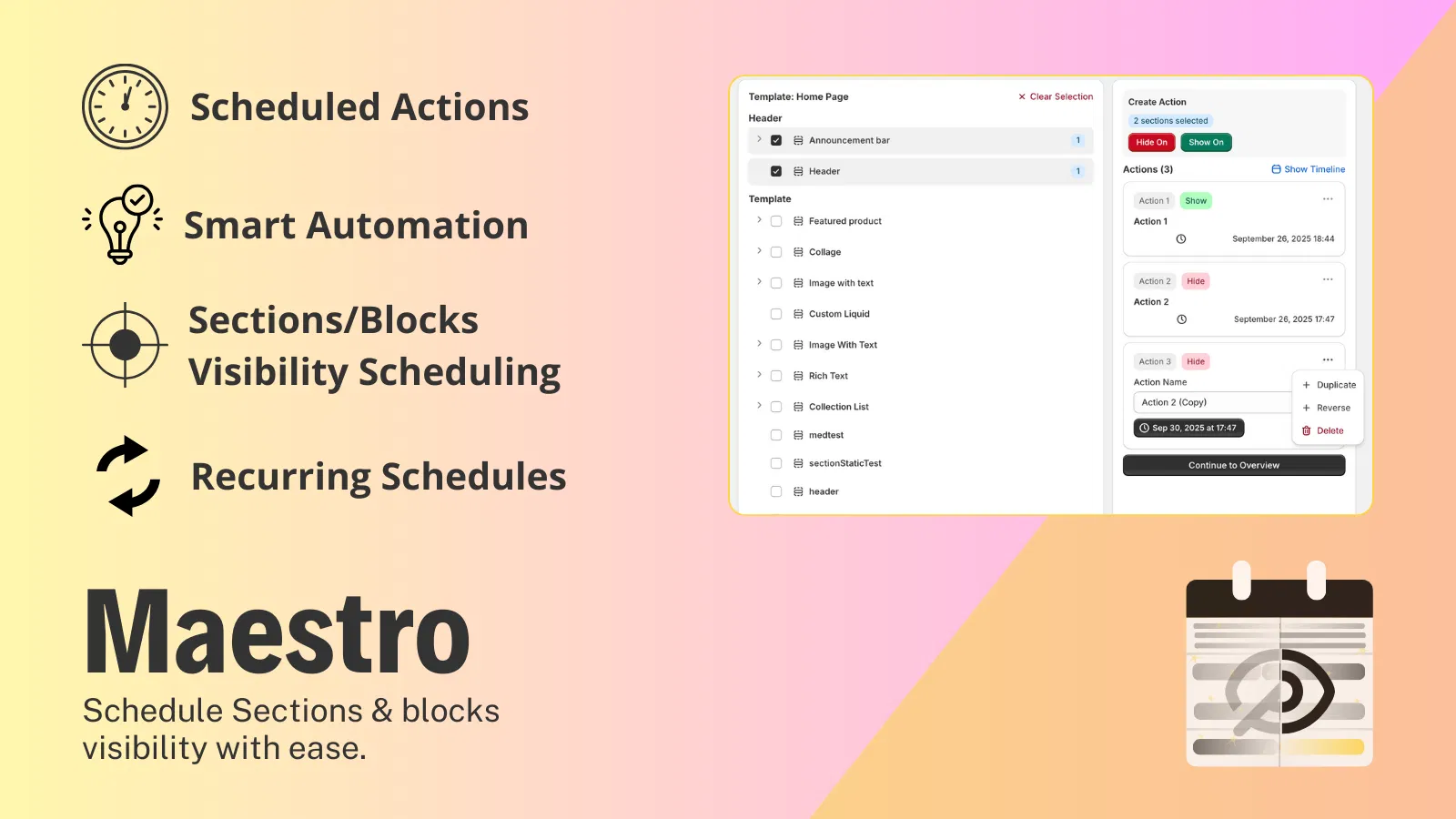
The "Draft Helper" feature is a game-changer for scheduled product launches. Instead of keeping products in "Draft" mode and manually switching them to "Active" at the moment of launch, you can set a specific date and time for the transition.
When you use the Draft Helper, you can:
- Prepare your product pages weeks in advance.
- Ensure all images, descriptions, and SEO tags are perfect.
- Set a precise "Go-Live" time that aligns with your email marketing or social media announcements.
- Avoid the "404 Error" that occurs when customers click a link to a product that hasn't been activated yet.
Automated Tag Management for Seasonal Sales
Tags are the lifeblood of Shopify organization. They power your filters, your automated collections, and often your theme's badges (like "Sale" or "New"). Manually adding and removing tags is a tedious task that is easily automated.
With Maestro, you can schedule tag additions and removals. For a Black Friday sale, you can tell the app to add a "BFCM" tag to specific collections at midnight and remove it automatically when the sale ends. This ensures your collection filters stay accurate without you needing to lift a finger. This level of precision is vital for maintaining a professional shopify store setup that builds trust with your customers.
Scheduling Price Changes and Rounding Rules
Pricing is one of the most sensitive areas of e-commerce. A small error here can be the difference between a profitable day and a massive loss. Most merchants still update prices via CSV uploads, which is slow and prone to formatting errors.
Maestro allows you to schedule price changes for specific dates. You can increase prices for a new season or drop them for a flash sale. Furthermore, the app supports rounding rules. If your calculated sale price ends in an awkward number like $19.43, you can set a rule to automatically round it to $19.99 or $19.00. This keeps your catalog looking clean and professional, which is a key component of conversion rate optimization.
Inventory Automation and Restock Management
Nothing kills a customer's momentum faster than seeing an "Out of Stock" badge on a product they love. Conversely, seeing a product marked as "In Stock" only to be told later that it is unavailable is a major blow to your brand reputation.
Automating inventory updates ensures that as soon as your warehouse updates stock levels, your catalog reflects those changes. You can schedule restock actions so that products move from the bottom of a collection back to the top the moment they are available again. This proactive approach to ecommerce maintenance services keeps your best-sellers front and center.
Managing Collection Visibility and Sorting
Your homepage and collection pages should be dynamic. If a customer visits your store every week and sees the exact same products in the exact same order, they will eventually stop clicking.
Maestro allows you to schedule changes to collection visibility and sorting orders. You can:
- Schedule a "Holiday Gift Guide" collection to appear on your navigation menu on November 1st and disappear on December 26th.
- Change the sorting order of a collection to "Newest" for the first week of a launch and then switch it to "Best Selling" automatically.
- Hide out-of-stock items from the top of the grid to ensure customers only see what they can actually buy.
The 5-Minute Setup: Step-by-Step
Setting up a hands-off catalog does not require a computer science degree. Here is how you can do it in about five minutes using the Maestro app.
Step 1: Define Your Goal
Identify what needs to happen. Are you launching a new collection? Ending a sale? Navigate to the Maestro app within your Shopify admin and select "New Schedule."
Step 2: Select Your Products or Collections
Use the intuitive search and filter tools to select the items you want to automate. You can select individual products, entire collections, or even products with specific tags.
Step 3: Choose Your Action
Select the attribute you want to change. This could be the product status (Draft to Active), adding/removing tags, changing prices, or updating metafields.
Step 4: Set the Timeline
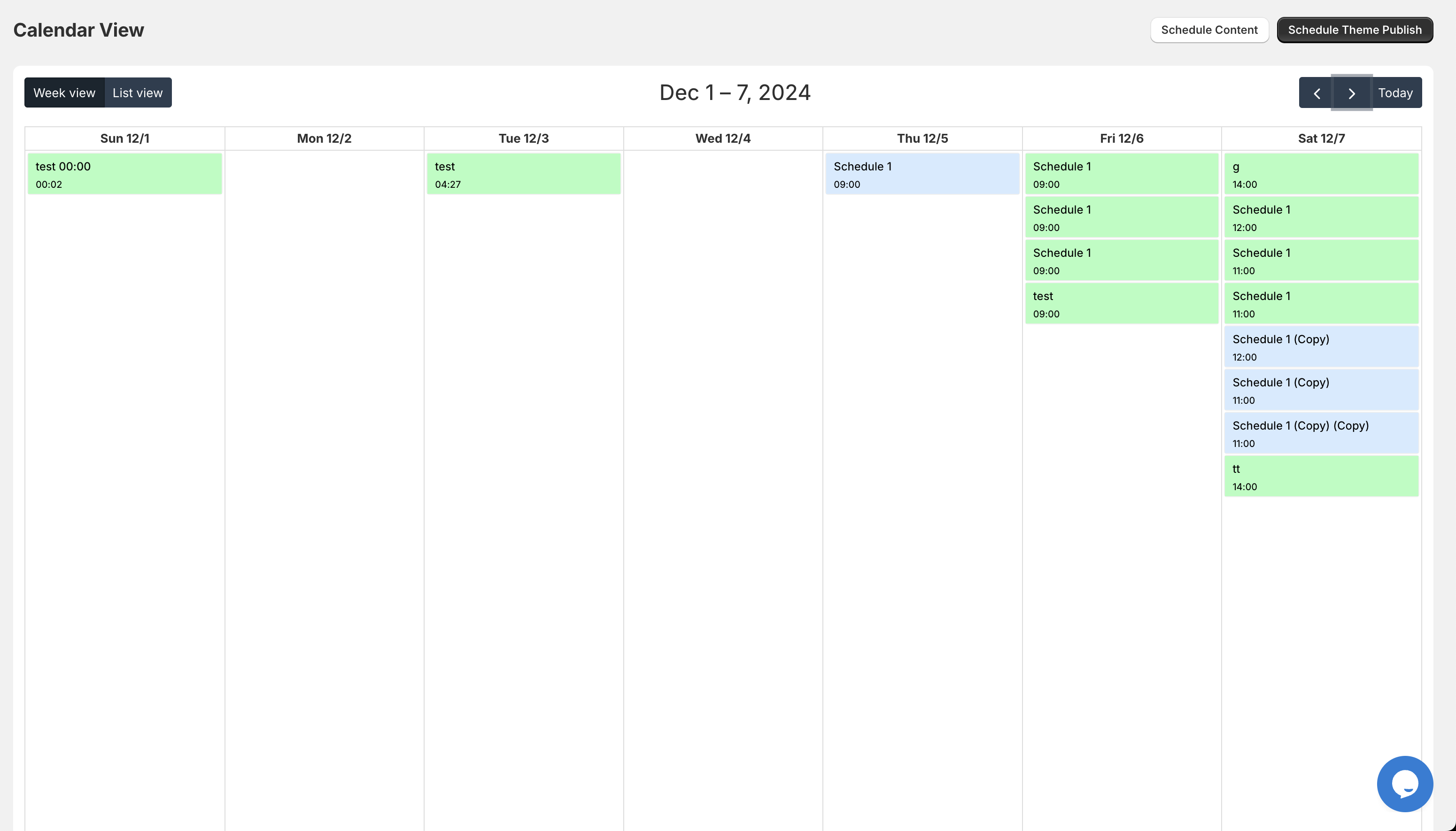
Use the calendar interface to pick the exact date and time. If this is a recurring event, such as a weekly "Deal of the Day," you can set a recurring schedule.
Step 5: Review and Save
Ensure all details are correct. The Maestro interface provides a clear summary of what will change and when. Once you hit save, the app takes over, and you can close your laptop.
Why This Matters for Your Bottom Line
Transitioning to a hands-off catalog is about more than just convenience; it is a strategic business move. When your store updates itself, you eliminate the "dead zones" that occur when a human is not available to make changes.
If your sale ends at midnight but you don't update the prices until 9:00 AM the next day, you have effectively given away nine hours of margin. If a product sells out at 2:00 PM and stays at the top of your collection until the next morning, you have wasted prime real estate that could have been used for an in-stock item.
By utilizing automation, you ensure that every pixel of your store is working to maximize sales at every hour of the day. This is the essence of modern shopify store setup and growth strategies.
Final Thoughts on Catalog Automation
As a Shopify expert, I have seen the transformative power of automation in stores of all sizes. From small boutiques to high-volume Shopify Plus brands, the need for a hands-off product catalog is universal. It reduces the mental load on founders, minimizes costly mistakes, and creates a smoother experience for the end consumer.
Setting up these workflows takes less time than your morning coffee break, yet the benefits last for years. If you are tired of the manual grind and want to focus on the high-level tasks that actually grow your business, it is time to let the machines do the heavy lifting.
If you are looking for more ways to optimize your store, check out our Shopify design services or explore our FAQs to see how we help merchants scale. Ready to get started with automation? You can learn more about the Maestro Theme Scheduler and how it can revolutionize your workflow.
For a personalized deep dive into your store's automation potential, book a meeting with our team today. We are here to help you build a store that works as hard as you do, even when you are asleep.