
As a Shopify expert, I often witness the same late-night ritual among e-commerce founders. It is 11:58 PM on a Thursday. Instead of sleeping, the founder is frantically refreshing their Shopify admin, clicking "Active" on fifty new products, manually adding "Summer-Sale" tags, and triple-checking that the prices ended in .99. This manual grind is not just exhausting; it is a recipe for expensive human error. If you are seeking a way to reclaim your sanity while scaling your brand, you need to transition from a manual workflow to a hands-off store.
In the world of high-growth e-commerce, your catalog should be a well-oiled machine that updates itself while you sleep. Whether you are handling a massive Shopify store setup or looking for ongoing ecommerce maintenance services, automation is the secret weapon for conversion rate optimization. When your store reflects the right products, prices, and tags at exactly the right moment, your customers trust you more, and your conversion rates climb.
By leveraging the Product Scheduler by Maestro app, you can automate every tedious aspect of catalog management. Here is why savvy merchants are making the switch:
- Eliminate the "Midnight Launch" stress by scheduling product status changes in advance.
- Reduce human error in pricing and tagging that can lead to lost revenue or customer frustration.
- Maintain a fresh storefront by automatically hiding out-of-stock items or updating seasonal collections.
- Optimize your profit margins with smart rounding rules that apply to every scheduled price change.
The Draft Helper: Your Secret Weapon for Stress-Free Launches
One of the biggest hurdles in managing a Shopify catalog is the transition from "Draft" to "Active." Most merchants keep new arrivals in draft mode while they polish descriptions and upload images. However, when launch day arrives, someone has to be there to push the button.
The "Draft Helper" feature within the Maestro app changes the game. As a Shopify expert, I often recommend this to brands that run frequent "drops." You can set a specific date and time for your draft products to go live across all your sales channels.
Step 1: Prepare Your Content
- Upload your images and write your SEO-optimized descriptions well in advance.
- Keep the product in "Draft" status so it remains invisible to customers and search engines.
- Ensure all variants and weights are correct for accurate shipping calculations.
Step 2: Set the Schedule
- Navigate to the Maestro app and select the products you want to launch.
- Choose the "Update Status" action and set it to "Active."
- Pick your launch time (down to the minute) and hit save.
Once the clock hits your scheduled time, the app pushes those products live. This allows you to focus on your marketing strategy or, better yet, get some sleep. You can learn more about these automated workflows on our Maestro Theme Scheduler page.
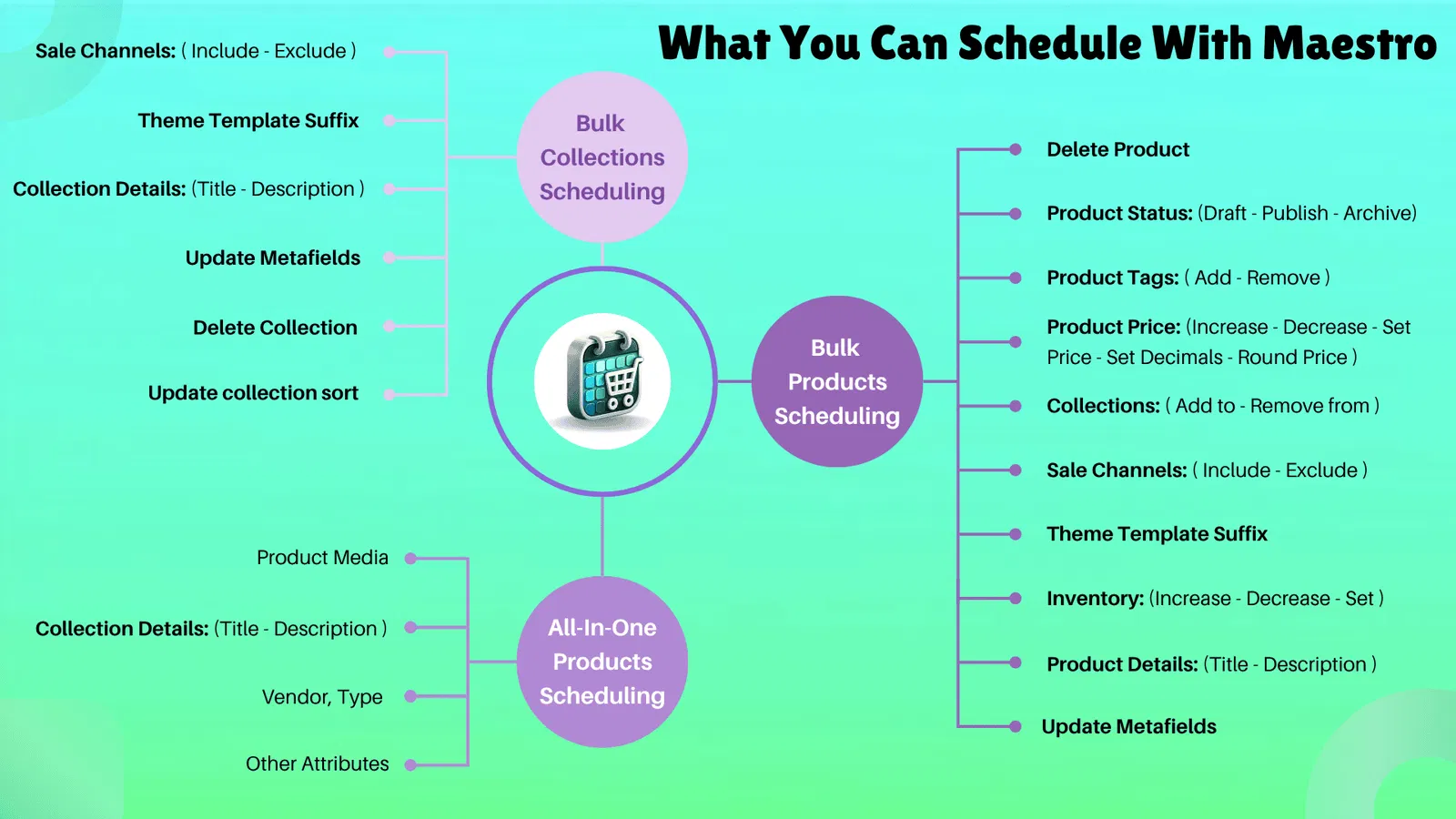
Automated Tag Management for Seasonal Sales
Tags are the invisible threads that hold a Shopify store together. They power your automated collections, your sidebar filters, and even some of your marketing automations. But manually adding and removing tags for a weekend sale is a nightmare.
Imagine you are running a "Flash Sale" for the weekend. You need to add a "Sale" tag to 200 items on Friday morning and remove it on Sunday night. If you forget even five items, your "Sale" collection looks broken, and customers get confused.
How to Automate Tagging
- Select Your Trigger: Choose the products that will participate in the promotion.
- Define the Action: Set an "Add Tag" action for the start of the sale and a "Remove Tag" action for the end.
- Coordinate with Collections: Since Shopify's automated collections rely on tags, your sale page will populate and depopulate itself automatically.
This level of precision is vital for conversion rate optimization. A clean, accurately tagged store ensures that users find exactly what they are looking for without stumbling over "Ghost" products that are no longer on sale.
Scheduling Price Changes and Smart Rounding Rules
Pricing is a psychological game. A product priced at $19.99 often converts better than one at $20.00. However, when you run a 15% off sale, your prices often end up looking messy (like $17.43). This screams "unprofessional" to a savvy shopper.
As a Shopify expert, I always emphasize the importance of consistent pricing. With the Product Scheduler by Maestro, you can schedule price drops and, more importantly, apply rounding rules.
Mastering the Price Update
- Bulk Adjustments: Increase or decrease prices by a fixed amount or a percentage across entire collections.
- Rounding Logic: Use the "Rounding Rule" feature to ensure every price ends in .99, .95, or whatever fits your brand's aesthetic.
- The "Compare At" Price: Automatically update the "Compare At" field during a sale so customers see exactly how much they are saving, then clear it once the sale ends.
This automation ensures your store always looks polished and professional, which is a key component of our ecommerce maintenance services.
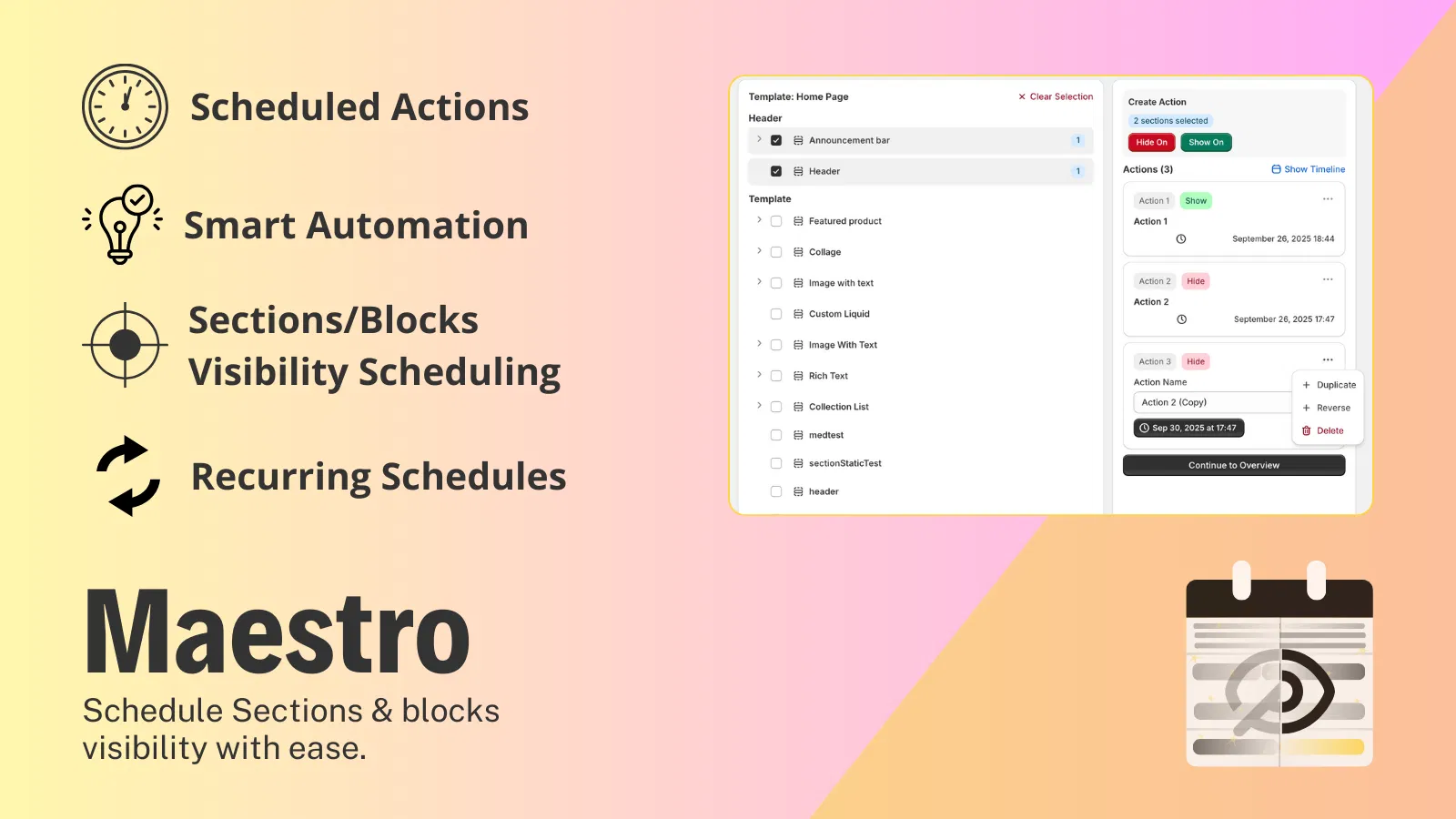
Inventory Automation for Restocks and Archiving
Nothing kills a conversion rate faster than a customer landing on a "Sold Out" product page from an ad. While Shopify handles basic inventory tracking, it does not automatically handle the "marketing" side of inventory.
If a product sells out, you might want to hide it from your main collection but keep the URL active for SEO. Or, when a shipment arrives, you might want it to jump back to the top of the "New Arrivals" list.
Streamlining Your Stock
- Auto-Hide: Set a rule to change a product's status to "Draft" or remove specific tags when inventory hits zero.
- Restock Alerts: When inventory is updated, use Maestro to re-add the "Back in Stock" tag and move the item to a featured position in your collections.
- Vendor Management: If you work with multiple suppliers, you can schedule updates based on vendor-specific timelines, ensuring your store reflects the current reality of your supply chain.
For brands handling complex B2B operations, this inventory automation is even more critical. You can explore our Shopify B2B wholesale channel solutions to see how we handle large-scale catalog management.
Managing Collection Visibility and Sorting
Your homepage and collection pages are your digital real estate. Just like a physical store, you need to rotate your "window displays." Manual sorting is fine when you have ten products, but when you have hundreds, it becomes an impossible task.
Maestro allows you to schedule when specific collections are visible and how products are sorted within them. This means you can have a "Holiday Gift Guide" collection appear on November 1st and disappear on December 26th without lifting a finger.
Smart Merchandising Steps
- Navigate to Collection Settings: Use the scheduling interface to set "Start" and "End" dates for collection visibility.
- Set Sorting Rules: Schedule a change in sort order. For example, you can sort by "Best Selling" during peak traffic hours and "Newest" during product launch windows.
- Theme Integration: Link these changes to your theme templates to ensure the layout shifts to match the new collection focus.
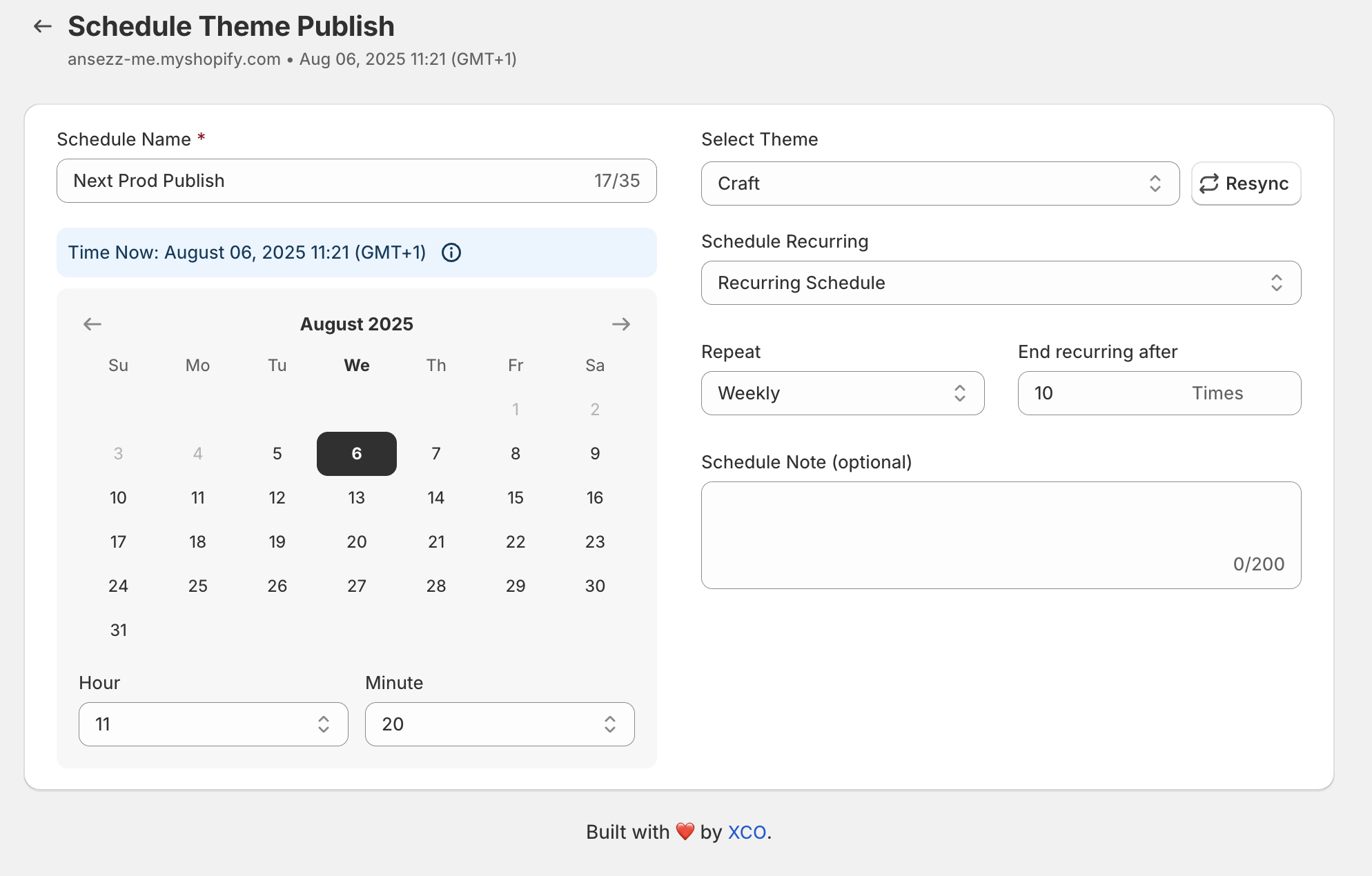
Why Automation is the Future of Shopify Plus
For merchants on Shopify Plus, the stakes are higher. The volume of data and the speed of the market require tools that can keep up. Automation is not just about saving time; it is about agility. When a competitor drops a price or a trend goes viral on TikTok, you need to be able to update your catalog in minutes, not hours.
By moving to a hands-off store model, you free up your team to focus on high-level strategy, creative marketing, and customer experience. The manual tasks that used to take up twenty hours a week can now be handled by a few clicks in the Maestro app.
The Benefits of a Proactive Approach
- Reliability: Systems do not get tired or forget to click "save."
- Scalability: Whether you have 50 products or 50,000, the process remains the same.
- Data Integrity: Automated updates ensure that your Meta, Google, and Pinterest feeds are always in sync with your store's actual data.
If you are unsure where to start with your automation journey, our team at XCO Agency is here to help. You can book a meeting with us to discuss a custom automation roadmap tailored to your specific business needs.

Conclusion: Take the Leap Toward a Hands-Off Store
Automating your Shopify catalog updates is a vital step in evolving from a "hustle" to a legitimate, scalable business. By utilizing features like the Draft Helper, automated tag management, and smart pricing rules, you create a store that is always accurate, always professional, and always optimized for sales.
The Product Scheduler by Maestro app provides the framework you need to reduce human error and save hundreds of hours every year. Remember, every minute you spend manually updating a product tag is a minute you aren't spending on growing your brand.
Stop playing catch-up with your catalog. Start scheduling, start automating, and start growing. If you have questions about how this fits into your current setup, check out our FAQs or reach out to us directly through our contact page. Your future, hands-off store is just a few schedules away.