
As a Shopify expert, I often work with merchants who feel like they are tethered to their computers every time a new product launch or a seasonal sale approaches. I see the same pattern frequently: a business owner or a dedicated manager staying up until midnight on a Friday just to manually toggle product visibility, update tags, and adjust prices for a Saturday morning launch. This manual approach is not only exhausting but also a significant bottleneck for growth.
The reality of modern retail is that your store never sleeps, and your catalog should not require manual babysitting to stay current. Many store owners are seeking a way to run a hands-off store where promotions go live and end exactly when they are supposed to, without the risk of human error or late-night stress. By implementing robust automation tools, you can ensure your store remains dynamic while you focus on high-level strategy rather than clicking "Publish" at odd hours.
Automating your product catalog offers several transformative advantages for your business:
- Significant Time Savings - Eliminate hours of repetitive manual entry and scheduling tasks.
- Reduced Human Error - Ensure that prices, tags, and visibility status are accurate every single time.
- Enhanced Operational Efficiency - Streamline your internal workflows by planning weeks or months in advance.
- Improved Customer Experience - Deliver a fresh storefront with timely updates that reflect your current marketing campaigns.
- Better Work-Life Balance - Reclaim your weekends and evenings by letting automation handle the heavy lifting of site maintenance.
The Power of Strategic Product Scheduling
When we discuss Shopify store setup, we often focus on the visual design or the initial configuration. However, the true power of a professional store lies in its operational backend. Effective catalog management is a cornerstone of conversion rate optimization. If a customer sees a "Coming Soon" product that should have launched three hours ago, or a sale price that failed to activate, trust is immediately diminished.
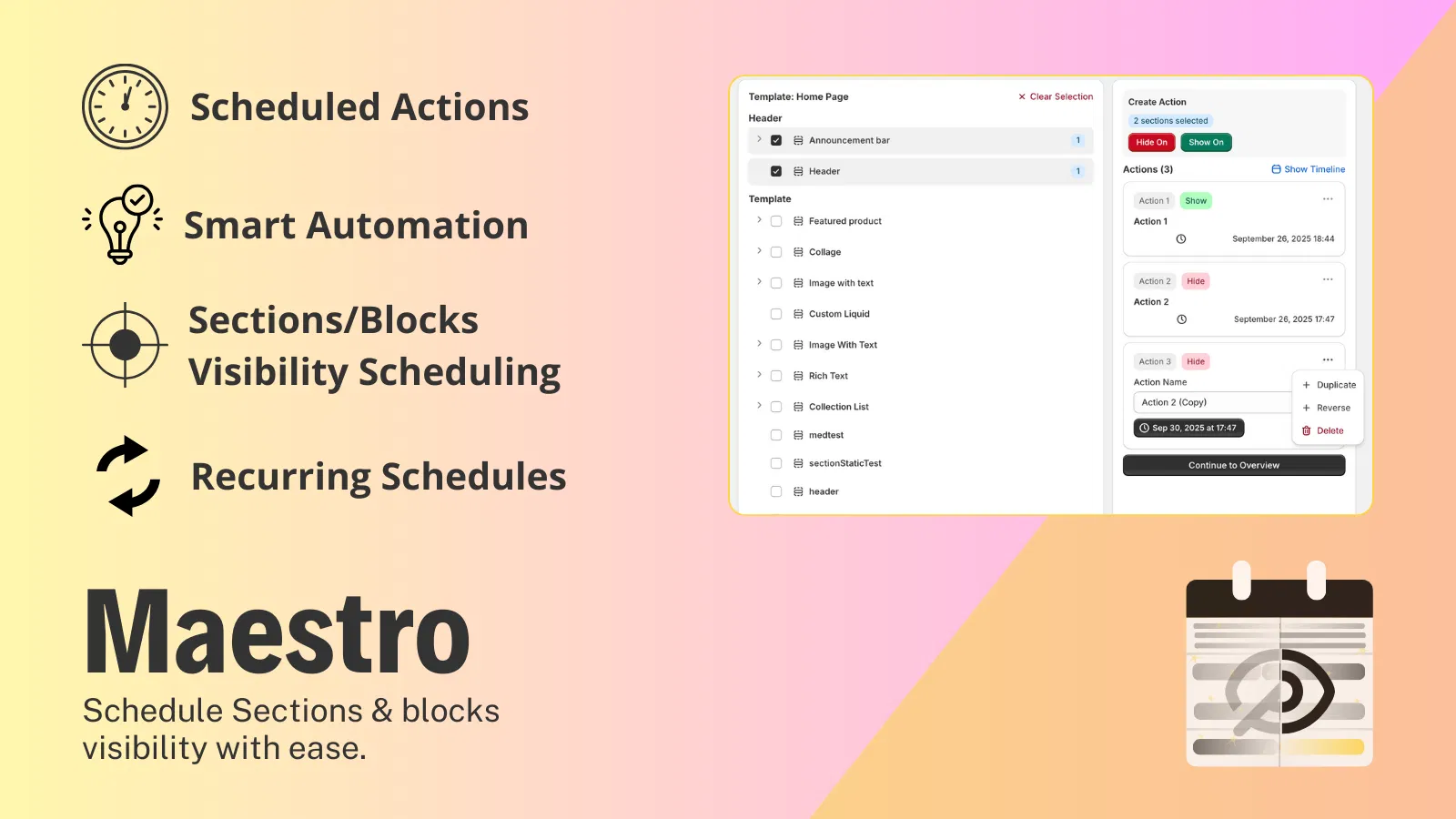
The Product Scheduler by Maestro app is designed to solve these specific pain points. It allows you to schedule virtually every aspect of your product and collection data, ensuring that your storefront reflects your marketing calendar with surgical precision.
Simplify Launches with the Draft Helper
The "Draft Helper" feature is a game-changer for merchants who handle frequent product drops. Instead of manually moving products from draft to active status, you can pre-schedule the exact moment a product becomes available to the public.
- Scheduled Publishing - Set a specific date and time for products to transition from draft to active status across all sales channels.
- Automated Archiving - Schedule products to move to draft or archive status once a promotion ends or stock is depleted, keeping your storefront clean.
- Pre-Launch Prep - Prepare your product descriptions, images, and SEO details well in advance, knowing they will go live only when you intend.

Mastering Seasonal Sales with Automated Tag Management
Tags are the lifeblood of Shopify organization. They power your filters, your automated collections, and often your theme's badges. Manually adding and removing tags like "New Arrival," "Black Friday," or "Final Sale" is a recipe for inconsistency.
As part of our ecommerce maintenance services, we advocate for tag automation to keep merchandising sharp and relevant.
- Dynamic Merchandising - Schedule the addition of "Sale" tags to trigger automated collections and storefront badges.
- Automatic Cleanup - Set schedules to remove "New" tags after a set period, ensuring your "New Arrivals" collection always stays fresh without manual intervention.
- Campaign Synchronization - Coordinate tag changes with your email marketing and social media campaigns to provide a consistent journey for the customer.
Precision Pricing and Automated Rounding Rules
Price management is one of the most high-stakes tasks in e-commerce. A single misplaced decimal point can lead to significant financial loss or customer frustration. The Product Scheduler by Maestro allows you to automate price changes with confidence.
Streamlined Discounting Strategies
Here are simple steps to automate your pricing strategy using the app:
- Select Your Products - Identify the products or entire collections that require a price adjustment.
- Define the Change - Choose whether to increase, decrease, or set a specific price value.
- Apply Rounding Rules - Use built-in logic to ensure prices always end in ".99" or ".00" to maintain your brand's pricing aesthetic.
- Set the Timeline - Establish both the start and end times for the price change, so your margins return to normal automatically once the sale is over.
By using these features, you can execute complex storewide sales in minutes rather than hours. This level of control is vital for maintaining professional Shopify design services where the visual presentation of price is key to the brand identity.

Inventory Automation and Collection Visibility
Nothing kills a conversion faster than a "Sold Out" item sitting at the top of a collection page. Managing inventory visibility is essential for a high-performing store.
- Inventory Status Sync - Automate the publishing or unpublishing of products based on their stock levels to avoid disappointing customers.
- Collection Sorting - Schedule changes to the way collections are sorted, such as moving high-stock items to the top during a restock event.
- Visibility Scheduling - Control when specific collections are visible on your navigation menu, perfect for seasonal "Gift Guides" or limited-time collaborations.
This proactive approach to inventory management ensures that your Shopify speed optimization efforts are not wasted on pages featuring unavailable products.
How to Set Up Your First Automated Schedule
Once your app is installed, creating an automated workflow is a straightforward process. Shopify will guide you through the interface, and the Maestro app is designed with a user-centric approach that minimizes technical friction.
Step 1: Create a New Schedule
Navigate to the Maestro app within your Shopify admin and select the option to create a new schedule. You will be prompted to name your task, which helps in tracking multiple overlapping campaigns.
Step 2: Choose Your Targets
Select the products or collections you wish to modify. You can search by title, tag, or vendor, or simply select entire collections to receive the update.
Step 3: Define Your Actions
Select the specific actions you want to automate. This could include changing the status to "Active," adding a "Summer Sale" tag, and decreasing the price by 20 percent. You can stack multiple actions within a single schedule for maximum efficiency.
Step 4: Set the Timing and Frequency
Choose the exact date and time for the schedule to trigger. For recurring tasks, such as a weekly "Deal of the Day," you can set the schedule to repeat at specific intervals.
Step 5: Review and Activate
Review the summary of your scheduled actions to ensure everything is correct. After completing the review, activate the schedule and let the app handle the rest.
Conclusion: Investing in a Hands-Off Storefront
Transitioning to an automated product catalog is a vital step for any merchant looking to scale without increasing their personal workload. By removing the need for manual updates, you significantly reduce the risk of errors that can harm your reputation and your bottom line.
As a Shopify expert, I often tell my clients that the best technology is the kind that works silently in the background. The Product Scheduler by Maestro provides that peace of mind. Whether you are managing a small boutique or a high-volume enterprise store, these tools allow you to focus on the creative and strategic aspects of your business while the software handles the repetitive logistics.
Taking a proactive step toward automation today means you will never have to spend another Friday night nervously refreshing your browser to ensure a sale goes live. Instead, you can trust that your store is operating exactly as planned, delivering a seamless experience to your customers while you enjoy your well-deserved time off.
If you are ready to optimize your operations and explore professional Shopify integrations, consider how automation can transform your daily workflow. For more tailored advice on enhancing your store's performance, feel free to contact our team of Shopify Plus experts.