
As a Shopify expert, I often encounter store owners who treat their e-commerce business like a high-stakes game of Whac-A-Mole. One minute they are manually updating prices for a weekend sale, the next they are frantically tagging products for a new collection, and by midnight, they are clicking "Publish" on a dozen new arrivals. This manual approach is not just exhausting, it is a recipe for human error that can tank your conversion rate optimization efforts.
If you are seeking a way to run a professional, high-converting store without being tethered to your laptop 24/7, you have come to the right place. Welcome to the lazy merchant's guide to automation. We are going to explore how to turn your Shopify store into a self-running machine using the Product Scheduler by Maestro app.
Why Manual Catalog Management is a Growth Killer
Before we dive into the "how," let's talk about the "why." Merchants often underestimate the hidden costs of manual updates. When you manage every product change by hand, you face several risks:
- Inconsistency and Error: Human error leads to incorrect pricing, broken links, or products appearing in the wrong collections.
- Missed Deadlines: If a sale is supposed to start at midnight but you fall asleep at 11:30 PM, you lose revenue.
- Stagnant Scaling: You cannot scale a business if your time is occupied by basic ecommerce maintenance services.
- Poor Customer Experience: Out-of-stock items that remain visible or incorrect tags confuse your customers and hurt trust.
By automating these tasks, you free up your mental bandwidth to focus on high-level growth strategies and brand building.
Introducing Your New Best Friend: Product Scheduler by Maestro
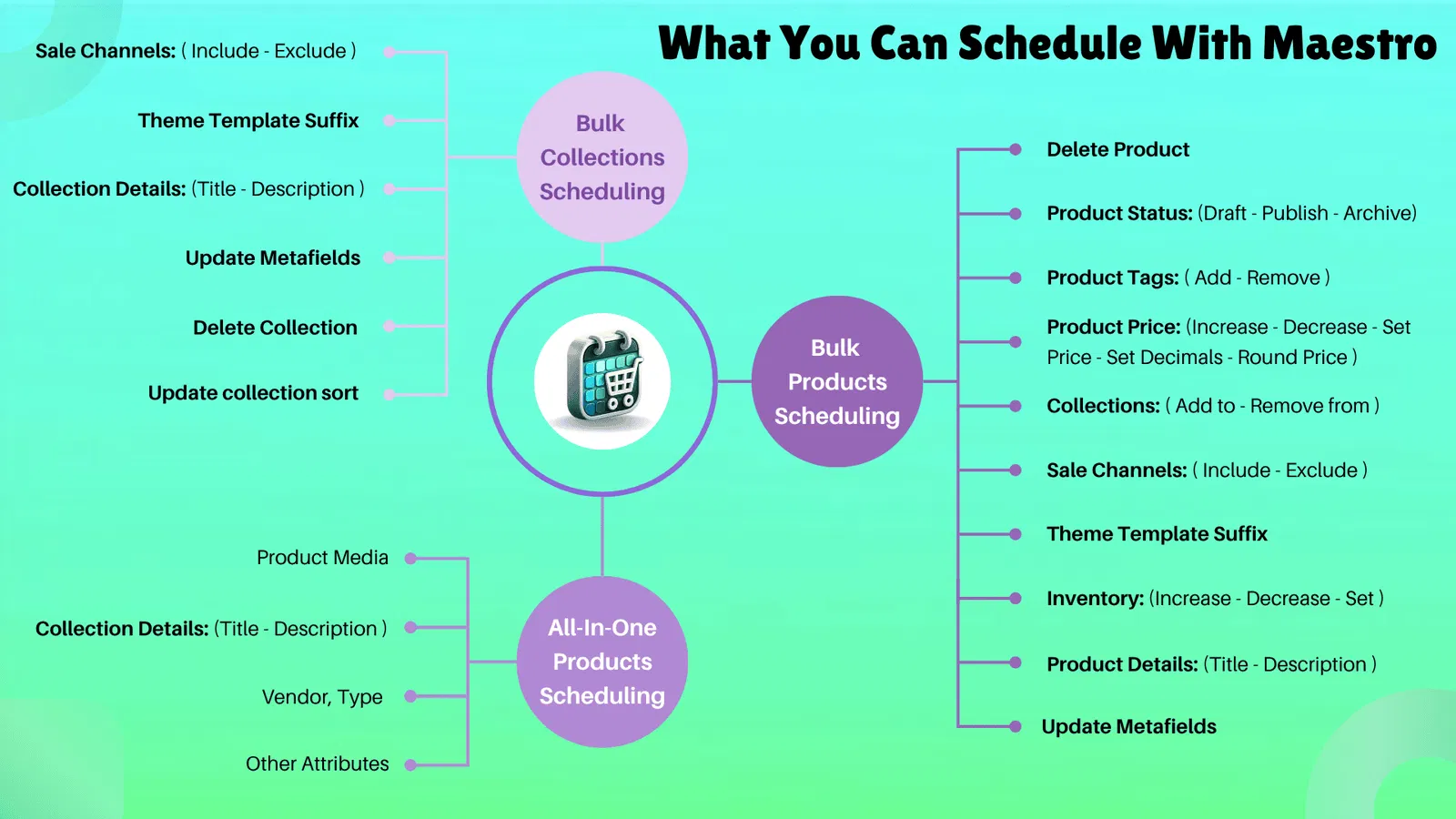
The goal of any sophisticated shopify store setup should be hands-off efficiency. This is where the Product Scheduler by Maestro comes into play. It is designed specifically for merchants who want to schedule every aspect of their product lifecycle.
Whether you are launching a new collection or running a seasonal promotion, this tool acts as your virtual assistant. It handles the heavy lifting of product visibility, price adjustments, and inventory logic so you do not have to.
Step 1: Mastering the Launch with the Draft Helper
One of the most common headaches for Shopify merchants is the "scheduled launch." Standard Shopify allows you to set a publish date, but it often lacks the granular control needed for complex setups.
The "Draft Helper" feature within Maestro is a game changer for scheduled product launches. Here is how you can use it:
- Prepare in Advance: Upload all your product data, images, and descriptions as "Drafts." This ensures nothing goes live prematurely.
- Set the Trigger: Use Maestro to schedule the exact moment those drafts should transition to "Active" status.
- Coordinate with Themes: You can even align these product launches with theme changes, ensuring your homepage banners and product pages go live in perfect synchronization.
This feature is vital for maintaining a professional appearance. There is nothing worse than a "New Arrivals" banner leading to a 404 page because the products were not published on time.
Step 2: Automating Price Changes and Rounding Rules
Pricing strategy is a core component of conversion rate optimization. However, changing prices for hundreds of SKUs for a 48-hour flash sale is a nightmare. Most merchants either skip the sale or spend hours in a spreadsheet.
With Maestro, you can schedule price changes across your entire catalog or specific collections. Here are the simple steps to take:
- Define the Scope: Select the products or collections that need a price adjustment.
- Set the Discount: Choose a percentage or fixed amount decrease.
- Apply Rounding Rules: Ensure your prices stay "pretty" (e.g., ending in .99 or .95) automatically.
- Schedule the Reversal: Tell the app exactly when to revert the prices to their original state.
This "set it and forget it" approach ensures your margins are protected and your sales start and end exactly when they should.

Step 3: Dynamic Tag Management for Seasonal Sales
Tags are the invisible engine behind Shopify’s organization. They control everything from automated collections to sidebar filters. During a seasonal sale, you likely need to add "Sale" or "Winter2026" tags to hundreds of items.
Doing this manually is a chore, but Maestro automates the entire process:
- Select the Schedule: Choose the start and end dates for your promotion.
- Automate Tag Addition: Set the app to add specific tags when the sale begins.
- Automate Tag Removal: Ensure those tags disappear the moment the sale ends.
This ensures your "Sale" collection is always accurate. It prevents customers from finding discounted items after the promotion has ended, which protects your brand's integrity and your profit margins.
Step 4: Inventory Automation for Restocks
Managing inventory visibility is a key part of ecommerce maintenance services. If a popular item goes out of stock, you might want to hide it from your main collection to keep the shopping experience fresh. Conversely, when it is restocked, you want it back in front of customers immediately.
Maestro allows you to set rules based on inventory levels:
- Hide Out of Stock: Automatically change product status to "Draft" or remove specific tags when inventory hits zero.
- Auto-Publish on Restock: As soon as your warehouse updates the inventory levels in Shopify, Maestro can trigger the product to go back to "Active" status.
- Sorting Logic: You can even schedule changes to collection sorting, pushing high-inventory items to the top of the page to boost conversion.

Step 5: Managing Collection Visibility and Sorting
Your storefront should feel alive and dynamic. A store that looks the same on Tuesday as it did on Friday is a store that misses out on repeat engagement.
By using the Maestro Theme Scheduler, you can automate the visibility of entire sections and blocks.
- Flash Sale Sections: Schedule a "Deal of the Day" section to appear only during specific hours.
- Seasonal Banners: Set your Christmas banners to disappear at midnight on December 26th without you having to lift a finger.
- Collection Reordering: Change the order of your collections on the homepage based on what is trending this week.
This level of automation ensures your store is always optimized for the current moment, which significantly improves the user experience and overall conversion rate.
The Lazy Merchant’s Workflow: A Weekly Template
To help you get started, here is a simple weekly workflow you can adopt to keep your store running on autopilot:
- Monday: Upload all new product drafts for the following week.
- Tuesday: Schedule all price changes for upcoming weekend promotions using Maestro.
- Wednesday: Set up tag-based automations for any new collections.
- Thursday: Review your "Draft Helper" settings to ensure the Friday morning launch is ready to go.
- Friday to Sunday: Relax. While other merchants are manually toggling settings, your store is updating itself.
This proactive step changes the way you interact with your business. You shift from being a "worker" in the store to being the "architect" of the store.
Final Thoughts: Embrace the Automation Revolution
Automating your Shopify catalog is not about being lazy: it is about being efficient. In the competitive world of e-commerce, the merchants who win are the ones who can move the fastest with the least amount of friction.
By leveraging the Product Scheduler by Maestro, you eliminate the tedious manual tasks that lead to burnout and errors. You ensure that your shopify store setup is robust, your conversion rate optimization is on point, and your ecommerce maintenance services are handled with surgical precision.
If you are ready to take your hands off the steering wheel and let automation drive your growth, now is the time to act. You can explore our full range of growth strategies or book a meeting with our team to see how we can help you build a truly hands-off Shopify empire.
Don't let manual updates hold your business back. Set the schedule, trust the system, and get back to doing what you love. Your future self (and your sleep schedule) will thank you.