
As a Shopify expert, I often talk to merchants who are essentially running their e-commerce stores on caffeine and a prayer. They are seeking a way to scale without spending every Sunday night hunched over a spreadsheet, manually updating prices for a Monday morning flash sale. If you have ever stayed up until 11:59 PM just to hit "Save" on a collection of 500 products, you know exactly what I am talking about. The manual approach is not just exhausting: it is a recipe for expensive human error.
In this installment of our daily series on the Product Scheduler by Maestro, we are diving into the world of pricing automation. Specifically, we are looking at how you can schedule sale prices and complex rounding rules without needing a degree in advanced mathematics. By moving away from manual updates and toward automated shopify store setup workflows, you can reclaim your time and focus on what actually matters: growing your brand.
The Midnight Math Meltdown
Managing a sale involves more than just picking a discount percentage. You have to consider your margins, your competitors, and the psychological impact of your price points. When you try to do this manually across a massive inventory, things start to break.
- The rounding inconsistency: You want everything to end in .99 for that sweet psychological edge, but after a 15 percent discount, your prices look like $12.43 or $17.82.
- The botched launch: You update the price but forget to update the "Compare At" price, so your customers do not even realize they are getting a deal.
- The inventory lag: A product sells out, but because your sale price is still active and your collection sorting is manual, that out-of-stock item stays right at the top of your page, killing your conversion rate.
These are the friction points that ecommerce maintenance services aim to solve. But with the right tools, you can handle this maintenance yourself, automatically.
Why Manual Pricing is Killing Your Conversion Rate
In the world of e-commerce, precision is everything. Conversion rate optimization is often a game of cents. If your pricing looks messy or inconsistent, customers lose trust.
- Trust and Professionalism: Consistent rounding (like $19.99 across all sale items) creates a cohesive brand experience.
- Urgency and Accuracy: If a sale starts late because you were stuck in traffic or had a slow internet connection, you lose potential revenue from those early-bird shoppers.
- Strategic Flexibility: Automation allows you to run shorter, more frequent sales (like "Happy Hour" discounts) that would be impossible to manage manually.
By using the Product Scheduler by Maestro, you transform your store from a manual labor camp into a well-oiled machine.
Enter the Product Scheduler by Maestro
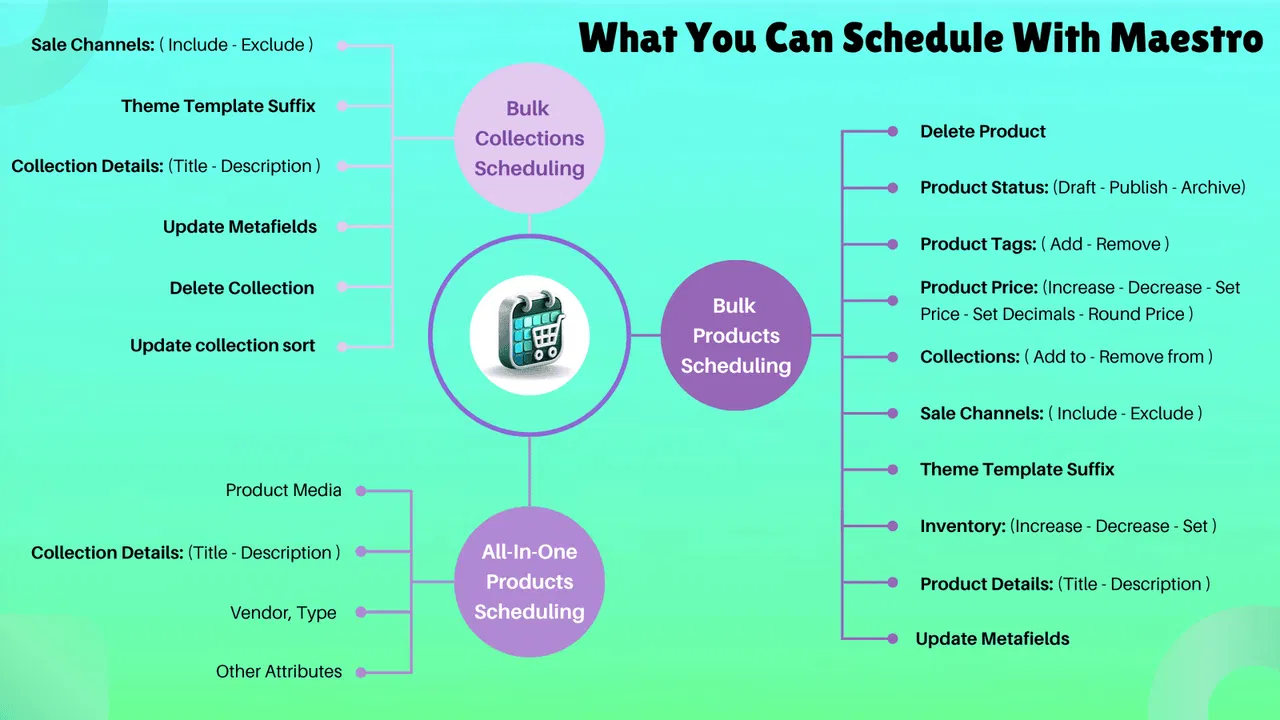
The Maestro app is designed to be the "hands-off" assistant every Shopify Plus merchant needs. While it handles everything from theme publishing to metafield updates, its pricing and rounding features are where it truly shines for those looking to optimize their shopify store setup.
Feature Spotlight: Automated Sale Prices
Setting a sale price with Maestro is not about changing one value at a time. It is about creating a rule that applies to a specific set of products for a specific window of time. You can select products by collection, vendor, or tag, and tell the app to reduce the price by a percentage or a fixed amount.
The best part? You can schedule the "reversal" at the same time. No more waking up on Tuesday morning to realize you are still selling your best-sellers at 40 percent off.
The Psychology of Rounding Rules
We all know that $19.99 feels significantly cheaper than $20.00. However, when you apply a 15 percent discount to a $25.00 item, you get $21.25. That extra $.25 might not seem like much, but it breaks the psychological pattern of your store.
Maestro allows you to define rounding logic that applies after the discount is calculated. You can set rules to:
- Round to the nearest .99
- Round to the nearest .95
- Round up to the nearest whole dollar
- Ensure prices always end in .00 for a luxury "B2B" feel
This level of detail is a vital step in professional shopify b2b wholesale channel management, where pricing consistency across different tiers is non-negotiable.

How to Set Up Your Hands-Off Pricing Strategy
Automation should not be complicated. If the tool is harder to use than the manual task, it is not a tool: it is a chore. Here is the simple step-by-step process for automating your sales using Maestro.
Step 1: Define Your Pricing Logic
Before opening the app, decide on your parameters. Are you discounting a specific collection? What is the "floor" price you are willing to hit? Once you have your logic, navigate to the Maestro dashboard and select "New Schedule."
Step 2: Configure the Maestro Draft Helper
If you are launching new products specifically for a sale, use the Draft Helper. This feature allows you to keep products in "Draft" status while you get the pricing, tags, and descriptions perfect. You can schedule the transition from "Draft" to "Active" to happen at the exact second your sale begins.
Step 3: Automate Tag Management
Tags are the glue that holds a Shopify store together. Use Maestro to automatically add a "SALE" tag to products when the price drops and remove it when the price returns to normal. This ensures your "Sale" collection is always accurate without you having to lift a finger.
Step 4: Apply Rounding Rules
Select your preferred rounding ending. If you want a consistent look, choose a rule like "Round to .99." The app will do the math across every SKU in the selection, ensuring that no matter what the starting price was, the final sale price looks intentional.

Beyond the Price Tag: Inventory and Visibility
A sale price is only effective if customers can actually find and buy the product. This is where inventory automation and collection visibility come into play.
- Inventory Restocks: You can schedule inventory updates if you know a fresh shipment is arriving right as the sale starts.
- Collection Sorting: Use Maestro to change the "Template Suffix" or the sorting order of a collection during a sale. You can push high-margin discounted items to the top of the page for the duration of the event, then automatically revert to "Best Selling" once the sale ends.
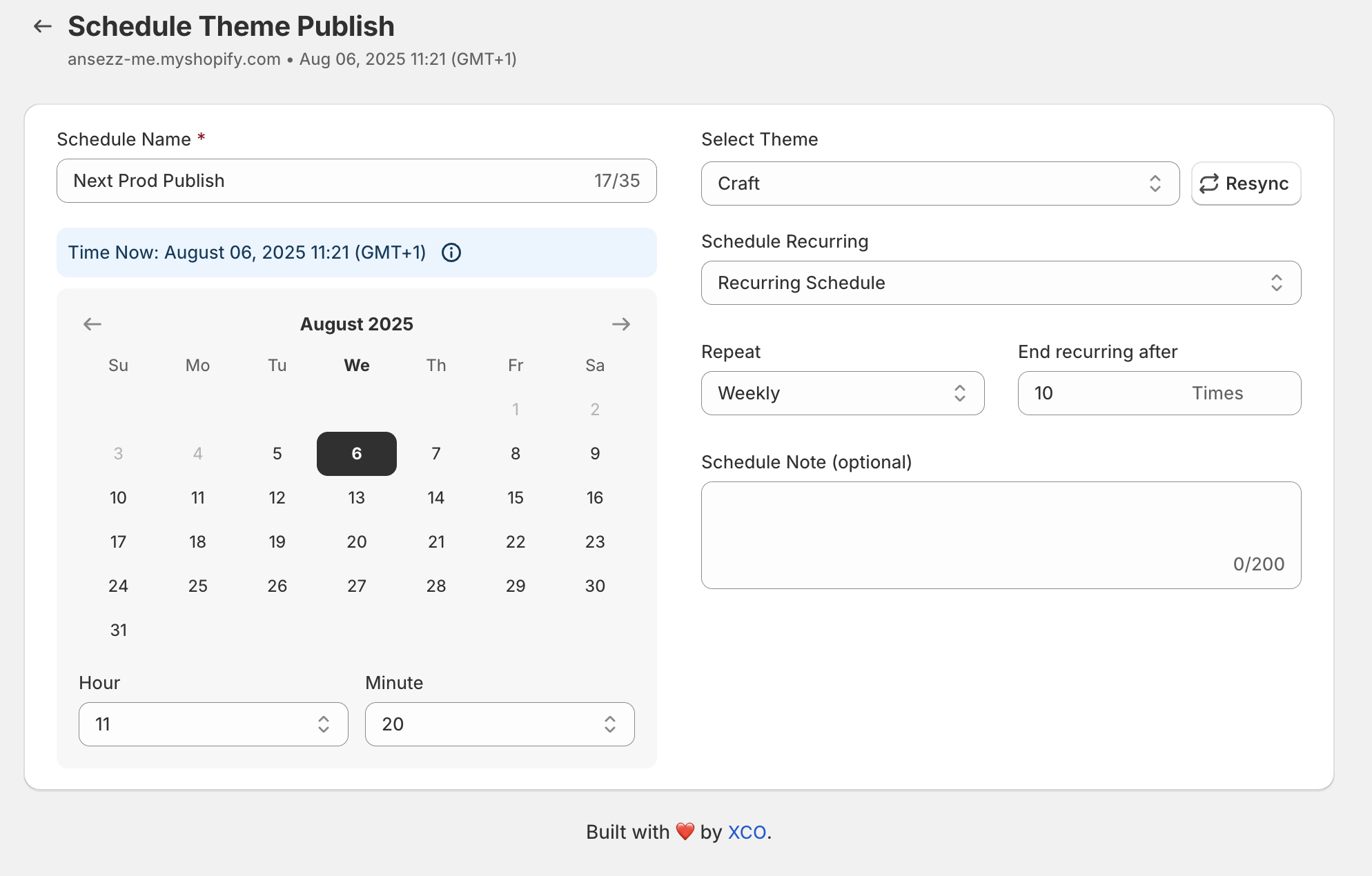
- Theme Integration: Align your pricing changes with theme updates. If you have a special "Black Friday" banner, you can schedule it to appear exactly when the automated price drops occur. For more on this, check out the Maestro Theme Scheduler.
Efficiency as a Growth Strategy
Many merchants view automation as a luxury, but in the current e-commerce climate, it is a necessity. Every hour you spend on manual data entry is an hour you are not spending on marketing, customer acquisition, or product development.
By implementing automated pricing and rounding rules, you are doing more than just saving time: you are reducing the "math headache" that leads to margin-eroding mistakes. You are ensuring that your conversion rate optimization efforts are supported by clean, professional, and consistent pricing data.
Conclusion: Take the Proactive Step
Automation is the difference between a store that owns you and a store that you own. As we have explored today, the Product Scheduler by Maestro takes the complexity out of sale pricing and rounding, allowing you to run a hands-off store that looks like it has a 24/7 operations team behind it.
Stop doing the math yourself. Whether you are prepping for a major seasonal event or just want to keep your store's pricing looking sharp, automation is the key.
If you are ready to stop the midnight math meltdowns and start scaling with confidence, it is time to look at how the right tools can transform your workflow. Visit our FAQs to learn more about how we support merchants, or if you are looking for a more tailored solution for your Shopify Plus store, feel free to book a meeting with our team.
Running a successful store shouldn't require a calculator and a sleepless night. Let Maestro handle the math while you handle the growth.