
As a Shopify expert, I often work with high-growth merchants who have reached a critical crossroads in their e-commerce journey. They have conquered their domestic market and are now seeking to tap into the massive potential of international consumers. However, the traditional path to global expansion was once a logistical nightmare, requiring multiple expansion stores, fragmented inventory, and a localized marketing strategy that was nearly impossible to synchronize.
The introduction of Shopify Markets has fundamentally changed this landscape. It has transformed international selling from a complex technical hurdle into a strategic growth lever. By centralizing global operations within a single dashboard, Shopify has empowered merchants to provide a local shopping experience for every customer, regardless of where they are in the world.
The High Cost of Fragmented International Selling
Before Shopify Markets, merchants typically expanded by creating separate store instances for different regions (e.g., store-us.com, store-uk.com). While this allowed for localization, it introduced significant operational friction:
- Duplicate Data Management: Updating a single product description meant logging into five different store admins.
- Inventory Silos: Stock was often partitioned, leading to situations where a product was sold out in the US but overstocked in Germany, with no easy way to bridge the gap.
- Fragmented Analytics: Merchants had to manually aggregate data from multiple sources to understand their global performance.
- Costly App Overheads: Paying for the same app subscriptions across multiple stores quickly eroded profit margins.
Shopify Markets eliminates these pain points by allowing you to manage your entire global footprint from one place. This unified approach is not just a convenience; it is a prerequisite for scaling efficiently in the modern e-commerce era.
How Localization Drives Conversion Rates
Research indicates that offering a localized shopping experience can increase conversion rates by up to 40 percent. Customers are significantly more likely to complete a purchase when they feel the store was built for them. Shopify Markets facilitates this through several core features:
1. Local Currencies and Pricing
Shopify Markets supports over 130 local currencies. It automatically converts prices based on real-time exchange rates, but more importantly, it allows for rounding rules. This ensures that a price converted from USD to EUR doesn't look like an awkward "€42.37" but rather a clean "€45.00."
2. Regional Payment Methods
While credit cards are universal, many regions have preferred local payment methods. In the Netherlands, iDEAL is essential. In Germany, customers look for Sofort. Shopify Markets allows you to toggle these on for specific regions, reducing checkout friction and building trust.
3. Language Translation
Speaking the customer's language is the most direct way to build rapport. Shopify’s built-in translation tools, combined with compatible apps, allow you to serve localized content across your entire site. This goes beyond just product descriptions; it includes your checkout, your shipping policies, and even your marketing banners.
Strategic Domain Management and SEO
One of the most vital steps in international scaling is how you structure your web presence. Shopify Markets provides flexibility in how you present your store to the world, which has a massive impact on your Search Engine Optimization (SEO).
- Subfolders (e.g., xco.agency/en-gb): This is the most popular choice for SEO because it keeps all your domain authority on a single root domain. Shopify handles the automatic creation of hreflang tags, which tell search engines exactly which version of the site to show to which user.
- Subdomains (e.g., uk.xco.agency): Useful if you want a slightly more distinct separation between markets while still retaining some brand equity from the main domain.
- Top-Level Domains (e.g., xco.co.uk): The gold standard for local trust, though it requires managing multiple domains and building SEO authority for each.
By using growth strategies centered around these structures, you ensure that your store is discoverable by the right people in the right places without needing a massive technical team to manage DNS records and SSL certificates.

Scaling Operations with Automation and Scheduling
Managing a global brand means dealing with different time zones and regional holidays. A promotion that starts on Monday morning in Tokyo will actually start on Sunday evening in New York. Managing these manual updates is where many merchants stumble.
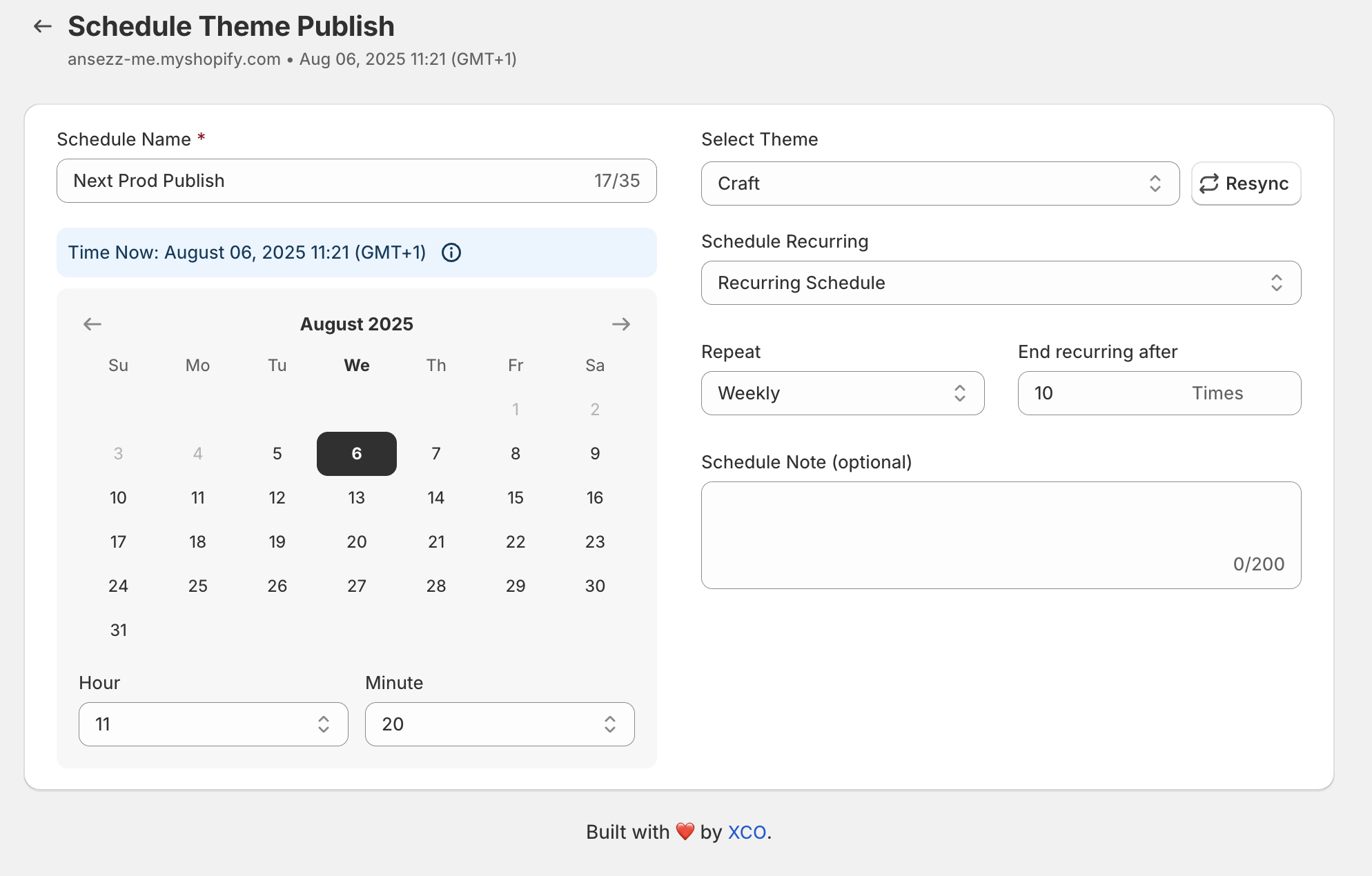
This is why at XCO Agency, we often integrate the Maestro Theme Scheduler into our clients' international workflows. When you are running a specific campaign for "Singles' Day" in China or "Boxing Day" in the UK, you cannot rely on manual theme updates.
Using Maestro for International Campaigns
- Schedule Market-Specific Content: Use the scheduler to publish theme versions that highlight regional promotions at exactly the right local time.
- Automate Section Visibility: If you have a banner that is only relevant to your Australian market, you can schedule it to appear and disappear automatically, ensuring your store always looks fresh and relevant.
- Reduce Human Error: By setting up your promotions in advance, you eliminate the risk of a team member forgetting to update the site during off-hours.
Simplifying the Legal and Logistical Burden
The biggest hurdle to global sales is often not the marketing, but the "boring" stuff: taxes, duties, and customs. Shopify Markets, particularly through its "Managed Markets" offering, acts as a merchant of record.
This means Shopify (often in partnership with Global-e) takes on the legal responsibility for your international transactions. They handle the calculation and collection of duties and import taxes at checkout. This "Duties Paid" (DDP) model is crucial for the customer experience. Nothing kills brand loyalty faster than a customer being hit with an unexpected $50 customs bill when their package arrives.
Furthermore, these managed solutions provide access to negotiated shipping rates with global carriers like DHL and UPS. You get the shipping power of a multinational corporation even if you are still a mid-sized brand.
Enhancing the Post-Purchase Experience Globally
International customers are naturally more skeptical than domestic ones. They worry about what happens if the product doesn't fit or arrives damaged. To scale globally, your after-sales service must be as robust as your storefront.
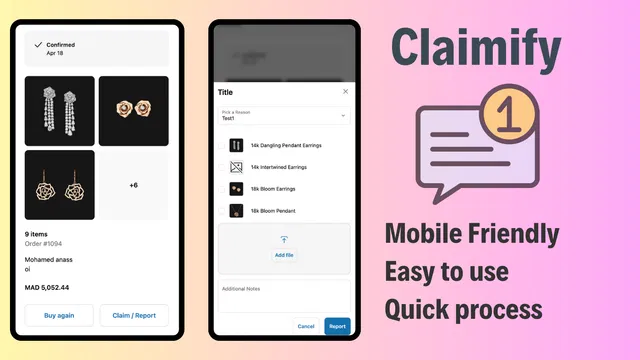
We recommend using tools like Claimify to streamline the claims and returns process. For a customer in another country, a simple, mobile-friendly way to report an issue is a major trust signal. If they can easily submit a claim with a few clicks and photos, they are far more likely to shop with you again despite the geographical distance.
Step-by-Step: How to Begin Your Global Expansion
If you are ready to move beyond your borders, follow these simple steps to activate Shopify Markets:
- Identify Your Top Markets: Analyze your current traffic data to see where international visitors are already coming from.
- Navigate to Settings > Markets: In your Shopify admin, click on "Add Market" and select the countries or regions you want to target.
- Configure Localization: Select the currency, language, and domain strategy for each specific market.
- Review Shipping and Duties: Ensure your shipping zones are updated and consider enabling duty collection at checkout to prevent customer surprise.
- Optimize the Content: Use translation apps or manual overrides to ensure your product names and descriptions resonate with the local culture.
- Schedule Your Launch: Use the Maestro Theme Scheduler to coordinate your global launch and any supporting marketing campaigns.
Conclusion: A Proactive Step Toward Global Dominance
Global scaling is no longer a luxury reserved for the world's largest retailers. With Shopify Markets, the barriers to entry have been lowered, allowing any ambitious merchant to build a truly international brand. By localizing the experience, simplifying the logistics, and using automation tools to manage the complexity, you can significantly boost your reach and revenue.
Managing a global store is a journey of continuous optimization. Whether you are looking for Shopify design services to create a multi-language masterpiece or you need a deeper dive into Shopify speed optimization for international regions, the tools and expertise are within reach.
Scaling globally is a vital step for any merchant looking to future-proof their business. If you are ready to take that step but aren't sure where to start, feel free to book a meeting with us. At XCO Agency, we specialize in turning high-growth Shopify stores into global leaders. Let's build your international empire together.