
As a Shopify expert, I often work with high-growth merchants who feel trapped by their own success in their domestic market. They see the data showing international visitors arriving at their store, yet they hesitate to pull the trigger on global expansion. Why? Because historically, selling internationally was a logistical nightmare. It required managing multiple stores, juggling various currencies, manually translating content, and navigating a minefield of local tax regulations.
High-growth brands are seeking ways to scale without exponentially increasing their operational overhead. This is where Shopify Markets comes in. It is not just a feature. It is a centralized hub that transforms how brands approach cross-border commerce. By consolidating localization tools into a single management system, it allows you to treat the world as a single market while still providing a localized experience for every individual customer.
The Problem with Traditional International Expansion
Before Shopify Markets, merchants typically chose between two difficult paths. The first was to ignore localization, which meant showing prices in a foreign currency and surprising customers with hidden duties at the door. This approach is a conversion killer. The second path was to create separate Shopify stores for every region. While this allowed for localization, it created a massive management burden. You had to sync inventory, update themes multiple times, and manage separate apps for every storefront.
Today, the expectations of the global consumer have shifted. They expect to shop in their own language, pay with their preferred local methods, and see the final price including all taxes and duties. Shopify Markets solves these complexities by automating the heavy lifting.
Core Features That Simplify Localization
Automated Currency and Domain Setup
One of the most immediate benefits of Shopify Markets is the ability to offer local pricing without manual calculation. The platform converts your prices into more than 130 international currencies using real-time foreign exchange rates. More importantly, it automatically implements rounding rules so your prices look professional and consistent (e.g., $29.00 instead of $28.67).
When you enter a new market, Shopify also handles the domain structure. Whether you prefer subfolders (yourstore.com/fr) or subdomains (fr.yourstore.com), the platform sets this up automatically. This is vital for SEO because it tells search engines exactly which version of your site to show to customers in specific regions.
Language and Content Adaptation
Speaking the customer’s language is the first step toward building trust. Through the integrated Translate & Adapt app, you can auto-translate your store into multiple languages. However, true localization goes beyond literal translation. It involves adapting your messaging to suit cultural nuances.
As a Shopify expert, I recommend going a step further than just translation. You need to adapt your marketing assets for regional holidays and seasons. For example, while your Northern Hemisphere customers are looking for winter coats, your Australian customers are in the heat of summer.

Managing these regional content shifts is where automation becomes your best friend. Using tools like Maestro Theme Scheduler, you can schedule specific theme sections or banners to appear only during regional events. This ensures your global store remains relevant 24/7 without requiring your team to be awake at 3:00 AM to flip a switch for a promotion in Tokyo.
Strategic Pricing and Product Control
Expansion does not mean you have to sell everything everywhere. Different markets have different shipping costs, competition levels, and demand. Shopify Markets allows you to set percentage-based or fixed price adjustments by market. If your shipping costs to the UK are higher than to the US, you can increase your UK prices by 10 percent to protect your margins.
You can also control product visibility. If a specific product cannot be shipped to certain countries due to regulations or licensing, you can simply hide it for those specific markets. This level of control, managed from a single dashboard, is a significant growth strategy that prevents customer frustration and shipping errors.
Scheduling Your Global Strategy
For merchants running complex global campaigns, scheduling is essential. If you are launching a product in Europe before the US, or if you need to adjust prices for a flash sale in a specific region, you need precision. We often recommend using Product Maestro Scheduler to automate these changes. By scheduling product availability and price adjustments, you ensure that your global strategy executes flawlessly across all time zones.
Boosting Conversion with Local Payment Methods
Offering a customer's preferred payment method is one of the most effective ways to reduce cart abandonment. While credit cards are common globally, many regions have specific preferences. For instance, adding Bancontact as a payment method can significantly increase conversions in Belgium, while iDEAL is essential for the Dutch market.
Shopify Markets integrates these major local payment methods directly into your checkout. This removes the friction that often occurs when an international customer reaches the final step and finds they cannot use their preferred bank or payment provider.
Transparency in Taxes and Duties
Nothing destroys brand loyalty faster than a customer receiving a surprise bill from a courier for import duties. Shopify Markets simplifies this by collecting duties and import taxes upfront during the checkout process.
- Select your markets: Identify which countries you want to target.
- Enable duty collection: Navigate to your shipping settings and enable the collection of duties at checkout.
- Ensure compliance: Shopify calculates the correct amount based on the product type (HS codes) and the destination country.
By being transparent about the total cost of ownership, you provide a better customer experience and reduce the likelihood of refused shipments.


Enhancing Post-Purchase Trust Internationally
Selling globally means your products are traveling further, which increases the risk of shipping delays or damaged goods. To maintain a high level of customer satisfaction, you must have a robust post-purchase support system. International customers are often more anxious about their orders because of the distance involved.
Providing clear tracking information is step one. Step two is simplifying the claims process. We often integrate Claimify for our clients to handle international order issues. If a customer in Singapore receives a broken item from your US warehouse, they want a quick resolution, not a week-long email thread.
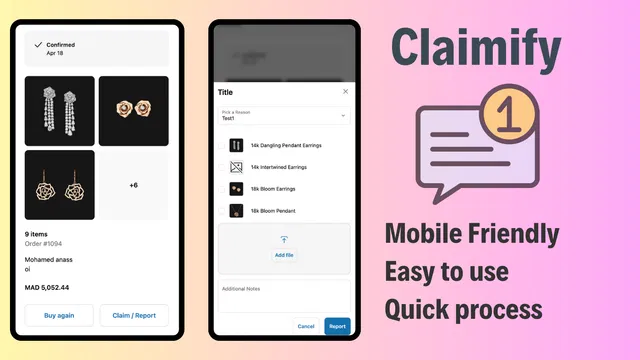
A streamlined claims process builds the trust necessary for repeat international business. When customers know that you stand behind your global shipments and offer an easy way to report issues, they are much more likely to return.
The Operational Advantage: One Admin to Rule Them All
The most compelling reason to use Shopify Markets is operational efficiency. Managing a single store with multiple markets means:
- Centralized Inventory: You don't have to split your stock across multiple Shopify stores.
- Unified Reporting: View your global performance in one place or drill down into specific markets to see where you are growing fastest.
- Single Theme Management: Update your site design once, and it propagates across all markets instantly.
- Simplified App Management: You only need to pay for and configure your apps (like loyalty programs or reviews) once.
For those looking to migrate from a complex multi-store setup, migration to Shopify Plus with Markets is often the most impactful move a brand can make to reclaim their time and focus on actual marketing rather than technical maintenance.
Taking the Next Step in Your Global Journey
Global expansion is no longer a luxury reserved for the world's largest retailers. With Shopify Markets, the barriers to entry have been dismantled. You can start small by grouping countries into a "Rest of World" market and then create specific, highly localized experiences for your top-performing regions as you gather data.
As you scale, you might consider upgrading to Managed Markets. This version of the tool takes things even further by acting as the "Merchant of Record," handling even more of the complex tax filings and compliance issues on your behalf.
Establishing a global footprint is a vital step for any brand looking to build a resilient, long-term business. By leveraging the automation and localization tools within the Shopify ecosystem, you can reach new audiences with minimal friction.
If you are ready to optimize your store for international success or need help navigating the complexities of Shopify Markets, our team at XCO Agency is here to guide you. We specialize in creating high-performance Shopify experiences that convert globally. Book a meeting with us today or contact us to discuss how we can help you power up your international selling strategy.