
As a Shopify expert, I often talk to merchants who treat their store admin like a high-stakes game of Whack-A-Mole. They are constantly jumping from product page to product page, frantically updating prices for a weekend sale, only to realize on Monday morning that they forgot to change half of them back. If you have ever set an alarm for midnight just to click "Save" on a collection price change, you are not just losing sleep; you are losing money.
Effective ecommerce maintenance services are not about how hard you work in the backend. They are about how smart your systems are. When you manage pricing manually, you introduce a level of human error that can tank your conversion rate optimization (CRO). Customers notice price inconsistencies. They notice when a "Sale" tag is still live on a product that is back to full price. Most importantly, they notice when your store looks like it has not been updated since the last decade.
In this installment of our daily series on the Product Scheduler by Maestro, we are diving deep into the pitfalls of manual price management and how you can use automation to run a truly hands-off store.
The High Cost of Manual "Busy Work"
Before we look at the solutions, we must identify the specific ways manual updates are hurting your bottom line. Most merchants seek shopify store setup advice focusing on aesthetics, but the real growth happens in the operational efficiency of your catalog.
1. The Midnight Sales Specialist Syndrome
The most common mistake is believing that you need to be present the moment a sale starts or ends. Merchants often stay up late or wake up early to manually toggle prices. This is not only unsustainable for your mental health, but it is also prone to error. One missed decimal point or one forgotten product can lead to significant revenue loss or a customer service nightmare.
2. The Inconsistent Price Rounding Trap
When you update prices manually, especially during a percentage-based discount, you often end up with "ugly" numbers like $19.34 or $47.81. Studies in conversion rate optimization show that clean, rounded prices (like $19.00 or $19.99) perform significantly better because they reduce cognitive load for the shopper. Manually rounding hundreds of products is a recipe for a headache.
3. Forgetting the Compare-At Price
A sale is only effective if the customer knows they are getting a deal. Manually updating the "Price" field but forgetting to adjust the "Compare-At Price" means your "Sale" tags won't trigger. You end up selling products at a discount without getting any of the psychological benefits of the perceived value.
4. Tag Management Nightmares
Tags drive everything from your smart collections to your filtering sidebar. If you manually change a price but forget to add or remove the "On Sale" tag, your storefront becomes a chaotic mess. Customers will filter for "Sales" and find products at full price, or worse, they will miss out on deals they were looking for because the tag was never applied.
5. Collection Visibility Chaos
Launching a new collection usually involves a flurry of manual price updates and visibility toggles. If you are doing this manually, your collection might go live before the products are actually priced correctly. This leads to a poor first impression and high bounce rates, which is the opposite of what you want for your conversion rate optimization.
6. The "Draft" Product Dilemma
Many merchants keep new products in "Draft" mode until the moment of launch. They then have to manually change each product to "Active" while also updating the prices. If you have fifty new items dropping at once, doing this manually is a guaranteed way to miss something.
7. Inventory and Price Disconnects
When a popular item is restocked, it often needs a price adjustment based on new shipping costs or vendor rates. If your restock process and your pricing process are two separate manual tasks, you risk selling out of new stock at an old, unprofitable price point.
How Maestro Transforms Your Workflow
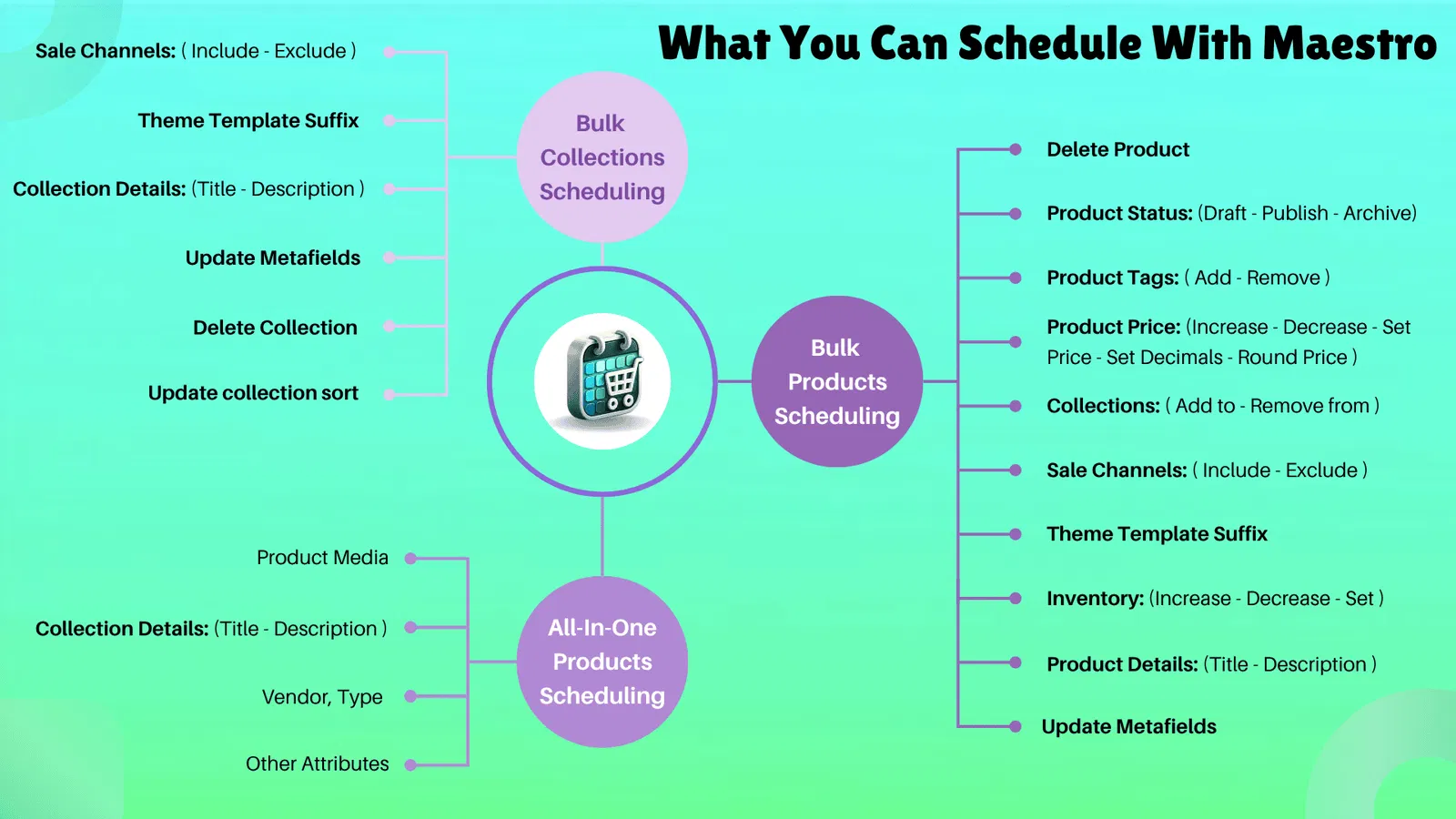
The Product Scheduler by Maestro was built to eliminate these exact pain points. Instead of being a slave to your Shopify admin, you can schedule every aspect of your product management in advance.
Here are simple steps to take control of your pricing strategy using Maestro:
Step 1: Use the Draft Helper for Seamless Launches
The "Draft Helper" is a game-changer for anyone looking to professionalize their shopify store setup. You can prepare your entire product catalog in draft mode, including the final sale prices and tags. You then schedule Maestro to flip the switch from "Draft" to "Active" at the exact second your marketing campaign goes live. This ensures a synchronized launch across all channels without you needing to be at your desk.
Step 2: Implement Automated Rounding Rules
Maestro allows you to set global or collection-specific rounding rules. Whether you prefer the .99 ending for a "bargain" feel or a clean .00 for a luxury aesthetic, Maestro applies these rules automatically whenever a price change occurs. This keeps your storefront looking professional and consistent, which is a vital step for conversion rate optimization.
Step 3: Automate Tag Management for Seasonal Sales
Instead of manually adding "Summer-Sale" tags to five hundred items, you can schedule Maestro to add the tag at the start of the sale and remove it the moment the sale ends. This ensures your smart collections stay accurate and your site search remains relevant.

Step 4: Schedule Recurring Price Changes
If you run weekly "Deal of the Day" promotions, you can set these as recurring tasks. Maestro will handle the price drop and the price reset every single week. This allows you to run a highly dynamic store with zero ongoing manual effort. This level of automation is why many top-tier brands use Maestro as part of their ecommerce maintenance services.
The Psychological Power of Perfect Pricing
Conversion rate optimization is as much about psychology as it is about technology. When a customer lands on your site and sees consistent pricing, clear "Compare-At" discounts, and perfectly rounded numbers, it builds trust. Trust is the foundation of every sale.

When prices are updated manually, inconsistencies inevitably creep in. A customer might see one price on the collection page and a different one on the product page because a cache hasn't cleared or a manual update was missed. This creates "friction." In the world of ecommerce, friction is the enemy of the "Add to Cart" button.
By using Maestro to automate your updates, you ensure that:
- Prices are consistent across all views.
- Sale banners and tags match the actual checkout price.
- Rounding rules maintain a high-end brand feel.
- Inventory levels and pricing are always in sync.
Boosting CRO with Hands-Off Management
Once you remove the burden of manual updates, you can focus on the higher-level strategy. Instead of spending three hours updating prices, you can spend those three hours analyzing your heatmaps or refining your growth strategies.
Maestro does more than just change numbers; it manages your store's "vibe." By automating the visibility of sections and blocks, you can ensure that your "Sale" banners disappear the moment the price scheduling ends. There is nothing more damaging to your credibility than a "Sale Ends at Midnight" banner that is still visible at 10:00 AM the next day.

Take the Next Step Toward Automation
If you are ready to stop being a "Midnight Hero" and start being a strategic CEO, it is time to look at how automation can power up your store. The Product Scheduler by Maestro is designed to give you your time back while ensuring your store performs at its peak.
Whether you are just starting with your shopify store setup or you are a high-volume merchant looking for better ecommerce maintenance services, Maestro is the tool that makes hands-off management a reality.
Stop making the 7 manual mistakes that are costing you sales. Automate your pricing, refine your rounding rules, and watch your conversion rate optimization soar.
Ready to see how Maestro can transform your Shopify workflow? Book a meeting with our experts today or visit our Maestro Theme Scheduler page to learn more about how we can help you build a more efficient, profitable store.