
As a Shopify expert, I often see merchants spending their Friday nights hunched over a laptop, frantically clicking through the Shopify admin to launch a new collection. They are seeking a way to scale their business, but they are trapped in the manual labor of catalog management. If your idea of a high-stakes adrenaline rush is hoping you didn't accidentally set your hero product to zero dollars during a bulk edit, we need to talk.
Managing a Shopify store setup involves more than just a pretty theme and a payment gateway. It requires a rigorous approach to ecommerce maintenance services to ensure your catalog remains fresh, accurate, and optimized for sales. When you handle catalog updates manually, you aren't just wasting time: you are actively sabotaging your conversion rate optimization. Human error is the silent killer of the customer experience.
In this guide, I will break down the seven most common mistakes merchants make with manual updates and show you how to transition to a hands-off, automated store using the Product Scheduler by Maestro app.
1. The Midnight Launch Syndrome
Many merchants believe that a successful product launch requires them to be physically present at the moment of release. They wait until the clock strikes twelve to toggle products from Draft to Active. This is not only exhausting but also incredibly risky. If your internet goes out or you make a typo in your exhaustion, your big launch becomes a big headache.
Manual launches often lead to:
- Inconsistent timing across different sales channels.
- Broken links if pages aren't ready when the marketing emails go out.
- Increased stress for your team during peak periods.
How to Fix It: Use the Draft Helper
Instead of losing sleep, use the Draft Helper feature within the Product Scheduler by Maestro app. This allows you to prepare all your product details in advance and schedule the exact second they should go live. By automating the transition from draft to active, you ensure a professional and punctual launch every single time.
2. The Tagging Roulette
Tags are the backbone of Shopify organization. They power your filters, your automated collections, and your reporting. However, when you update tags manually across hundreds of products, mistakes are inevitable. You might tag a winter coat as "Summer2026" or forget to remove a "Sale" tag after a promotion ends. This creates a messy storefront that confuses both customers and search engines.
Reliable tagging is essential for:
- Accurate collection filtering for better user experience.
- Automated marketing workflows that trigger based on specific tags.
- Effective SEO and internal site search results.
How to Fix It: Automated Tag Management
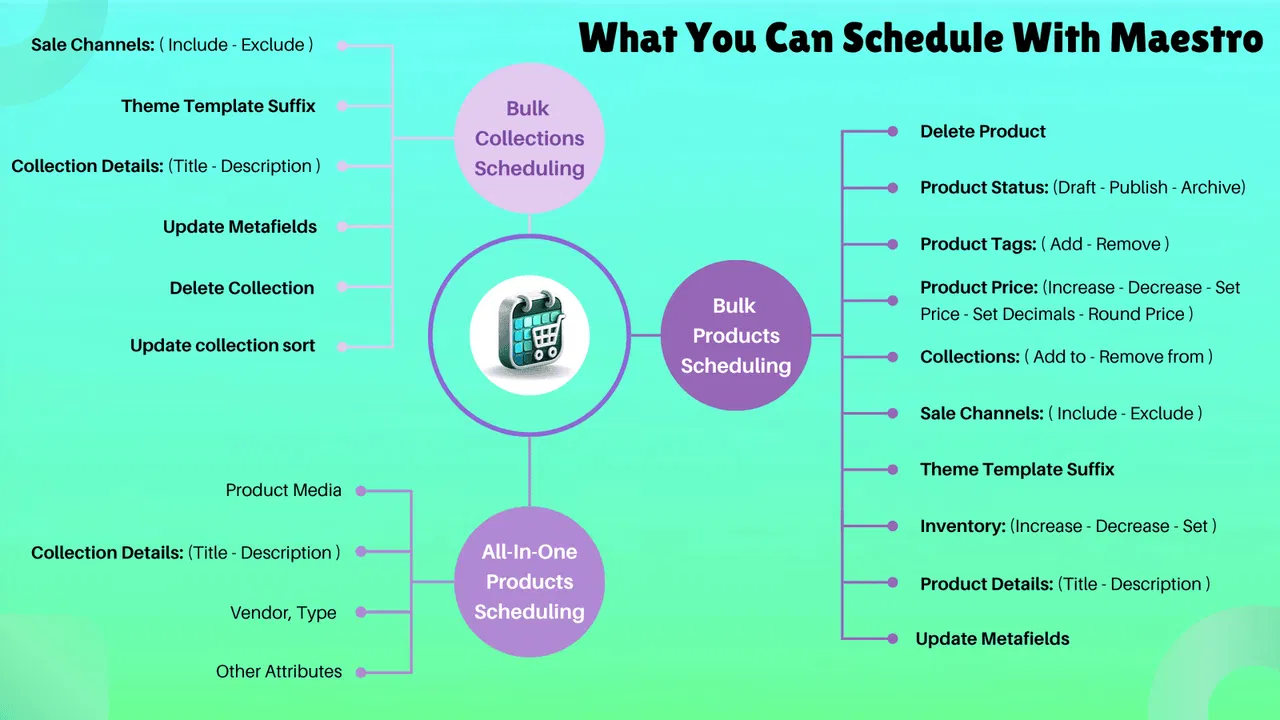
With Maestro, you can schedule tag additions and removals. If you are running a seasonal sale, you can set a rule to add a "Holiday Sale" tag on Monday morning and automatically remove it on Friday night. This keeps your shopify store setup clean and ensures that your ecommerce maintenance services are handled without you lifting a finger.
3. The Price Rounding Disaster
Nothing screams "unprofessional" quite like a price list that looks like a math homework assignment. If your prices are a mix of $19.99, $20.00, and $19.43 because of a percentage-based discount, you are hurting your brand perception. Manually adjusting every single price to look clean is a Herculean task that no business owner should endure.
Inconsistent pricing leads to:
- Reduced trust from customers who notice the lack of attention to detail.
- Visual clutter on collection pages.
- Lower conversion rate optimization due to psychological pricing barriers.
How to Fix It: Price Rounding Rules
The Product Scheduler by Maestro app allows you to schedule price changes and apply rounding rules simultaneously. Whether you want everything to end in .99 or .00, you can set the logic once and let the app handle the heavy lifting. This ensures your store looks polished and your profit margins remain intact.
4. The Inventory Invisibility Act
Have you ever had a popular item go out of stock, only to have a restock arrive and sit in the warehouse for three days because no one remembered to update the Shopify inventory? Or worse, have you forgotten to hide an out-of-stock item, leading to "Page Not Found" errors or frustrated customers clicking on unavailable products?
Poor inventory management results in:
- Lost sales opportunities for restocked items.
- High bounce rates from customers landing on out-of-stock pages.
- Negative reviews from disappointed shoppers.
How to Fix It: Inventory Automation
Automating your restocks and stock-outs is a vital step in maintaining a hands-off store. Maestro can monitor your inventory levels and trigger specific actions, such as changing product visibility or updating tags, when stock hits a certain threshold. This keeps your store dynamic and responsive to real-time supply chain changes.

5. The Collection Chaos
Your homepage and collection pages are your digital storefront windows. If they stay the same for months, repeat customers will stop coming back. However, manually reordering products or changing which collections are visible is often the last thing on a busy merchant's to-do list. When collections are not managed strategically, high-margin products get buried at the bottom of the page.
Common collection mistakes include:
- Showing "New Arrivals" that are six months old.
- Leaving seasonal collections visible long after the holiday has passed.
- Failing to highlight high-converting items at the top of the grid.
How to Fix It: Scheduling Collection Visibility and Sorting
Maestro gives you the power to manage collection visibility and sorting on a schedule. You can plan your merchandising strategy weeks in advance. Set your "New Year, New You" collection to appear on January 1st and disappear on February 1st. You can also automate the sorting process to ensure that your best-sellers or newest items are always front and center.
6. The "Set and Forget" Fallacy
Many merchants treat their catalog like a static document. They set it up once and only change it when something breaks. This "set and forget" approach is a massive mistake in the fast-paced world of ecommerce. Your catalog should be a living entity that evolves based on customer behavior, trends, and promotions.
A stagnant catalog leads to:
- Declining search engine rankings over time.
- Boredom for returning customers.
- Missed opportunities for flash sales or timely promotions.
How to Fix It: Implement Recurring Schedules
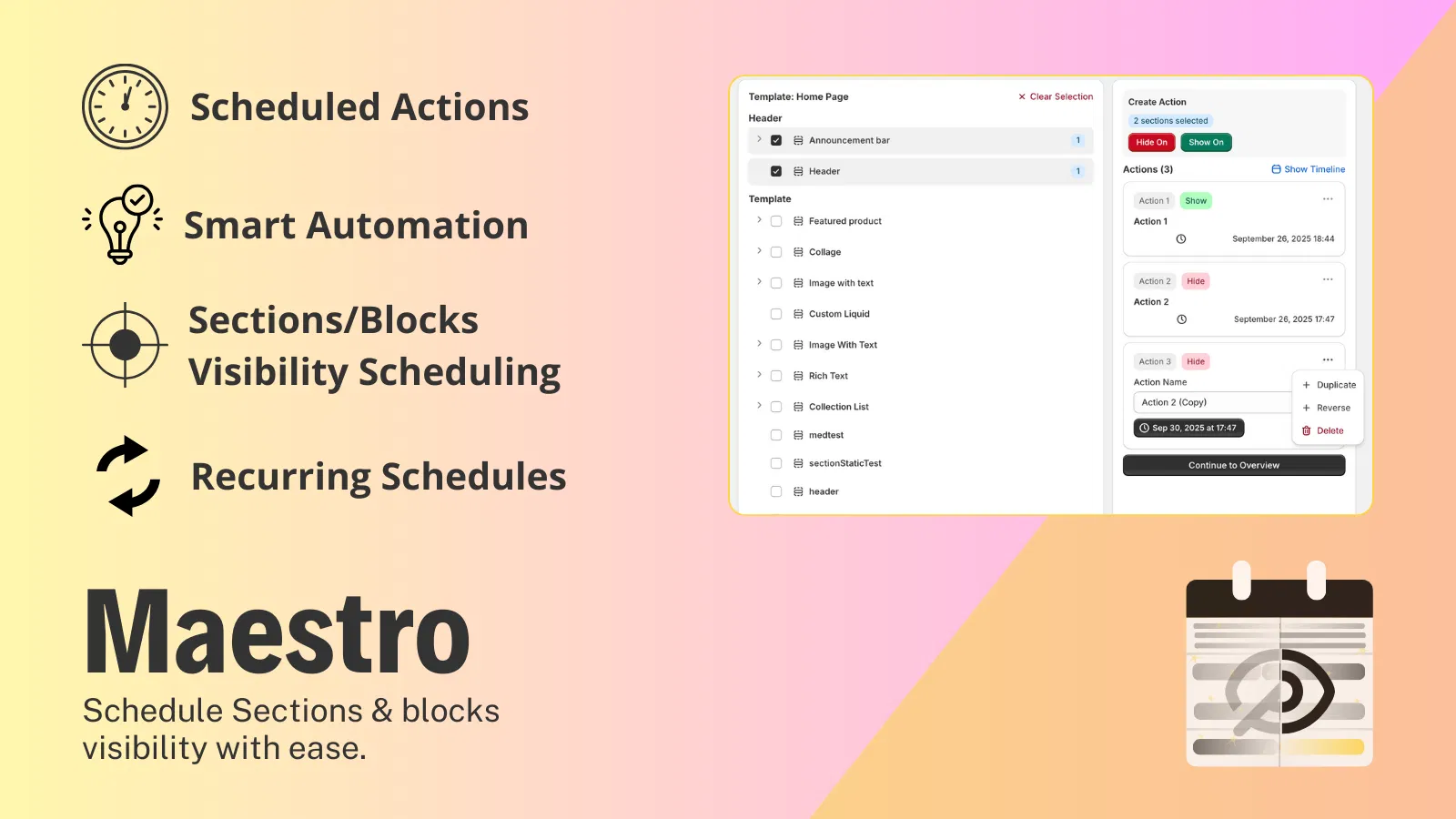
Instead of manual updates, use Maestro’s recurring schedule feature. This allows you to plan out weekly "Deal of the Day" updates or monthly catalog refreshes in one go. By automating these recurring tasks, you keep your store fresh without adding to your daily workload. This is a core component of high-level ecommerce maintenance services.
7. The Spreadsheet Dependency
If your main tool for catalog updates is a giant, color-coded CSV file, you are living on the edge of disaster. One wrong drag-and-drop in Excel can overwrite your entire product database, delete your SEO descriptions, or mess up your SKU logic. Spreadsheets are powerful, but they are not a substitute for proper automation tools.
The dangers of spreadsheet dependency include:
- Data validation issues and broken formatting.
- The high probability of "human error" during the import/export process.
- Difficulty in tracking who made which change and when.
How to Fix It: Centralize with Maestro
Move away from the "Export-Edit-Import" cycle. By using a dedicated tool like Product Scheduler by Maestro, you create a single source of truth within your Shopify admin. You can see all your scheduled actions in one place, track their status, and make adjustments on the fly without ever touching a CSV file. This significantly boosts your conversion rate optimization by ensuring your data remains clean and accurate.
Creating a Proactive Workflow
Transitioning from manual updates to an automated system is not just about saving time: it is about professionalizing your operations. When you remove the friction of manual catalog management, you free up your brain to focus on growth strategies, customer acquisition, and brand building.
Here are simple steps to begin automating your catalog today:
- Identify your most repetitive tasks: Look at your calendar and note every time you have to log in to Shopify to change a price, a tag, or a product status.
- Install Product Scheduler by Maestro: Navigate to the Shopify App Store and integrate this tool into your shopify store setup.
- Audit your current catalog: Use this opportunity to clean up old tags and outdated information.
- Set up your first automated campaign: Start small, perhaps by scheduling a weekend sale or a new product drop.
- Monitor and optimize: Use the time you saved to analyze your sales data and refine your scheduling strategy for even better results.

The Path to a Hands-Off Store
As a Shopify expert, I have seen the difference between merchants who are "working in their business" versus "working on their business." The former are the ones manual-tagging products at 2 AM. The latter are the ones using Maestro to automate their entire catalog lifecycle while they focus on high-level strategy.
Automating your catalog updates is a proactive step that protects your brand, enhances your customer experience, and allows you to scale without needing to hire an army of data entry clerks. Whether you are managing a small boutique or a high-volume Shopify Plus store, the principles of automation remain the same: reduce human error, save time, and stay consistent.
If you are ready to stop making these seven mistakes and start running a more efficient store, it is time to look at your ecommerce maintenance services through a new lens.
To learn more about how we can help you optimize your Shopify store or to explore our other services, feel free to book a meeting with our team. We specialize in everything from Shopify speed optimization to advanced growth strategies. Don't let manual tasks hold your business back: automate today and watch your productivity soar.